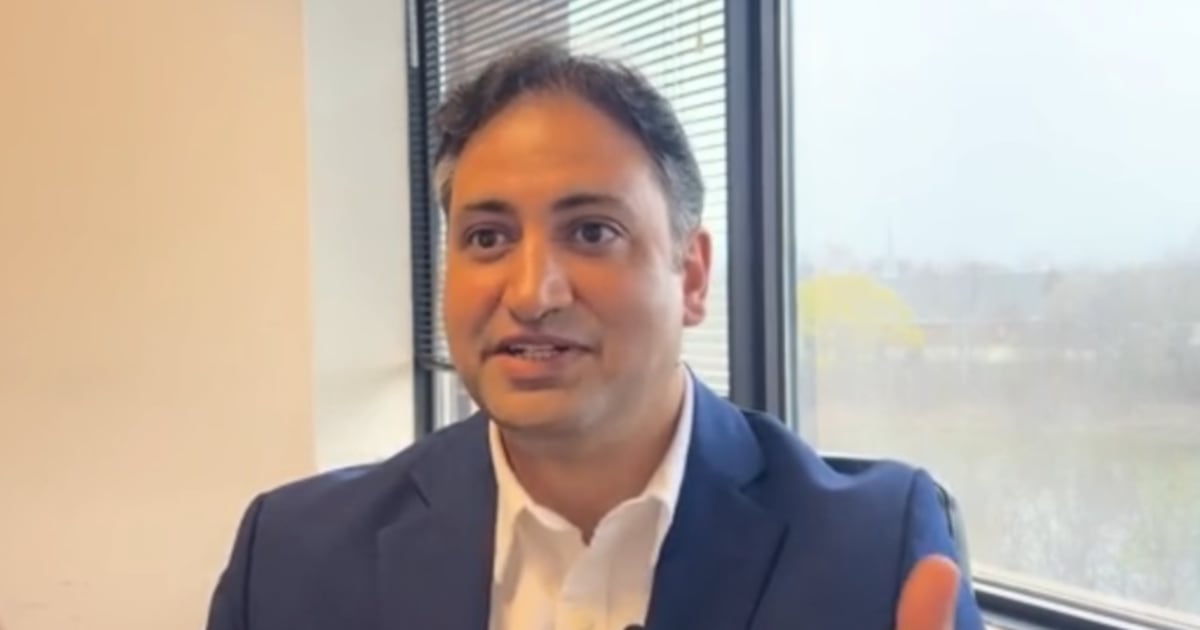
“It’s not common. It’s unusual. But the big companies, which have complex formulation development processes, have a dedicated toxicologist for it and now at NOW Health Group I’m working here. They can afford [to] have a dedicated toxicologist. I am the example,” said Dr. Tahir Mir, toxicologist, NOW.
Unlike pharmaceuticals, dietary supplements do not require pre-market FDA approval. That places responsibility squarely on manufacturers to ensure product safety before they reach consumers. At NOW, every ingredient undergoes structured safety evaluation.
“NOW has a very good database of safety profiles, so no product will go into the market without a safety profile,” he said. “So we ensure that our products are safe and effective.”
Dr. Mir’s role goes beyond reviewing published clinical studies. He evaluates upper intake limits, potential drug interactions, organ-specific effects and long-term risk exposure.
“In that safety profile, we mention, first thing, what is the upper limit we can go for? So the patents or the clinical studies…tell us the recommended dose because they have done the clinical trials on a recommended dose. But a toxicologist has to see what could be the upper limit,” said Dr. Mir. “We should not go beyond that limit.”
Even when ingredients come with clinical backing or intellectual property protections, NOW conducts its own independent safety assessments.
“At NOW, whether it is a patented product or a trademark product or a proprietary blend, any ingredient we create our own safety profile for that based on the clinical studies, what those patents have published, what those articles or clinical data is there,” he said. “So we built those documents for safety. We call this safety profiles.”
Those internal dossiers consolidate clinical findings, regulatory considerations, and safety thresholds into a single risk assessment document. Dr. Mir says natural origin does not eliminate safety consideration, while heavy metals and other contaminants remain an ongoing industry concern.
“We check for everything, whether it’s the mycotoxins or any other infiltration or heavy metals,” he said. “Toxicologists play a role where we can set a permissible limit for any adulterant. For example, it is not possible to extract or remove all the heavy metal from the raw material. There might be traces. It is naturally in the plant or in the product. So there is a permissible limit for everything. So my work at NOW is to see what is the permissible limit at which it will not show any toxicity for long-term-use. So it should be safe.”
Dr. Mir also investigates adverse event reports, supports global product registrations and works cross-functionally with R&D, sales and marketing to set safety parameters for new formulations.
“If there is an ARE (Adverse Event Report), then I do a proper investigation on that ingredient or that product, and that goes to the FDA,” Dr. Mir said. “We report that to the FDA as well and that helps the toxicologists to keep an eye on a long-term basis. I mentioned it earlier as a risk assessment. That’s also one of my projects.”
Looking ahead, Dr. Mir said he expects continued growth in ingredients targeting metabolic health, but stresses that popularity must be balanced with evidence. As the supplement market evolves, proactive toxicology may become less of a differentiator and more of an expectation.
“You should have an eye on long-term use,” he said. “It should be efficient, beneficial. It should have a very good efficacy without any side effects. That’s my purpose here at NOW.”