Collagen supplements have become social media darlings, with creators regularly swearing that these powders support more youthful-looking skin and hair. Given that collagen is a type of protein, it’s gotten even more attention lately.
Your body naturally produces collagen, but production changes over time, explains Gary Goldenberg, MD, a board-certified dermatologist practicing in New York City. “As we age, natural collagen production declines and we tend to break it down more rapidly,” he says.
Collagen supplements can support the body’s collagen production, providing amino acids — especially glycine, proline, and hydroxyproline — that the body can use to build collagen, says Scott Keatley, RD, co-owner of Keatley Medical Nutrition Therapy.
Despite all the hype surrounding these supplements, there is admittedly mixed data on their performance. “The strongest evidence is for modest improvements in skin hydration and elasticity, and some improvements in joint pain and function in certain groups, typically over eight to 12 weeks,” Keatley says.
Collagen is one of the main components of connective tissue, but collagen supplements provide protein, too, according to Jessica Cording, RD, the author of The Little Book of Game-Changers. “While there is some research on collagen supporting skin moisture and elasticity, I’m more likely to recommend it as a way of adding extra protein into someone’s diet,” Cording says.
Like all supplements, collagen supplements aren’t closely regulated by the Food and Drug Administration (FDA). With that, it’s difficult to know whether the bottle accurately reflects what the label says. That’s why we consulted experts on the collagen supplements they’d recommend. Here’s what they shared.
Read more: Best magnesium supplements, according to experts
What is collagen?
Collagen is the most abundant protein in the body, accounting for about 30 percent of the body’s protein, according to the Cleveland Clinic. Collagen has a fiber-like structure used to make connective tissue, Cording explains. It’s also the main building block of the body’s skin, bones, tendons, ligaments, and muscles.
Collagen is naturally found in animal flesh, including beef, poultry, and fish, Cording explains. There is no recommended daily allowance (RDA) for collagen, but research suggests that it’s safe to take 2.5g to 15g of hydrolyzed collagen a day.
Do collagen supplements work?
Research results on the impact of collagen supplements have been mixed. “Ingested collagen is digested into peptides and amino acids. It doesn’t travel intact to skin, hair, or joints,” Keatley explains. “Benefits tend to be modest, variable, and slow.” However, people will often report small benefits, according to Cording. “You don’t notice a change instantly,” she says. “It tends to be more subtle, gradual changes.” She also stresses that a collagen supplement shouldn’t be considered a substitute for a balanced diet.
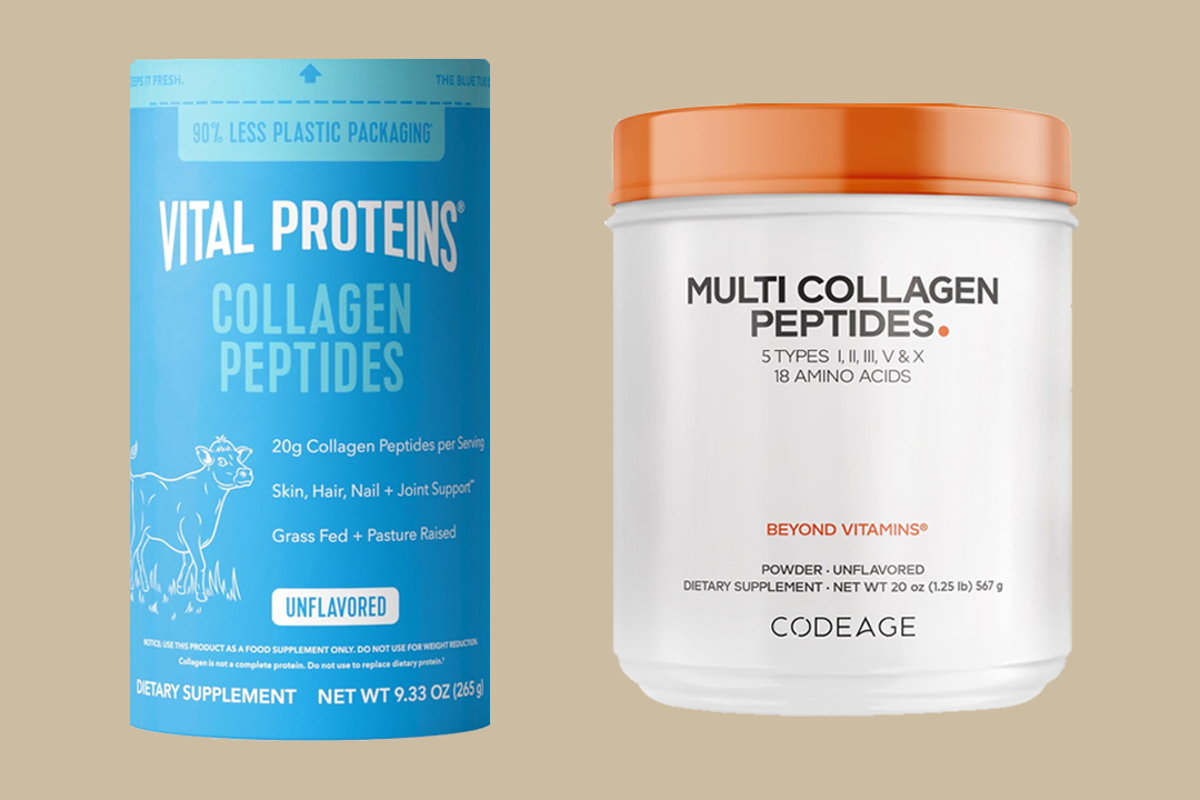
The best collagen supplements for 2026 are: Ancient Nutrition multi collagen protein: $28.01, Amazon.comCodeage multi collagen powder platinum: $39.99, Codeage.comVital Proteins collagen peptides powder: $27, Iherb.comThrive Market grass-fed collagen peptides: $26.99, Thrivemarket.com