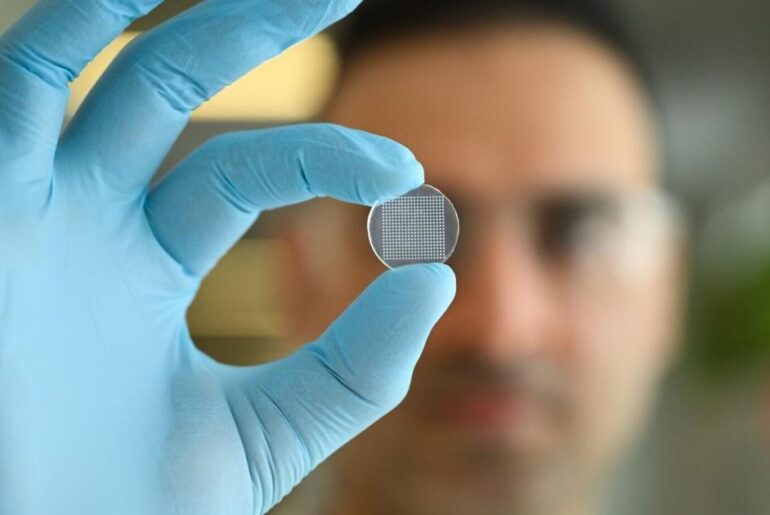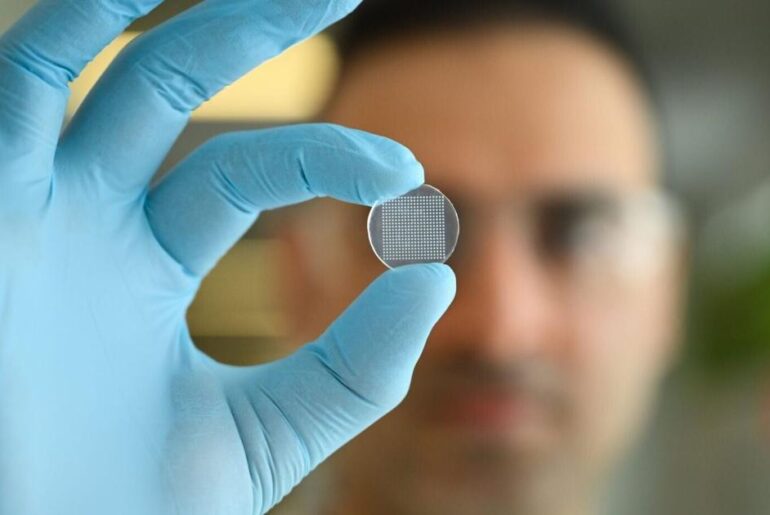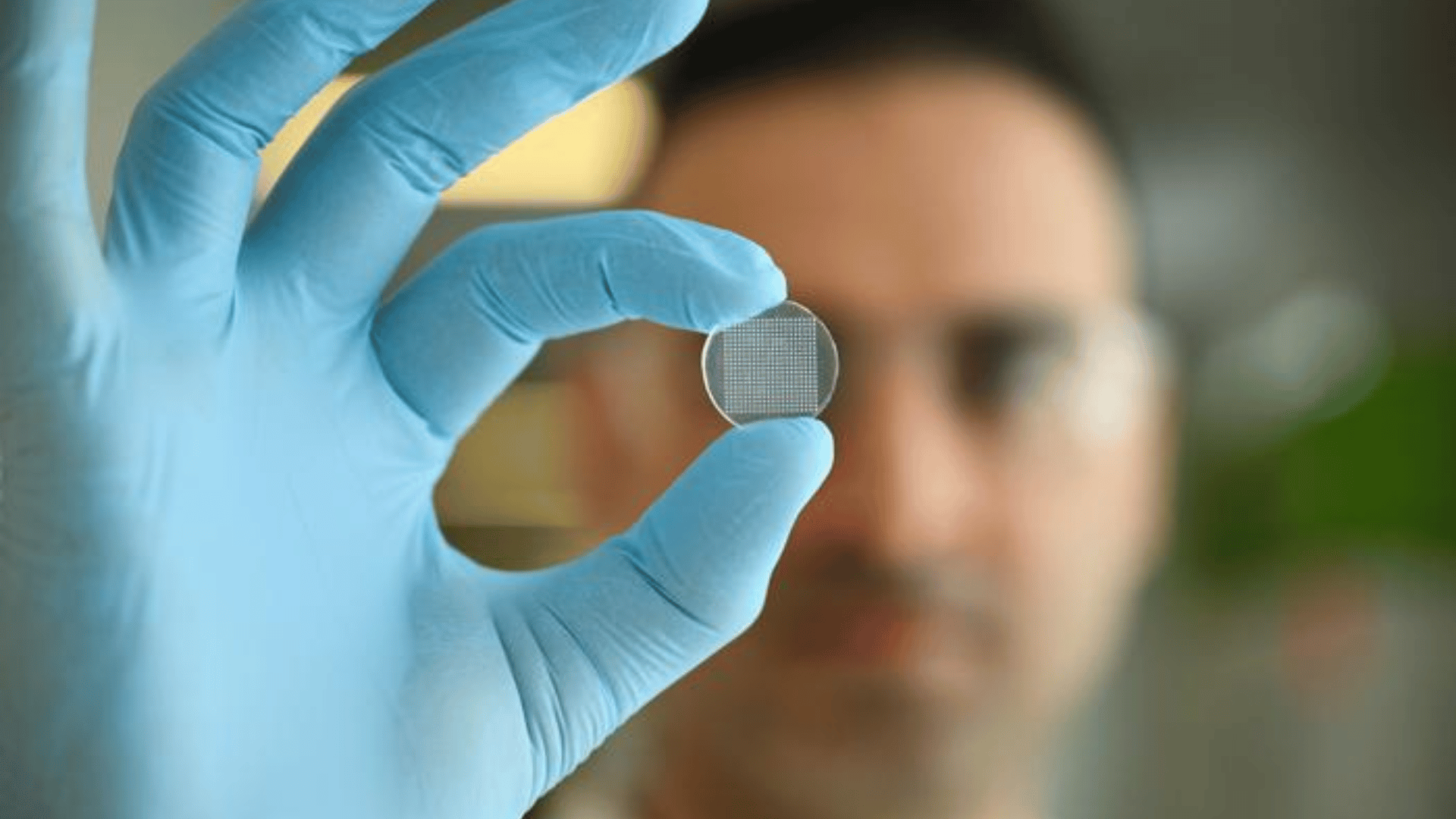
Researchers at The Jackson Laboratory (JAX) and MIT have developed a new way to examine your immune system without using a single needle or scalpel. It looks like a traditional bandage, but it’s actually a “microneedle” patch that can pull immune cells directly from your skin in minutes.
The research team’s goal here is to make medical testing much easier for the patient. Right now, if a doctor needs to see how your body is fighting a disease or reacting to a vaccine, they usually have to draw blood or cut out a small piece of skin for a biopsy. This new patch does the same job without the invasive procedures.
A Patch That is Minimally Invasive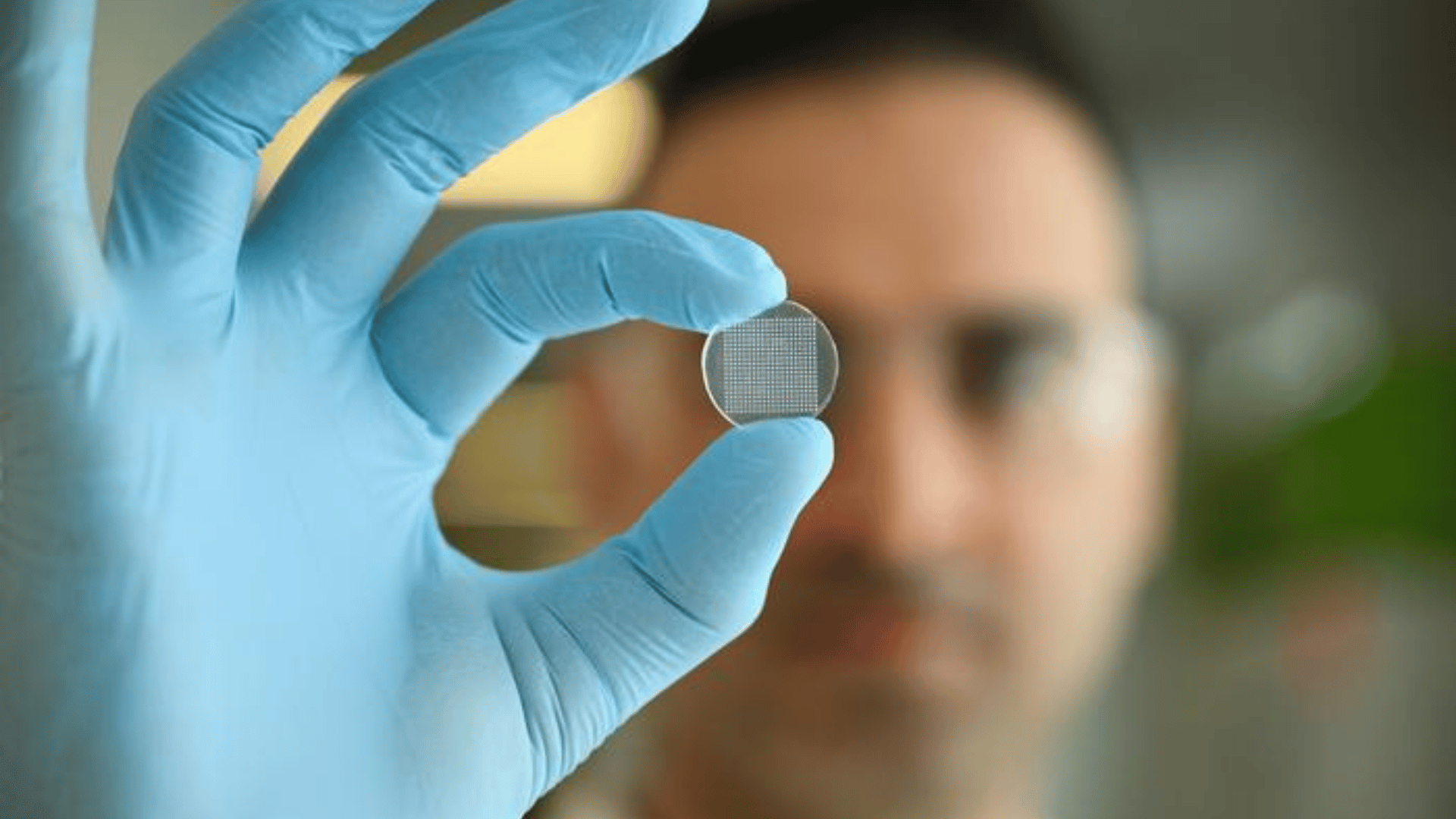 The microneedle skin patch is about the size of a quarter; Photo: The Jackson Laboratory
The patch is covered in hundreds of tiny, microscopic needles made from a safe polymer and coated in a seaweed-based gel. These needles only touch the very top layer of your skin, avoiding nerves and blood vessels.
When you put the patch on, it basically “wakes up” a small group of local immune cells. These cells then send out an alarm that draws in other specialized cells from your bloodstream. The patch’s gel soaks up those cells and other inflammatory signals, giving doctors a clear picture of what’s happening inside your body.
“Traditionally, studying some of the most important immune cells in the body requires a skin biopsy or blood draws. Because many of these cells live and respond in tissues like the skin, accessing them has meant invasive procedures,” said Sasan Jalili, a researcher at JAX. “We’ve shown we can capture them painlessly and noninvasively instead.”
“This is especially important in sensitive or visible areas like the face or neck, where people often don’t want biopsies because of scarring, as well as for older adults, frail patients, and very young children or infants,” Jalili added.
Testing For Skin Conditions
Moreover, researchers are already testing the patches on humans to study skin conditions like psoriasis and vitiligo. The team explains that the patch is easy to use, and it might eventually allow patients to monitor their own flare-ups from home.
Additionally, it could improve how doctors track cancer treatments or see if a vaccine is working. “This study marks the first demonstration of live human immune cell sampling using a microneedle patch,” Jalili explained. “This opens the door to a new way of monitoring immune responses that’s practical, painless, and clinically feasible.”