
Research into a popular sleeping aid has some scientists worried about long-term usage.
A recent analysis of adults with insomnia, which has not yet been peer-reviewed, found that people prescribed melatonin for more than a year are at greater risk of heart issues.
Among more than 130,000 adults across multiple countries, those who were prescribed melatonin long-term had an 89 percent higher risk of heart failure over five years, and were twice as likely to die from any cause, compared with those not prescribed melatonin.
Watch the clip below for a summary of the findings:
 frameborder=”0″ allow=”accelerometer; autoplay; clipboard-write; encrypted-media; gyroscope; picture-in-picture; web-share” referrerpolicy=”strict-origin-when-cross-origin” allowfullscreen>
The findings are preliminary and don’t change current health recommendations. They do not necessarily mean that melatonin – the fourth most popular natural product taken by adults in the US – is causing dangerous repercussions.
What the results do suggest is that longer-term uses of melatonin need to be studied further to ensure they are safe.
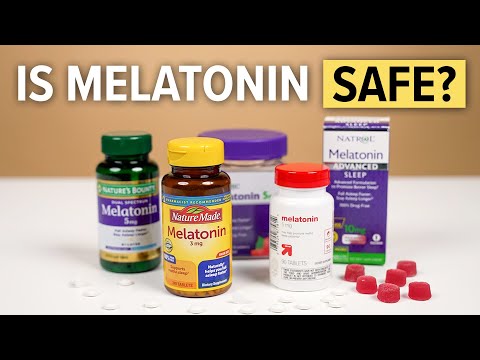
Melatonin is typically considered safe and well-tolerated for short-term use among those who are not pregnant or breastfeeding. That means around 1 to 2 months.
There are limited studies on the supplement’s effects after that time, a situation that some researchers believe should be remedied, especially as the supplement grows in popularity.
 frameborder=”0″ allow=”accelerometer; autoplay; clipboard-write; encrypted-media; gyroscope; picture-in-picture; web-share” referrerpolicy=”strict-origin-when-cross-origin” allowfullscreen=”allowfullscreen”>
The research was presented last November at the American Heart Association’s Scientific Sessions.
“Melatonin supplements may not be as harmless as commonly assumed,” medical scientist Ekenedilichukwu Nnadi at SUNY Downstate/Kings County Primary Care in New York said at the time.
“If our study is confirmed, this could affect how doctors counsel patients about sleep aids.”
A melatonin supplement replicates a hormone naturally produced by the brain to help keep the body’s internal clock ticking. Taking this substitute at the end of the day can help some people fall asleep and stay asleep.
In the US and many other nations, melatonin supplements are available over the counter, which means patients can take them without medical guidance or supervision on dosage or length of use.
While some studies suggest that long-term melatonin use is safe, comprehensive research is lacking.
Among other countries, the recent analysis from Nnadi and colleagues in the US analyzed the electronic health records of adults in the US and also in the UK, where melatonin is only available by prescription.
A secondary analysis found that those who took melatonin for over a year were almost 3.5 times as likely to be hospitalized for heart failure when compared to those not taking melatonin.
Plus, the risk of dying from any cause jumped from 4.3 percent to 7.8 percent between groups.
The research is concerning, but the findings should be approached with caution. The study’s methodology has a major limitation.
Participants were not surveyed on their melatonin use. Their prescription records were used to gauge who was taking what. This means that the control group (those who did not take melatonin) may have included, for example, people in the US who took melatonin without a prescription.
Carlos Egea, President of the Spanish Federation of Sleep Medicine Societies, who was not involved in the study, noted this caveat in an expert reaction to the research. However, he still takes the study’s associations seriously.
“These findings challenge the perception of melatonin as a benign chronic therapy and only highlight the need for a prospective trial with a control group to clarify its safety profile,” argued Egea.
Related: Study Ties 5 Subtypes of Sleep With Distinct Health And Lifestyle Patterns
Even in the short term, melatonin can come with downsides that many users aren’t aware of. For instance, a series of non-fatal overdoses among children in Australia has raised questions over the safety profile of the supplement for certain age groups.
Melatonin products might be based on a natural hormone, but that doesn’t mean there aren’t risks.
The findings were presented at the American Heart Association’s Scientific Sessions.
An earlier version of this article was published in November 2025.