The Evanston Human Services Committee unanimously passed a motion to refer more than $870,000 over the next three years to address the lower life expectancy for residents of the Fifth Ward by extending the city’s Pathways to Wellness program from a one-year pilot to a three-year initiative. The motion will now go to the Finance and Budget Committee. If approved there, it will be sent to City Council for final approval.
If the money is ultimately approved, it will mark the second time in two years city funds have gone towards the issue. In September 2024, the City Council unanimously approved allocating $400,000 of American Rescue Plan Act (ARPA) funds to pay for a one-year pilot of the Pathway to Wellness program. The goal of the program is to improve health outcomes for Evanston’s most vulnerable populations, specifically focusing on hypertension.
The committee believes the money is essential to address the 13-year difference in life expectancy between residents in the Fifth Ward and residents who live in Northeast Evanston. According to 2022 data from the city’s Process for Local Assessment of Needs, residents in the Fifth Ward have an average life expectancy of 75.5 years, while residents who live in Northeast Evanston have an average life expectancy of 88.8 years.
If the plan is put into place, Dr. Elizabeth Lynch of Rush University Medical Center would lead a team of health professionals, alongside Neticia Blunt-Waldron of Evanston’s Whole Woman Fitness to implement it in three phases. The first phase would provide a community blood pressure screening to identify residents with undiagnosed hypertension, followed by a 12-week lifestyle program for residents with high blood pressure. Then, the final phase would refer participants who need additional care to community-based medicine management programs or to a primary care physician.
Of the $400,000 approved in 2024, $56,000 has already been spent on program design through the Human Services Fund and $344,000 remains available from that fund, according to a memorandum from the city. The motion passed Monday by the Human Services Committee recommends that an additional $871,674 from the city’s Water Fund will go towards correcting life expectancy discrepancies. The program, which would total more than $1.2 million, will serve 100 residents. Of the total cost, roughly two thirds of the money would be spent on metrics to gauge the program’s effectiveness.
While the request was unanimously approved, some committee members did raise questions about the price of the program.
Krissie Harris, committee member and Second Ward councilmember, asked if there were other ways they could address the gap without the program.
“I’m looking at a program that is expensive … I feel like there are aspects of this, a majority of the aspects in this, can be done in-house with our own health department,” Harris said.
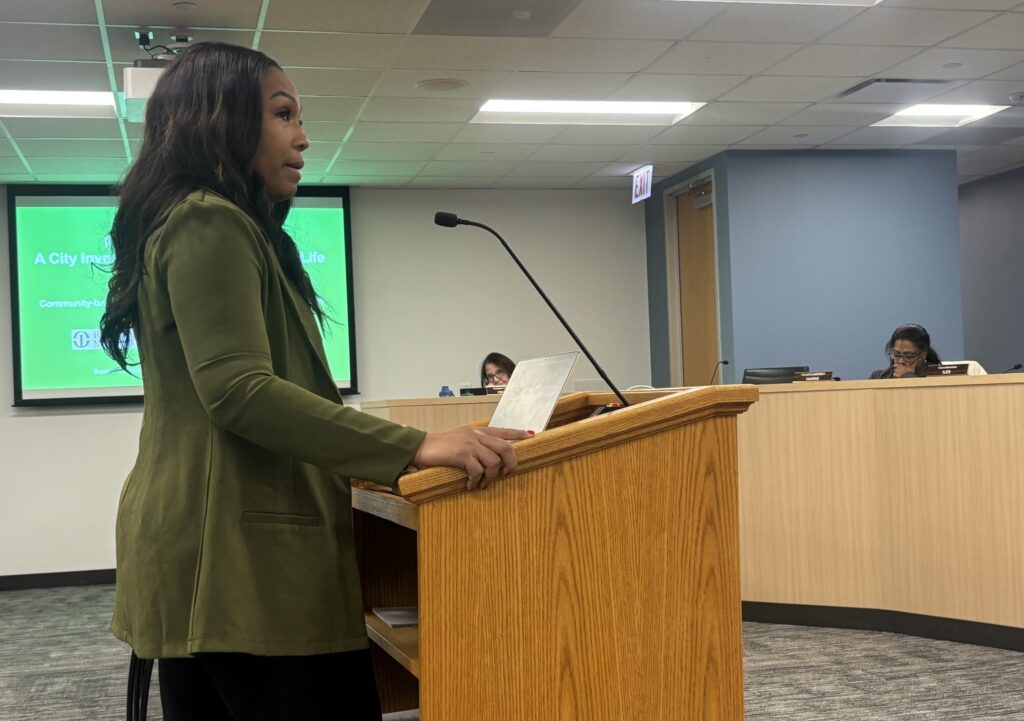
In response, Neticia Waldron, the program designer and owner of Whole Women Fitness in Evanston, said the program would using existing resources, like the Evanston Community Health Hub, but more needs to be done.
“Since we know that these resources are there, it makes perfect sense to use them to sustain programming in the community,” she said. “The data shows that we need more than what we have, and we currently don’t have it cohesively collected to close the gap.”
Lynch said because of the in-depth research and relationship with the city’s health department, this program can offer proof as it continues.
“It’s extremely admirable that this request was made to do a rigorous evaluation of this because there is a lot of money going into health programming that is not effective,” Lynch said.
Waldron explained that for residents of the Fifth Ward, chronic disease and heart issues are two of the most prominent but preventable causes of death, adding that that both of her grandmothers and mother died from heart disease before reaching the age of 65.
“So I stand before you, not just as a healthcare administrator of over 20 years, not just as a business owner here in the Evanston community… but I stand before you as a 44-year-old matriarch,” Waldron said. “I’m the oldest woman in the family, that should not be normal.”
Components of the Pathway to Wellness program include lifestyle change support like physical activity and nutrition advice, community-based blood pressure screening through the Community Health Hub and community-based medications management from a nurse practitioner.
“We have sat together and reworked this program to make it applicable to our city and to formulate it in a way that it is meaningful and impactful to everyone … we realize that the power isn’t just in treatment but it’s in prevention and it’s also in systematic change,” Waldron said.
Related Stories