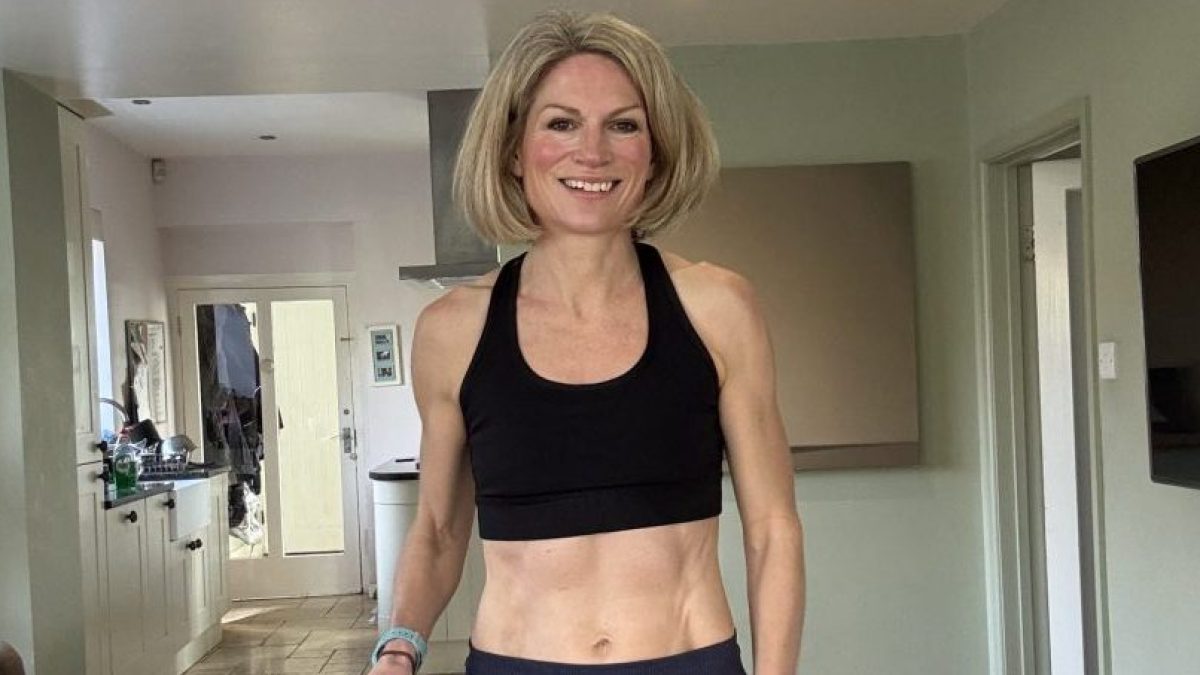
Just 19 seconds on this left my core, glutes and arms shaking as I collapsed on the carpet
From the plank to weight machines, via Russian twists, leg raises and bicycle crunches, I’d tried pretty much every exercise possible to strengthen my abdominals, which, for a 47-year-old mum of two, were reasonably steely.
So when I heard about a £119.95 gadget that promised to work my core “more intensely than anything you have ever done before”, I rolled my eyes. Not only was I pretty sure this wasn’t true, but I believe in fitness (as in life), hard work and discipline trump gimmicks any day – especially at that cost.
Then I tried the Core Master and decided perhaps there is a place for a device that looks a bit like the pogo ball I used to jump on as a kid in the 80s in my fitness regime, after all.
New FeatureIn ShortQuick Stories. Same trusted journalism.
Just 19 seconds on this balance-based exercise board left my core, glutes and arms shaking as I collapsed prone and humbled on the carpet, questioning everything I thought I knew about my body, my muscles, my stamina.
But I brushed myself off, got back on my board and kept trying. Three months later, with just a minute’s practice a day, my core is stronger than ever.
The muscles on my stomach are more visibly defined, yes, but those on my back are bolstered too, making me feel more stable, whether I’m doing deadlifts or hauling myself out of bed in the morning. A strong core is critical for good posture, a healthy back and injury prevention and psychologically, it’s helpful too. With the centre of me strong on the outside, I feel more emotionally resilient and, well, centred.
So what exactly is the Core Master and why is it so challenging? At its most basic level, you put your forearms on either side of a rotating ball in the middle of the board and hold a plank, which sounds simple enough, especially if you can hold a regular plank for several minutes already. But, you’re braced against a fixed surface in a regular plank. With the Core Master, you’re balancing on a small ball. “When you remove the floor, you trigger the mechanoreceptors (that detect change) in your joints and connective tissue,” explains the Core Master’s creator and personal trainer, Dean Varga. “These sensors send a high velocity feedback loop to the brain demanding constant micro adjustment.”
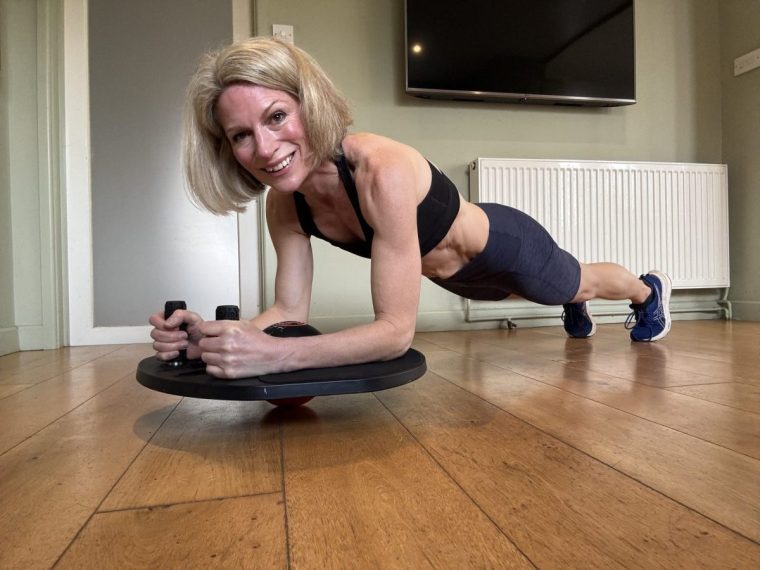 The Core Master targets often forgotten deep transversus abdominis (TVA) muscles that wrap around your core and the multifidus muscles along the spine
In other words, it burns like hell, targeting often forgotten deep transversus abdominis (TVA) muscles that wrap around your core and the multifidus muscles along the spine (both critical for stabilising your spine) far more ferociously than a regular plank. “It hyper fires the small stabilising muscles,” says Varga. “You aren’t just getting stronger – you’re educating your nervous system to protect your spine automatically.”
The obliques and “showy” six-pack muscles are also worked, says Varga, 43. “But it doesn’t stop there. To maintain structural integrity on the board, you have to engage the glutes, the lats (latissimus dorsi – the large flat muscles on your back) – they lock the pelvis and spine into place. It’s a total body workout that forces the entire system to work together.”
He came up with the Core Master after getting clients to do planks on his old balance board – an elevated board that wobbles. “Everyone used to comment how they could feel their core a lot more,” he said, deciding “it would be great if we could take that balancing plank on the move. So that’s where I got the idea of the roller ball.”
A trained engineer, he made a prototype in his nan’s garage in 2016. Feedback from clients was “awesome”, and since the Core Master was launched in 2020, it’s won fans from former footballer Rio Ferdinand, to former Prime Minister Rishi Sunak and presenter Kirsty Gallacher, who described it as “the best workout of my life”.
I was already happy with my existing workout, however: 55 minutes of simple, cheap weight training in my kitchen every other day. But after writing about the 10 minutes of ab exercises in it (which currently include weighted Russian twists, side planks and leg raises) last November, I got a message from Core Master HQ: would I like to try their product? They asked twice. I relented out of politeness, holding out no great hope.
Precisely because it was so hard, I felt compelled to carry on. Over the next month, I worked my way from holding a 19-second plank to holding one minute, substituting the regular plank in my kitchen workout for the Core Master version and doing an additional minute on the days I wasn’t lifting weights. Of course, my other exercises still contribute to my strong stomach, but this one has turbocharged it.
Varga advises beginners start with 20 seconds every other day with their knees on the floor, which shortens the “lever” between feet and arms to make the exercise easier (advice I would have been wise to take), working their way up to 180 seconds, or three minutes, a day, which could be split into sets.
I’ve progressed to holding the board’s removable handles and twisting side to side from my waist – like steering a car, but more stressful – and dabbled in bending my knees and rolling back on the board to my feet, before returning to the start position – “to add a leg workout into the mix, which really gets your heart rate up,” says Varga. He has devised 100 exercises for the Core Master, from press-ups and mountain climbers to ab extensions where you roll your arms on the board out in front of you “to increase that lever. You can certainly feel it for a few days after.”
The cost is, of course, substantial, and it’s worth proving you can maintain a fitness regime and would therefore actually use it, before investing. Cheaper options include Swiss Balls and Medicine Balls, balance cushions – air-filled discs – which are around £15 on Amazon, and wobble boards, around the same price, all of which you can put your hands on to intensify a plank through the added challenge of balance.
Arguably, none are as versatile as the Core Master, but they’re a good place to start – and a good reminder for the most committed exercisers that there’s always room for improvement.