Catholic Health World, the official newspaper of the Catholic Health Association of the United States, featured St. Peter’s Health Partners (SPHP) and St. Joseph’s Health as part of its article on Trinity Health’s system-wide efforts to address food insecurity.
 Eric Stone
 Sheilah McCart
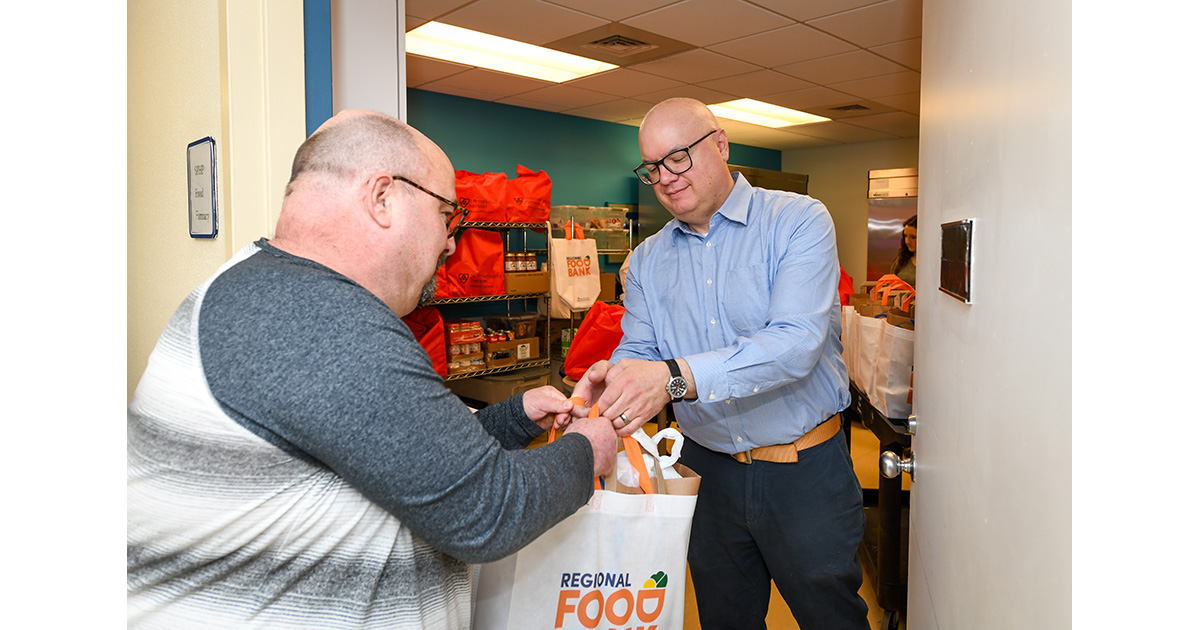
Featured in the article were Sheilah McCart, manager of community engagement, community health and well-being at SPHP; Eric Stone, director, community health and well-being at St. Joseph’s Health; Dr. Daniel Roth, Trinity Health executive vice president and chief operating officer; and Carolyn Alessi, regional director of community health and well-being at Trinity Health of New England.
From the article:
At Trinity Health’s St. Peter’s Health Partners in Albany, New York, and St. Joseph’s Health in Syracuse, New York, patients and community members have gained access to healthy food and improved their health outcomes through the Food Farmacy program.
Representatives from those hospitals’ community health and well-being departments say Food Farmacy has been a success, in large part because the program has a screening system to identify people who could most benefit from chronic disease management. It also has a behavior change model that provides participants with education and resources to promote lasting results, access to professionals to coach people and help them navigate the system, and access to multiple sources of nutrient-rich food.
Eric Stone, director of community health and well-being for St. Joseph’s Health, says, “Our focus has been on the education and social care pieces.”
Sheilah McCart, manager of community engagement, community health and well-being at St. Peter’s Health Partners, says it is critical for health care providers to address nutritional deficiency, especially as it relates to chronic disease management. Lack of healthy food “leads to so many chronic diseases, including diabetes and hypertension. In pediatric patients, it can cause learning issues. For pregnant women, it can lead to gestational diabetes, which can lead to poor pregnancy outcomes,” she says.
In both the Albany and Syracuse areas, there are neighborhoods with few or no grocery stores selling fresh, healthy foods. McCart says the cost of living has been escalating faster than many people’s paychecks. This has resulted in high levels of food insecurity, she says. Many people eat cheaper, heavily processed convenience food that doesn’t nourish their bodies. There is a high level of nutrition-related chronic disease in these low-income areas, she says.
Click here to read the full article.