Key Takeaways:
Nordstrom Rack is reframing off-price beauty as a distribution strategy, not a markdown channel.With cross-banner shopping behavior and high-income, brand-aware consumers, Rack functions as a funnel into the broader Nordstrom ecosystem.Through partners like Beautyspace and disciplined hero-SKU assortments, brands are entering off-price with pricing integrity intact.
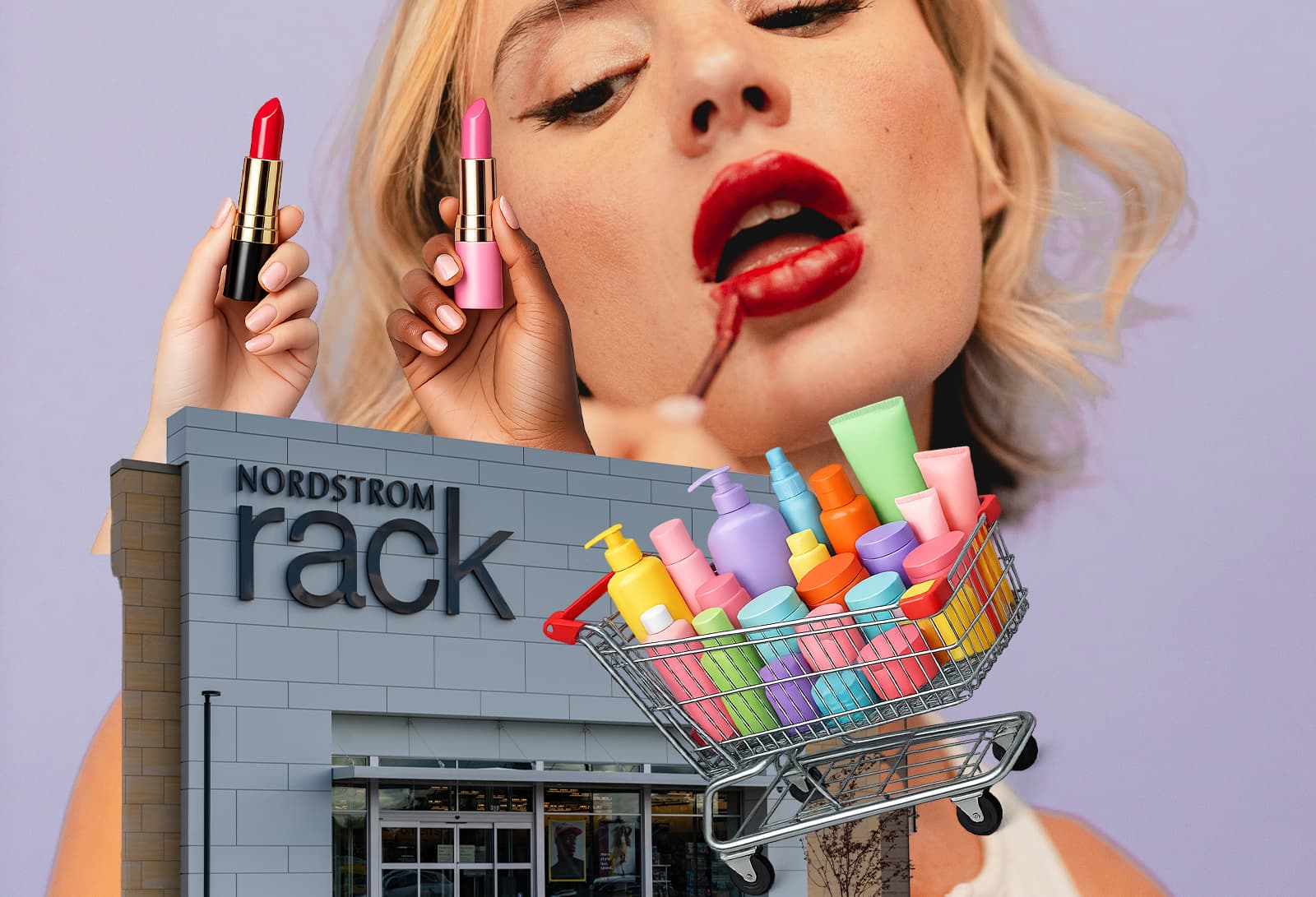
In beauty, the term “off-price” can be seen as the last player picked, only useful in moments of inventory stress, but rarely positioned as a strategic growth channel. That framing, however, is shifting; inside Nordstrom Rack, this evolution is particularly pronounced. As parent company Nordstrom Inc., which went private last year, continues to operate a multibillion-dollar retail ecosystem spanning full-line department stores and Rack locations nationwide, the off-price banner has increasingly become both a proximity play and a customer acquisition engine.
Nordstrom Rack banner net sales in the fourth quarter increased 1.2%, or increased 6.6% excluding the 53rd week, and comparable sales increased 3.5% compared with the same period in fiscal 2023. Full-year Nordstrom Rack comparable sales increased 4.7%. Notably, beauty within Rack is not being treated as a clearance category, but as an access strategy.
“Nordstrom Rack offers both prestige and mass beauty brands in one convenient destination, catering to how our customers like to shop,” a spokesperson at Nordstrom said to BeautyMatter. “Nordstrom Rack stores are conveniently located where customers live and work, providing easier access to their favorite beauty products.” The language is deliberate. This channel is less about excess inventory and more about physical adjacency.
The Full-Price Off-Price Model
Perhaps the most defining element of Rack’s beauty architecture is that much of its assortment is sold at full manufacturer’s suggested retail price (MSRP). “We offer the same beauty brands customers know and love at Nordstrom, at Nordstrom Rack’s full price,” the spokesperson said. That includes prestige mainstays such as MAC, Clinique, Kiehl’s, Charlotte Tilbury, Lancome, and Drybar. Also, the global off-price retail market was valued at $317.4 billion in 2024 and is growing at a CAGR of nearly 8%, according to Market.US. North America accounts for the lion’s share of sales—42.8%, or $135.8 billion.
This pricing discipline directly addresses one of the most persistent tensions in off-price: dilution. The Rack narrative reframes the channel as distribution expansion rather than markdown dependency. “We know delivering great brands at great prices resonates with customers at the Rack,” the spokesperson said, “[and] our strategy starts with the premium brands we offer at Nordstrom. From there, we’ve identified nationally recognized brands that we know resonate with our customers both in stores and online. These brands differentiate us in the off-price retail space.” Differentiation here is about brand equity.
The Rack beauty shopper also complicates traditional assumptions about the off-price consumer. “Our Nordstrom Rack customer skews female, has a high household income, and is a premium shopper,” the spokesperson said. “We know the Nordstrom Rack customer is looking for that elevated treasure hunt where they can find brands at a good value, and our teams do their best to provide them with the quality that they expect from Nordstrom.”
In other words, the shopper is not abandoning prestige; she is integrating it into a high-low purchasing pattern that has become normalized across fashion and beauty. To support that behavior, Rack has leaned into format strategy. “Grab & Go Beauty items are available in all Nordstrom Rack stores, featuring travel-ready versions of select products that are larger than samples and highlight new trends, bestsellers, or must-try items,” the spokesperson said.
Initiatives like this introduce customers to prestige beauty and connect them with the full range of offerings at Nordstrom. Travel sizes function as friction reducers, as they often incur lower commitment, faster turnover, and gateway entry into brand ecosystems.
Cross-Banner Economics and the Curated Intermediary Layer
Rack’s role extends beyond store-level productivity. “We find that our customers shop across both banners (Nordstrom and Nordstrom Rack),” the spokesperson said, adding that Nordstrom Rack is also one of its top sources of new customer acquisition for Nordstrom Inc. This dual-banner behavior transforms Rack from a margin-compromising outlet into a funnel mechanism.
It also helps stabilize inventory flow without training customers to wait for markdowns because the pricing architecture remains intact. “At the Rack, we strive to deliver great brands at great prices and make shopping easy,” the spokesperson said. Convenience, scale, and proximity, rather than liquidation, are the operational levers here.
As off-price becomes more strategic, curated distribution partners are increasingly shaping how brands enter the channel. Noah Rosenblatt, President of Beautyspace, framed Rack-readiness as a question of brand architecture, not excess inventory. “From a curator perspective, a brand is ‘Rack-ready’ when it already carries strong consumer recognition and can translate that equity into high-velocity, self-explanatory sell-through,” he said to BeautyMatter.
Rosenblatt also added that it is less about discovery and more about accessibility; meeting the customer where they already shop and allowing them to engage with a brand they trust at a compelling value moment. In his view, hero products like from Touchland, matter more than experimentation. “The brand entered with clear visual identity, immediate recognizability, and a hero product that communicates function and desirability at a glance,” he said.
The dilution question is often overstated, Rosenblatt argued, if pricing integrity is preserved. “Our model is structurally protective because we operate at full MSRP,” he said, “[and] the customer is not being trained to wait for markdowns when they’re being given access.” That distinction—access versus discount—has become critical as retailers grow more analytical about channel frequency.
“Retailers are absolutely more analytical about channel frequency today,” Rosenblatt said. “The concern retailers are trying to avoid is training the customer to associate a prestige brand with discount dependency.” For Rosenblatt, curated distribution is no longer defensive inventory management. “Brands need partners that can operate in the space between those extremes,” he said. “When all three sides benefit simultaneously, the model stops being defensive inventory management and becomes a growth strategy,” he continued.
Brand Perspective: Alignment over Arbitrage
For participating brands, the appeal lies in alignment rather than arbitrage.
“Our brand, The Hair Edit, is all about providing luxury, department store quality products at an exceptional value,” Martin Okner, CEO of Fromm Beauty, parent company of The Hair Edit, said to BeautyMatter. Success in off-price, according to Rachel Lavipour, VP of Sales, is about ubiquity. “For us it is about making sure our brand meets her consumer wherever she chooses to shop for beauty and fashion essentials to elevate her every day,” she told BeautyMatter.
Operational discipline remains essential. “Since The Hair Edit products have been sourced and priced for the mass market, we have found a very strong alignment between our mass market and off-price selling prices,” Lavipour explained. Structurally, the channel is no longer episodic. “Consumers have been shopping high-low for years,” Okner said, adding that off-price is a highly strategic and important channel for brands to cultivate and nurture for long-term growth.
Off-price beauty is not expanding because consumers are trading down. It is expanding because consumers are shopping differently. Nordstrom Rack’s model—full-price prestige, curated hero SKUs, travel-led trial, cross-banner migration, and geographic proximity—signals a more sophisticated future for the category.
“Our beauty strategy at the Rack is focused on providing customers with convenient access to products and a sense of discovery,” the spokesperson said. In a market where pricing power is fragile and brand equity is hard-earned, Rack’s approach suggests that the future of off-price beauty will not be defined by discount depth, but by distribution architecture, pricing discipline, and meeting the premium shopper wherever they choose to engage.