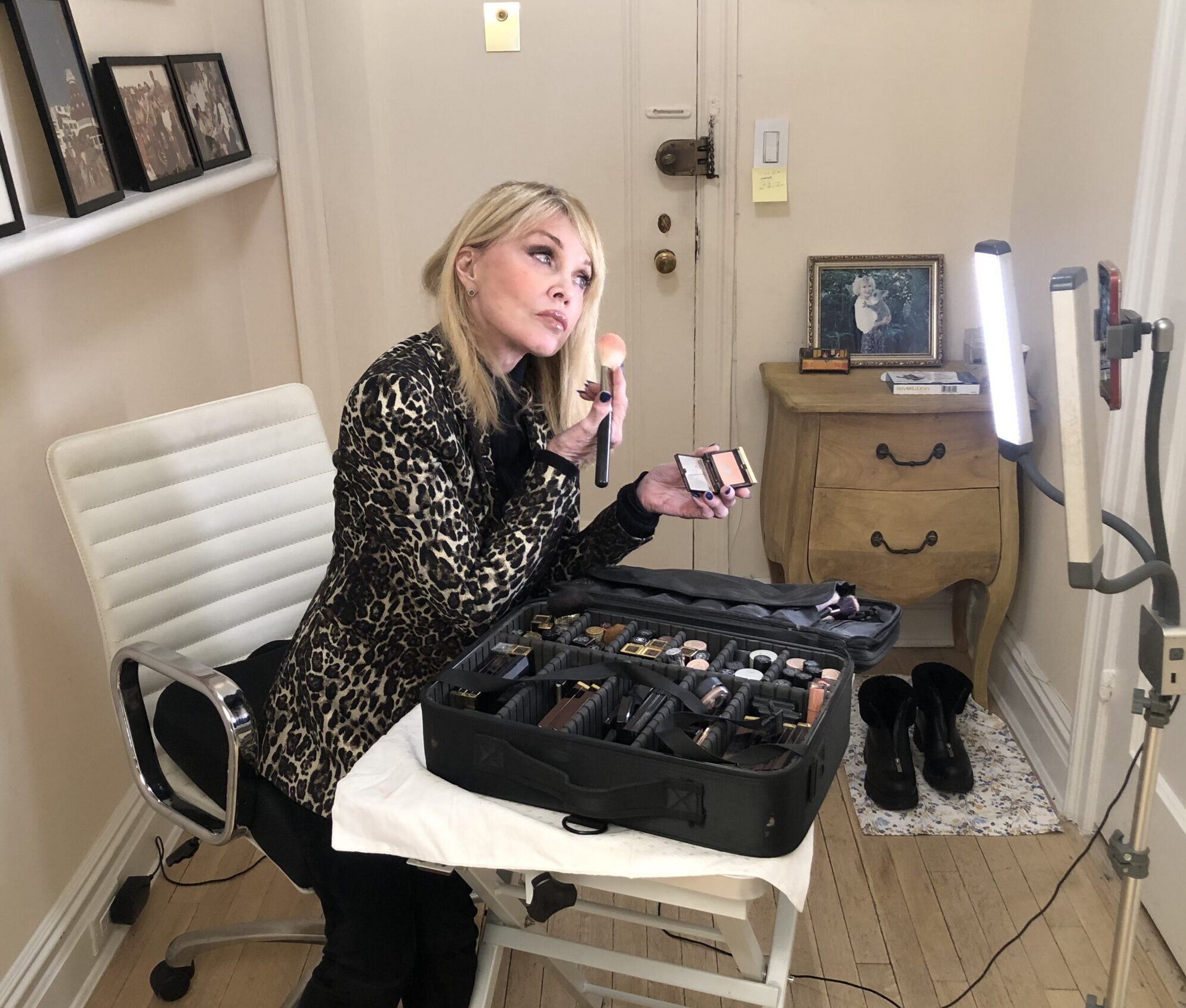
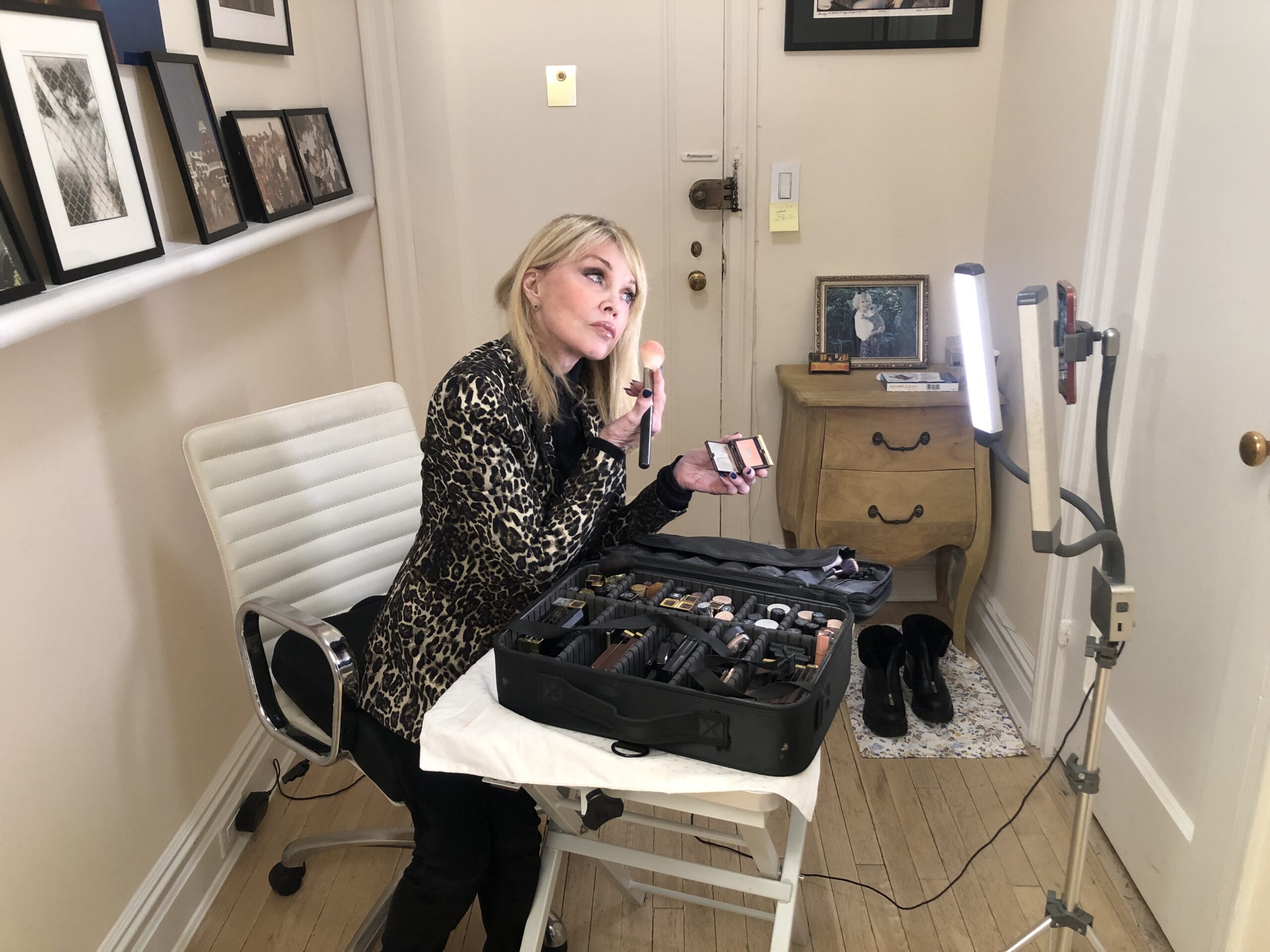
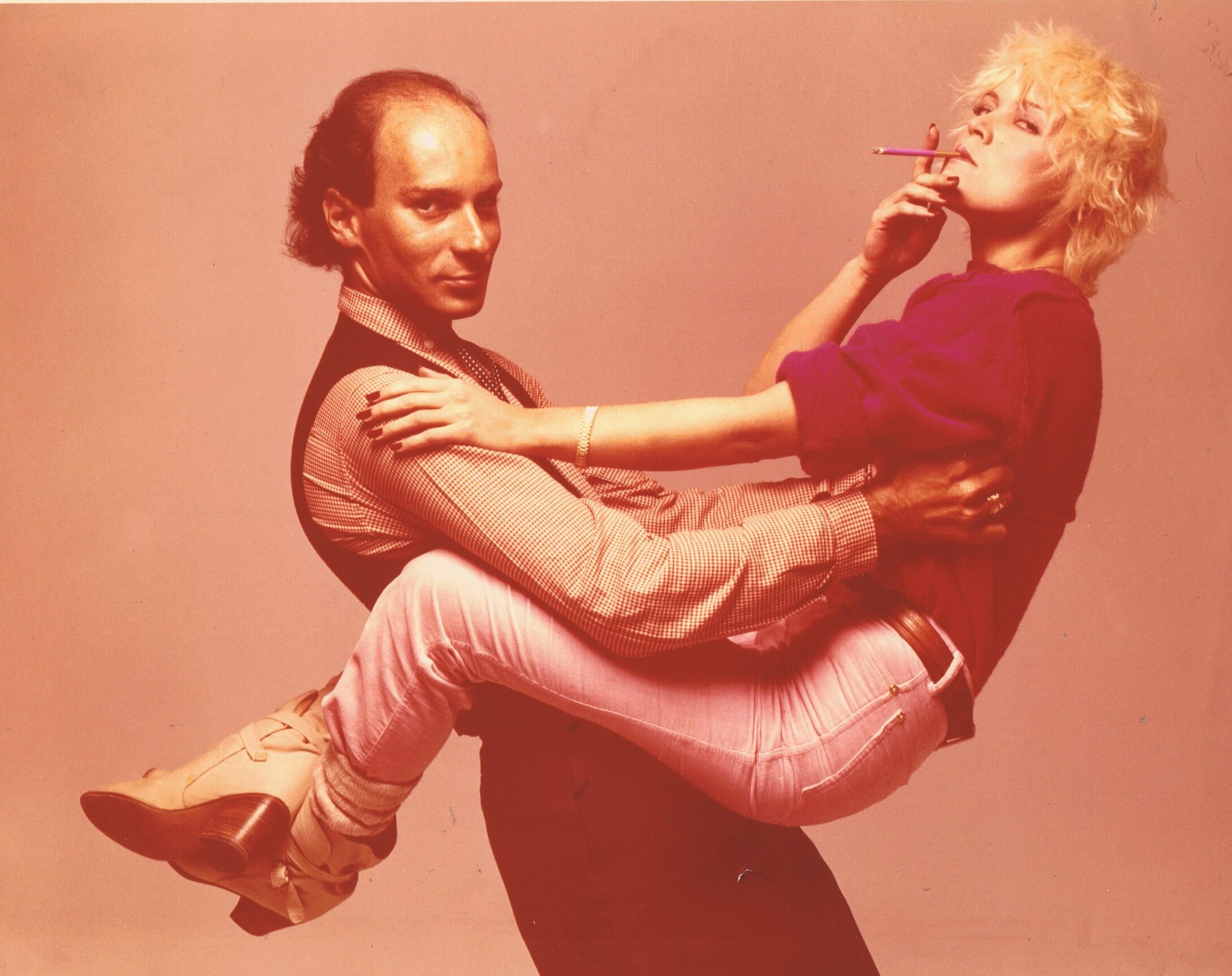
Sandy Linter, photographed by David Savage.
If Giorgio Moroder invented the disco sound, Sandy Linter gave it a face. The pioneering makeup artist threw out the early 70s demure day look for bold colors that matched a new, nightcrawling glamour. Vivid swoops of pigment on cheekbones, eyes metallic and dangerous, glossed lips—ready for pleasure. Linter understood it was about seduction after dark, under artificial light. “It was never meant to look natural,” she told me while leafing through her 1980 book Disco Beauty, now a collector’s item fetching $700 on eBay.
Now in the fifth decade of a storied career, Sandy still sports her signature look: Peroxide blonde hair framing a set of startling, aquamarine eyes. Her beauty is still impressive, and authoritative. It explains her new generation of fans, who avidly follow her posts on Instagram, ranging from cosmetic tutorials to photographic treasures from moments spent on set with Francesco Scavullo, Albert Watson, Deborah Turbeville and Richard Avedon; hair icons like John Sahag; and early supermodels like Patti Hansen, Lisa Taylor and the tragic beauty, Gia Carangi.
Last month, we met up at the Manhattan apartment she’s lived in since 1976, its walls lined with photos and its shelves stacked with leather-bound portfolios. “She was always number one for me,” attests Patti Hansen, a fellow Staten Islander. “She loved makeup and making women feel beautiful. She gave me a look that last a lifetime.”
———
DAVID SAVAGE: Before we get started, I just want you to have fun with this and not feel like I’m interrogating you. And if anything, just say…
SANDY LINTER: I know how to say “next question.” [Laughs]
SAVAGE: Okay. So, I know you grew up in Brooklyn.
LINTER: Born in Brooklyn, left when I was two years old. I grew up in Staten Island.
SAVAGE: Where’d you go to high school?
LINTER: Curtis High School.
SAVAGE: What kind of high school was that?
LINTER: I’m 12 years old, walking to Curtis from my apartment, and all I see ahead of me are teenage boys smoking with that doo-wop hairdo, and the girls with busts and fabulous flair skirts and chewing gum. I was in over my head.
SAVAGE: At that time, were girls trying to look older than they were?
LINTER: Yeah. I looked 12, so I would do everything in my power not to look 12. I had no skills, I just knew that I needed to step it up.
SAVAGE: And Staten Island probably wasn’t the easiest place to grow up in.
LINTER: Oh, it was fabulous. I grew up in Dongan Hills, in a project. But we were the first families in that project, so everything was clean and new. And since I’m a baby boomer, there were millions of kids all over the place. I had so many friends. I loved my childhood.
SAVAGE: Who did you first make up?
LINTER: My mother was a very beautiful woman, and she was a secretary, and I was about 15 years old. She had great clothes, a great sense of style. And we had Glamour Magazine, Bazaar, Vogue, all the issues. I would pour through them. My mother would buy makeup, fill the bathroom with all her goodies, and she didn’t know what to do with them. But instead of studying, I would go in the bathroom and play with the makeup. And one day at dinner my mother said, “Do you think you could do my makeup tomorrow morning like yours?” So the next day, I did her makeup—she had beautiful green eyes and red hair, so of course I did green eyeshadow, and she wore it to work. So subliminally, it gave me confidence, and I accepted the fact I was doing my mother’s makeup really well. And she loved it.
SAVAGE: Did your girlfriends start noticing that you were very skilled at makeup?
LINTER: Calm down. [Laughs] I wasn’t very skilled. I did my mom, and she loved it and I loved it, but my girlfriends were not asking me yet.
SAVAGE: So when you were pouring through the pages of Seventeen, that was the beginning of your love affair with makeup, beauty, cosmetics?
LINTER: I loved Seventeen. Then I got married in 1969 to a great guy named Adam Linter—that’s my last name to this day. He was kind of an entrepreneurial type of guy who didn’t have a nine-to-five job, so we got married and I didn’t know what to do. He said, “You love makeup, why don’t you go to beauty school?” And I thought, “Maybe that’s a great idea.” So I went to Wilfred Academy on Broadway, and it was the first time I was really in an integrated setting with gay guys and the first time I experienced Latina and Black culture. It was so much fun. It was like, I know I belong here. And I learned a lot.
SAVAGE: So let’s fast-forward. You eventually got a job at the Kenneth makeup counter at Bloomingdale’s, which was a pretty formative job because it was sort of your gateway to everything that came next, right?
LINTER: Yeah. This is 1970, and Bloomingdale’s was the it store. It was so fab, full of young people, it was sensational. It was like a club, practically, it had that kind of feeling. So I applied for a job at the Kenneth counter because he had a major salon in New York City. They put me behind the counter. At that point, I’d just come out of Wilfred Academy, so I had my look going on.
SAVAGE: What was your look?
LINTER: Platform goody two-shoes, a bright yellow sweater, a bright yellow and red mini skirt, big black suede platforms that tied around the ankle.
SAVAGE: Were you making up people right at the counter?
LINTER: At the counter I got by without ever using the cash register. I did not know how to ring up a sale, but I could make a sale. So I would be wearing everything from the counter on my face and a woman would walk by and say, “What’s that?” And I would ring it up. I never touched the cash register. I was so happy because I can’t add, subtract, multiply, or divide. But I was selling like hotcakes. It was all a testing ground for me. I was just jumping into it. And I’m not saying I was 100% good, but I was making people up a little bit.
SAVAGE: So this transitioned into you being hired for the Kenneth salon itself, and you began working there on site. Tell me about that experience.
LINTER: It was very formal. There was a grand entrance to the salon. Everything was Billy Baldwin-decorated, and [it was] clearly another place I knew I was out of my depth. The receptionist looked at me like, “Who are you, the new makeup artist? You’re not going to make it here.” But she was kind enough to show me the room right next to the reception desk that Mr. Kenneth had designed for Marilyn Monroe. Marilyn would park her car outside of the salon, keep it running, and she could run in, he’d do her hair, and then [she would] run out. And what hit me about that little room was that the walls and the ceiling were decorated in leopard fabric. I could never forget it.
SAVAGE: Naturally, people are going to want to know who some of your clients were.
LINTER: They were sending me all their wealthy women. I have a list of names someplace, but one day I kept hearing the name “Mrs. Onassis.” I kept hearing this buzz that she was on the fourth floor, and I think someone said, “She’s coming for makeup.” And there she appeared—she had white cream in her hair, I think that was a conditioning treatment, and she had her nylon stockings rolled down to her ankles. She was wearing a typical smock from the salon, and that floor did eyebrows and waxing and hair conditioning and straightening and makeup.
Then she sat down in my chair and she put her head back. I picked up my pencil to line her eye and she went, “Ouch.” So I looked at the pencil and I had forgotten to sharpen it, so I went back to my counter and I was shaking as I was sharpening this pencil. And when I walked back, she just had put her head back and closed her eyes, ready for me to continue. It wasn’t a big deal to her. But for me, I wanted to die. It came out beautiful. She has very large eyes, and they’re set far apart, so I took a wine-colored shadow in the hollow of her eye closer to her nose to draw her eyes a little bit closer together. She leaves and I love what I did, and I love what she allowed me to do. I told her to walk into that room so she could see herself full-length and she went, “Oh,” in that Marilyn Monroe voice. “It’s beautiful.”
SAVAGE: That’s sweet.
LINTER: Then maybe a week later, I went to Bloomingdale’s and one of the counter girls told me that Mrs. Onassis bought everything. Her housekeeper had gone there with the list of makeup and she purchased everything that I used on her.
SAVAGE: That’s a very big endorsement. You alluded to this when we first spoke, but the industry was dominated by men when you first got into it, right?
LINTER: Yes. Makeup artists and hairdressers. Women at that time believed that men knew more about what they should look like to please another man, so they would go to a male makeup artist.
SAVAGE: Do you feel like you were a pioneer in a way?
LINTER: Yeah, absolutely. I was one of them.
SAVAGE: So while you were still employed at Kenneth, you started getting bookings with magazines?
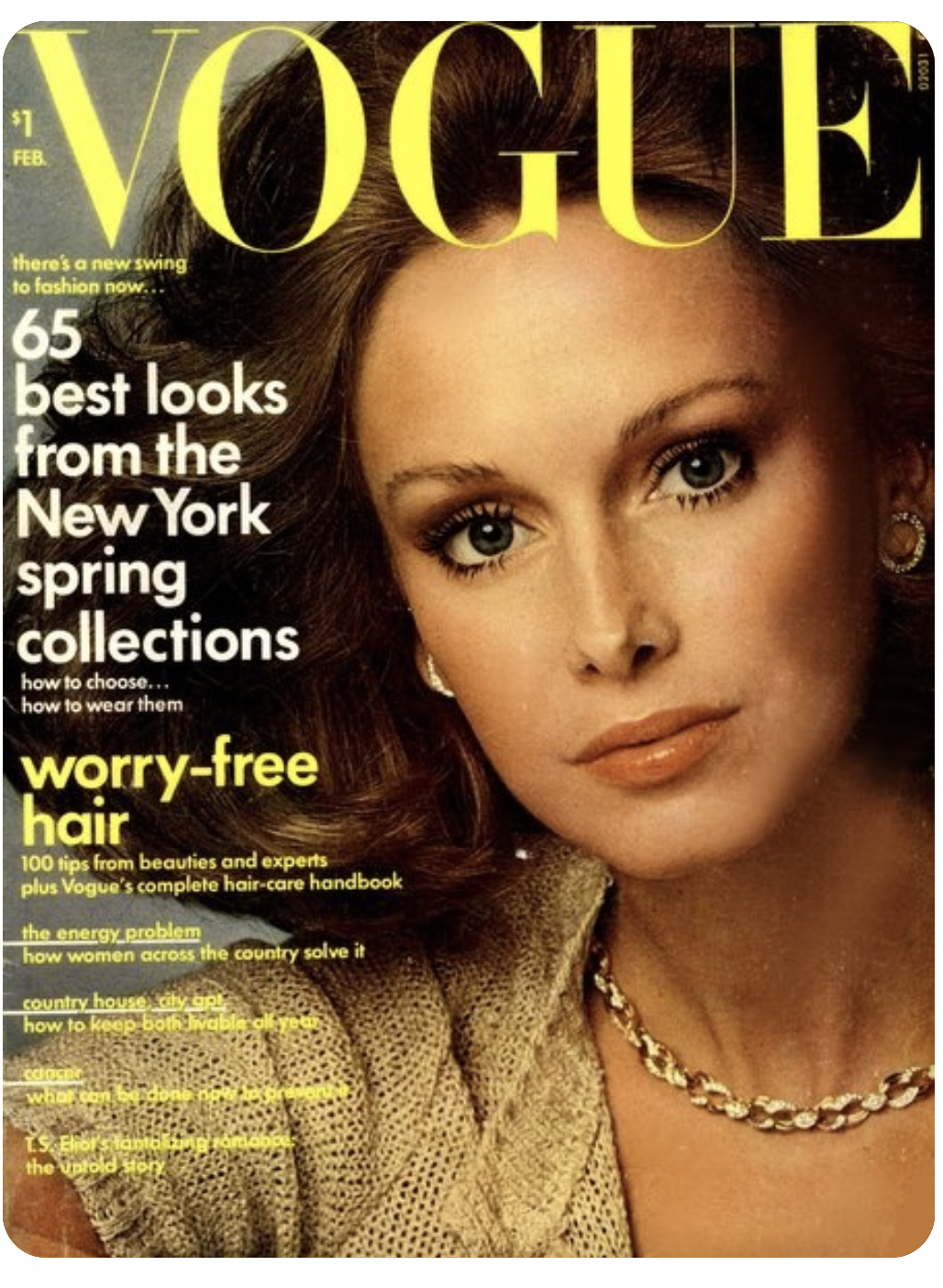
LINTER: One of my clients was Shirley Lord, and she was the beauty editor of Vogue. So she does a two-page article about me in Vogue with beautiful illustrations about the shades of colors that I was using that had never been used before, so the editors of Vogue want to know who I am. Polly Mellon brought an actress for me to make up one day, and then the next day she brought me another actress, and then it dawned on her very quickly, “Why don’t I just ask Mr. Kenneth if I could have Sandy for the day and she can do the whole shoot with us?” The new models did not know how to do their makeup. The older models, like Jean Shrimpton, knew how to do their hair. They had wigs and wiglets from the ’60s, but these young girls were clueless about putting themselves together for the camera. One of the first jobs Polly Mellon hired me for was with Karen Graham. Karen Graham could do her own makeup. She was so stunning and beautiful, but Polly wanted her to look different. So I did Karen’s makeup and I got the cover—10 beautiful, gorgeous pages inside, and that was my first shoot for Vogue.
SAVAGE: We’re now in the mid ’70s. How were the looks evolving? What did women want to look like?
LINTER: So when I did that first shoot for Vogue with Karen Graham, I did her with this real strong, cheap look, because that’s what I liked. Then it started to be trendy, and the blush started getting stronger, and then it started to get lifted and higher up and more contoured-looking. It was a lot of color. It was disco time. It was getting to be a lot of frosted shimmer shadows—very, very vibrant.
SAVAGE: How do you go to the office and work as a secretary, but with disco makeup?
LINTER: Now, let me explain. We ditched the false eyelashes. There was no heavy eyeliner. Maybe purple, maybe blue, maybe gold, maybe green shadows, but artistically applied. Then with a strong color on the cheek and lip gloss. Lip gloss was very big, and it was very new. But don’t forget, we had come out of the ’60s when women went to work in mini skirts. So what’s a little disco makeup?
SAVAGE: Let’s talk about [Francesco] Scavullo, another legendary photographer. Did he request you, or did the editor request that you go to Scavullo?
LINTER: That’s a good question. I would never know who requested me. My agent would tell me, “Tomorrow you go to Scavullo at 9:00.” They would never even tell me who was going to be there. There were no call sheets, just a telephone.
SAVAGE: How did you know what to bring?
LINTER: I didn’t know what to bring. [Laughs] And I had nothing on wheels. I had a makeup satchel. Now, I’m a little person, but I’d just hope it had all the right colors. But once I was at Avedon [Studio] and I did not know Beverly Johnson was going to be there. I call up my mother and I say, “Mom, go to my apartment…” She went to my apartment, she comes to Avedon Studio, drops off my foundation, and Avedon looks at her, and he said, “Who’s that? I’ve never seen anyone like that before in my life.” He said that to my mother. I was shocked.
SAVAGE: So you really impressed him?
LINTER: Well, my mom did. I did not impress him at all. But she was a beautiful woman. She had on a little white fur jacket.
SAVAGE: Like a chubby?
LINTER: Yes, a chubby.
SAVAGE: So back to Scavullo, what was he like? How did he work?
LINTER: Francesco loved people who performed. So if you came to his studio, you could be a nobody, but if you performed and if he liked what he saw on the camera on set, he was fine. He treated you very well. So he was good like that.
SAVAGE: Who were some of the other photographers? There was Chris Von Wangenheim.
LINTER: That’s a whole different cuddle of fish. One of the first shoots with Vogue was with Lisa Taylor, and the photographer Chris Von Wangenheim. I remember two shoots with him. The first shoot was in a club atmosphere, a beautiful club, with two beautiful models. One was Christina Steidten and the other one was Denise Hopkins. I made them up on set. There was no studio where I went to do the makeup, so if there was a bathroom, I took the girls in the bathroom. I think there was music playing, and the girls are in these slinky, sexy dresses, and they start dancing with the two male models. I’m like, “Boy, am I in the right place! I do not ever want to leave this.”
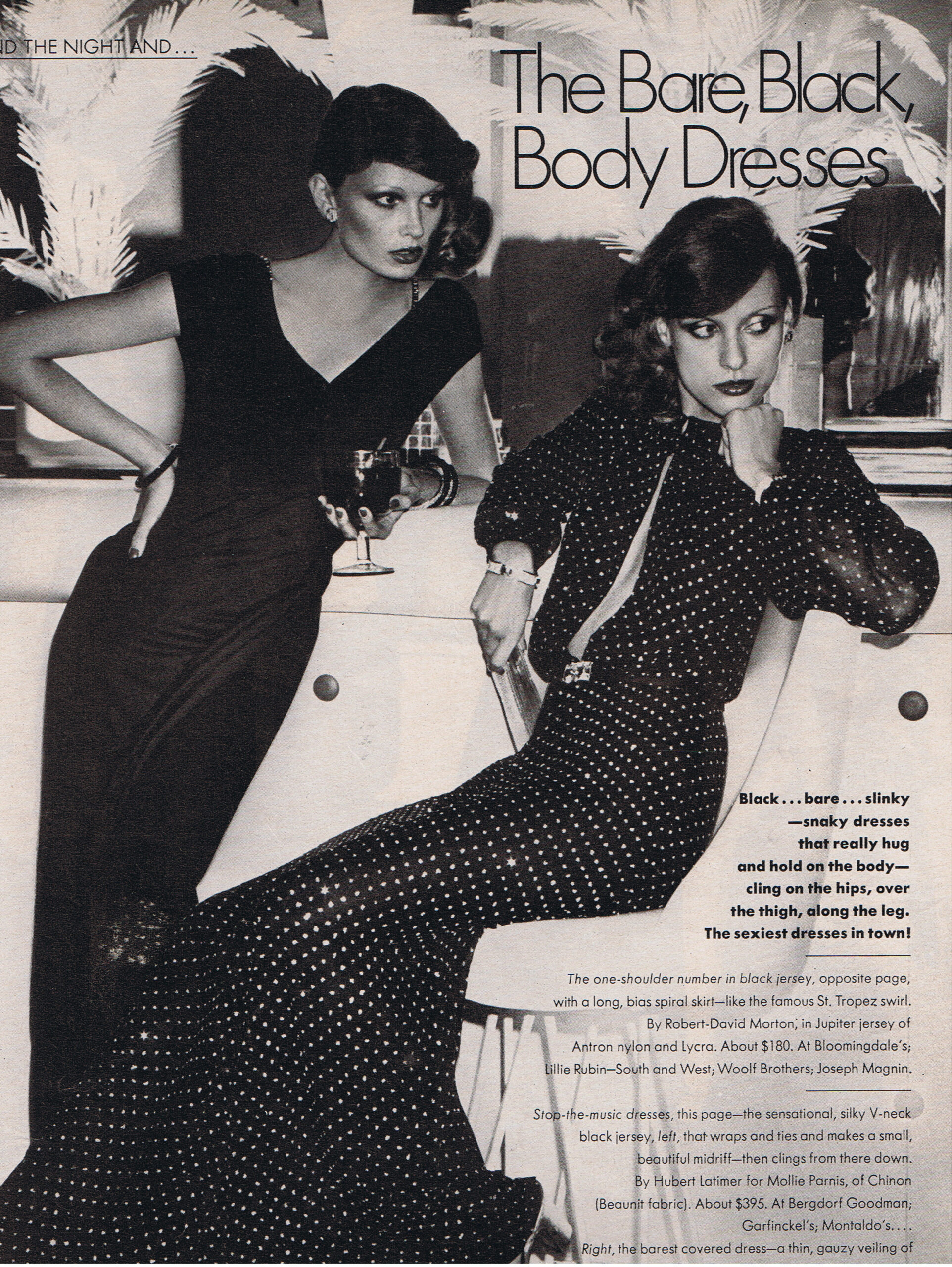

SAVAGE: And tell me about that famous Lisa Taylor.
LINTER: So the next day, I go to a Brownstone, and again I make her up on set and she’s 100% naked. I mean, she must have had a towel, but she slid into the bathtub and the stylist, Frances Stein, put this tray across Lisa’s lap that was very heavy. They loaded up with these beautiful bottles of the best perfumes that we had at the time and Chris positioned the perfume bottles so that you won’t see nipples. Nothing fazed her at all, and what I remember the most is just thinking, “Where did they get these ideas from?” I mean, it was such an incredible time to be included in this kind of fashion experience.
SAVAGE: Speaking of Lisa Taylor, she’s in a movie that a lot of people associate with that time period, The Eyes of Laura Mars.
LINTER: Joey Mills did the makeup.
SAVAGE: There’s this famous scene that was inspired by a shoot that you were on with Deborah Turbeville. What was she like?
LINTER: She was lovely. I just loved Debbie. She was quiet and very… bookish. Her references were all about the movies—old movies from the 20s and the 30s, that’s what she liked. I mean, she didn’t like anything new.
SAVAGE: Some other editorial highlights of yours are that you worked with Iman on her first assignment in New York and you made up Diane Von Furstenberg.
LINTER: Yes. Oh, Diane was lovely. Iman was sensational. I mean, I really worked with the best, best, best people. I was living my dream.
SAVAGE: You also had some run-ins. Frances Stein slapped you on set?
LINTER: Yeah. Listen, I don’t remember when Frances Stein slapped me, but she just flew off the handle. I liked her and she liked me because we worked together often, but it must’ve been something like, I wasn’t paying attention to her enough that day, so she slapped me. I mean, you can’t do that.
SAVAGE: Now, it’s almost unimaginable.
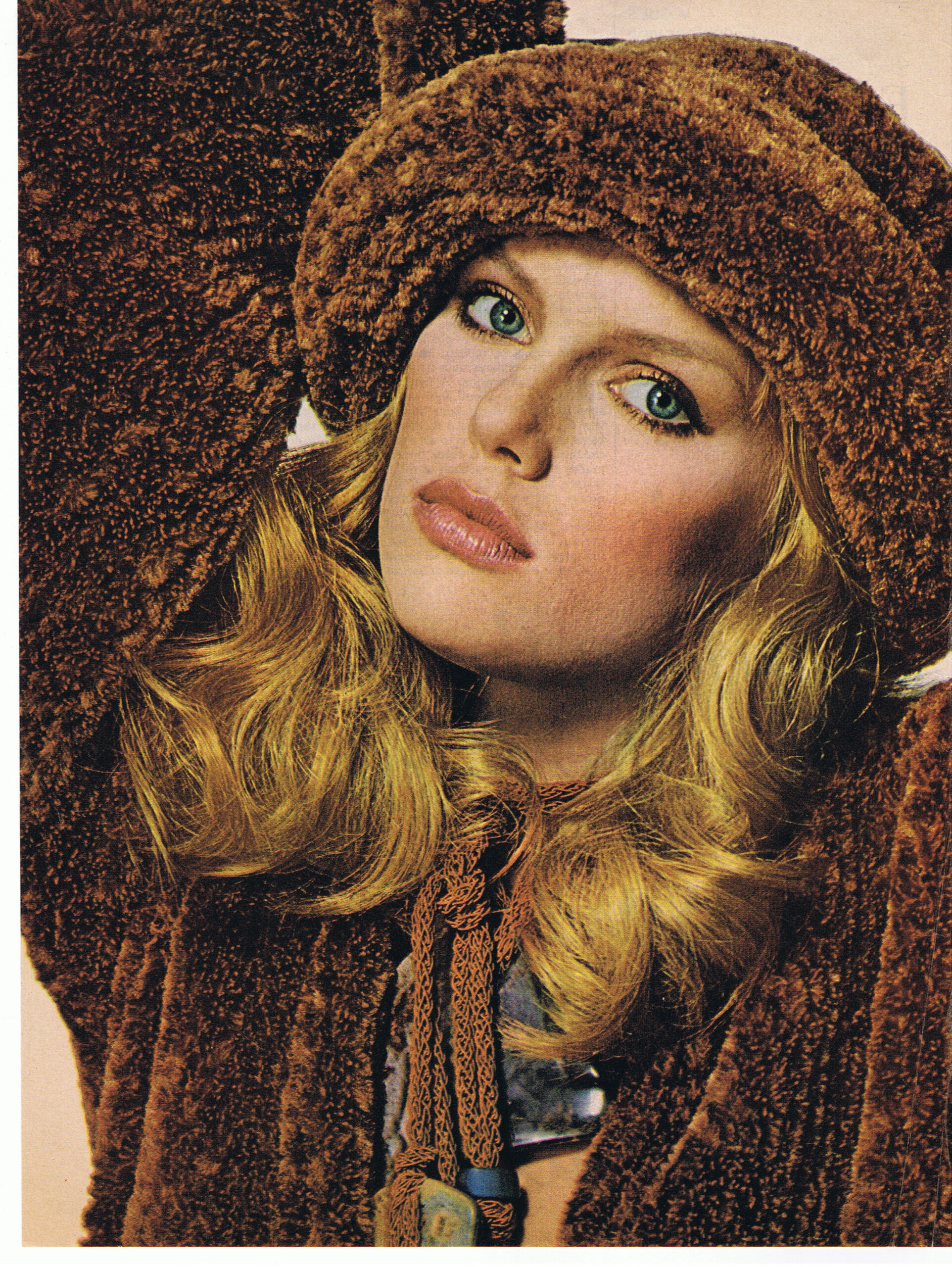
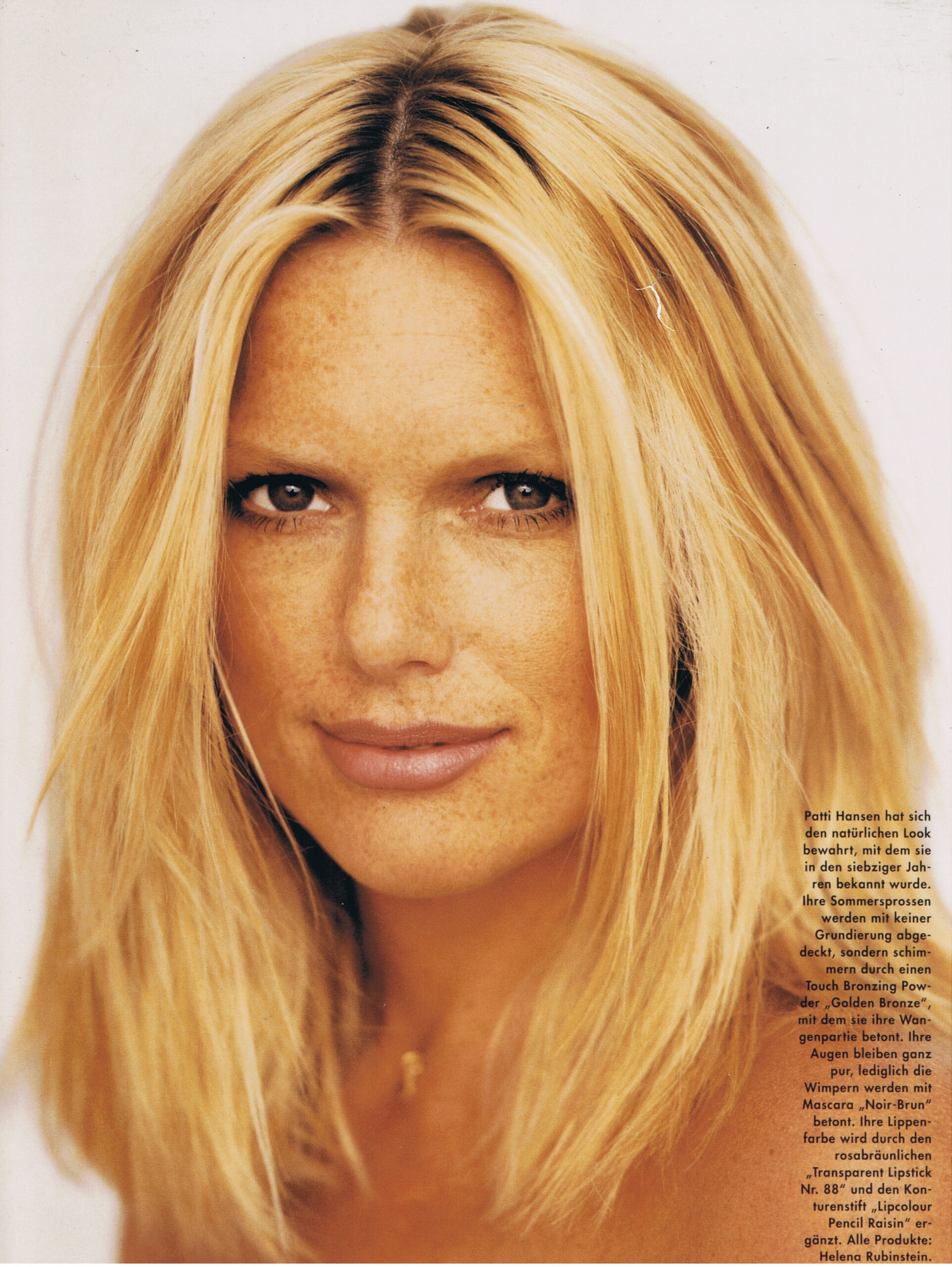
LINTER: Unimaginable. But I didn’t know there was anyone higher up that I could talk to about it. What was I going to do? So I just went back, cried, told my boyfriend about it. He owned a hair salon. He said, “Quit. Don’t work for them anymore.” And I thought, “I’m not going to let her make me quit.” So I didn’t. Then, another time, I was working for [Richard] Avedon for Vogue, and it was with Patti Hansen and Rosie Vela. And both of these girls, as young and new as they were, I had been working with them often for a lot of shoots for Vogue, especially Rosie Vela, especially Patti Hansen, so I knew how to do their makeup. Avedon comes into the dressing room expecting to see some sweet little makeup. But no, I had done a little bit of an Egyptian eye first. He comes in and he pushed me. He says, “You don’t know what you’re doing.” And because I’m lightweight, I hit the wall. And I left. I walked out crying. Polly sent me an apology letter, ’cause Polly was the editor that day. Vogue sent me flowers.
SAVAGE: Did you ever work for him again?
LINTER: I did, but it would be many years later when the two of us kind of forgot all about it. It was right before he died, actually.
SAVAGE: So at a certain point, you left Kenneth and you went out on your own and started working for a salon called Xavier Coiffure.
LINTER: I was working for Xavier Coiffure. He was my boyfriend. The music was playing and it was more boutique salon. It was very chic. But here’s what happened: my boyfriend cheated on me with my girlfriend. I was so heartbroken. I was crying every day. We had been living together, so we split up and all of a sudden I got this apartment. And my neighbor, Howard Fugler, came over one day and said, “Come on, we’re going to Studio. This new club just opened up.” I had heard rumblings about some fabulous new club. So he pulls me together and I wear my Fiorucci skirt, my Fiorucci earrings, all this crap. And we get down there and the street is bogged down with limos. And in front of Studio 54, there are these crowds and crowds of people. But Howard was on a mission. The doorman takes a look at the two of us and he goes, “Go in.” And we were in.
SAVAGE: So was this opening night?
LINTER: Yes, opening night.
SAVAGE: Wow. Very few people have those bragging rights.
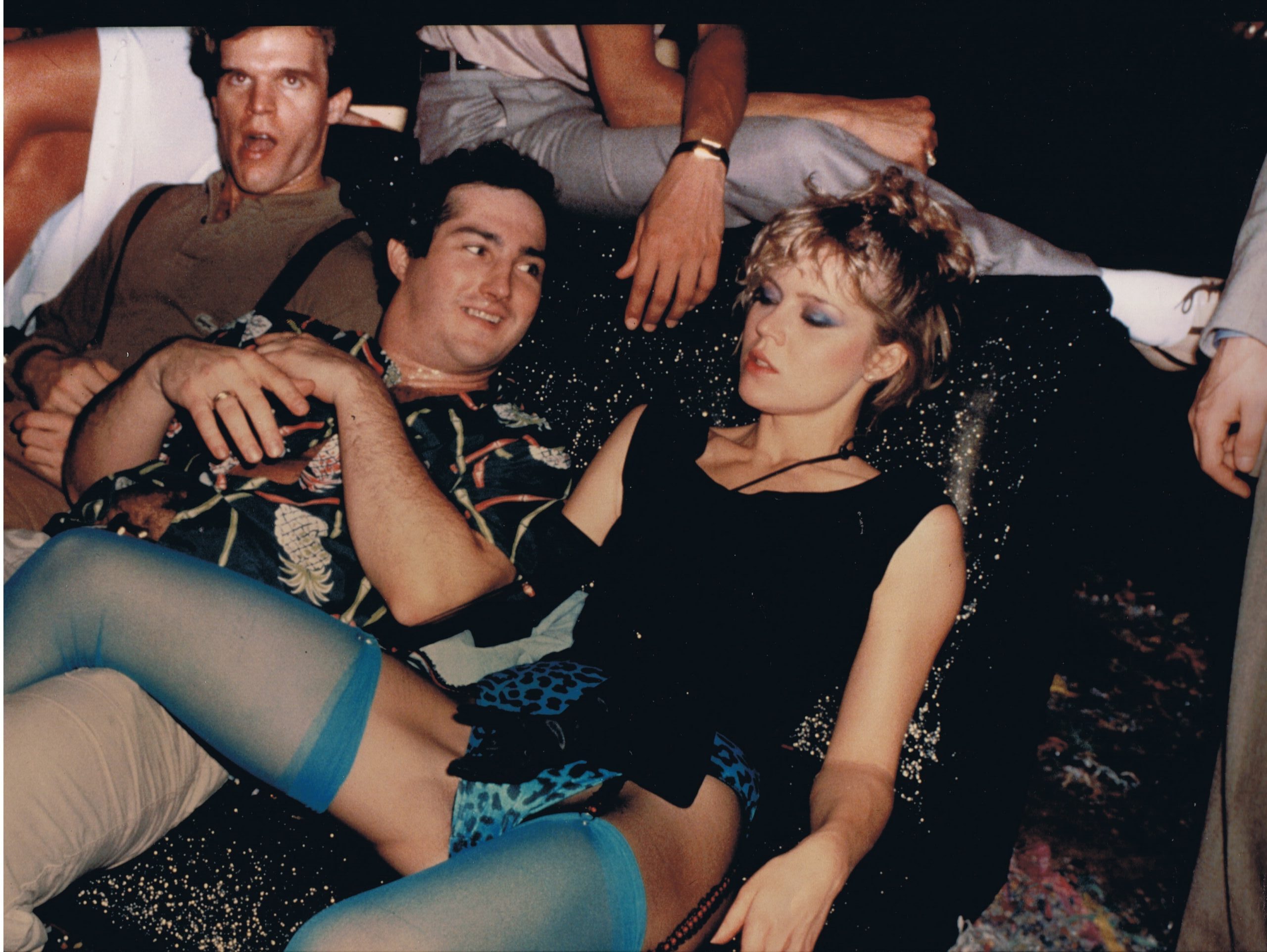
LINTER: It was absolutely sensational. I mean, I was so lucky. I was really in the right place at the right time. If it wasn’t for my gay friends… It was decadent and glamorous. You knew you were in someplace special. You throw your coat at the coat check. You get your little stub. And then you hear the music and run to the dance floor. We smoked, we drank, we did drugs.
SAVAGE: What was your favorite drug to do?
LINTER: For me, it was a half a Quaalude and maybe a line of coke a little later on. I was a very dainty drug user, but it got me through the whole night. I mean, it was just sensational.
SAVAGE: Did drugs cut down a lot of people that you knew? What impact did drugs have on the industry at that time?
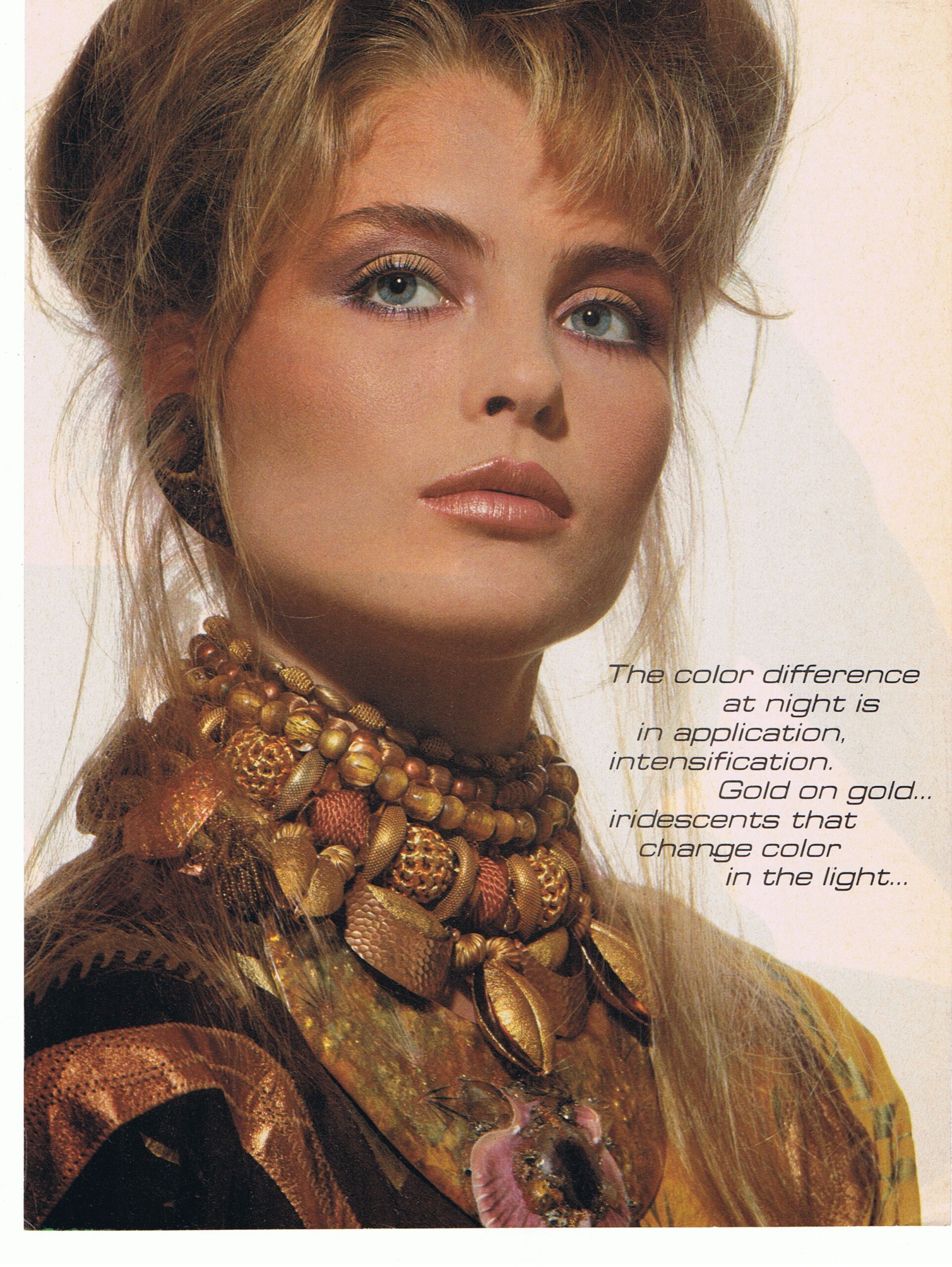
LINTER: Well, it didn’t have a lot of impact at first, because we didn’t even know they were going to make us addicts or anything. I never heard the word rehab. For me, it worked, got me out of my shell, if I had a shell. I looked like I had been out the night before, but I’d go to work the next day and bring that energy with me. [Sandy shows a photograph] This is me at work for Bloomingdale’s.
SAVAGE: Wow, that’s beautiful.
LINTER: Isn’t that gorgeous?
SAVAGE: So along comes a pop star named Madonna, who really shakes up things. Every girl wants to look like Madonna. And her signature—
LINTER: Was the very heavy eyebrow and red lip. She had a big influence.
SAVAGE: How did you see her influencing makeup and the way women wanted to look?
LINTER: Well, the red lip came back as a sensation. I mean, everyone did the red lip years ago, but the way she wore it with the blonde hair and the heavy eyebrows… The ’80s were all about letting your eyebrows grow back in. She was very, very, very fashionable. And she had the trend with the denim. She hit big. I missed her, though. Scavullo did a shoot with her, and he used Way Bandy to do the shoot. I always wished he had picked me because I did Debbie Harry. I could have transitioned to Madonna very easily, but he used Way. Okay, fine. Whatever.
SAVAGE: What can you tell us about Debbie?
LINTER: So the day that I did Debbie Harry was for the cover of Interview Magazine, actually. Barry McKinley booked me. I think he thought she would feel comfortable with me because I had the platinum blonde hair. I was being mistaken for Blondie in the street. [Laughs] I had the purple leather jacket. He knew we would be a good match. And she came in, sullen and tough, and sat down in my chair. She wouldn’t look up at me. Finally, she looks up at me and she’s kind of bleary-eyed and hungover. So I start doing her makeup, and I could see the minute I started that this is something magical about makeup. Women relax when they know you have a grip on them. The same is true for hair. When they know you know their face, you know what you’re doing, they just relax. And the cover is pretty iconic.
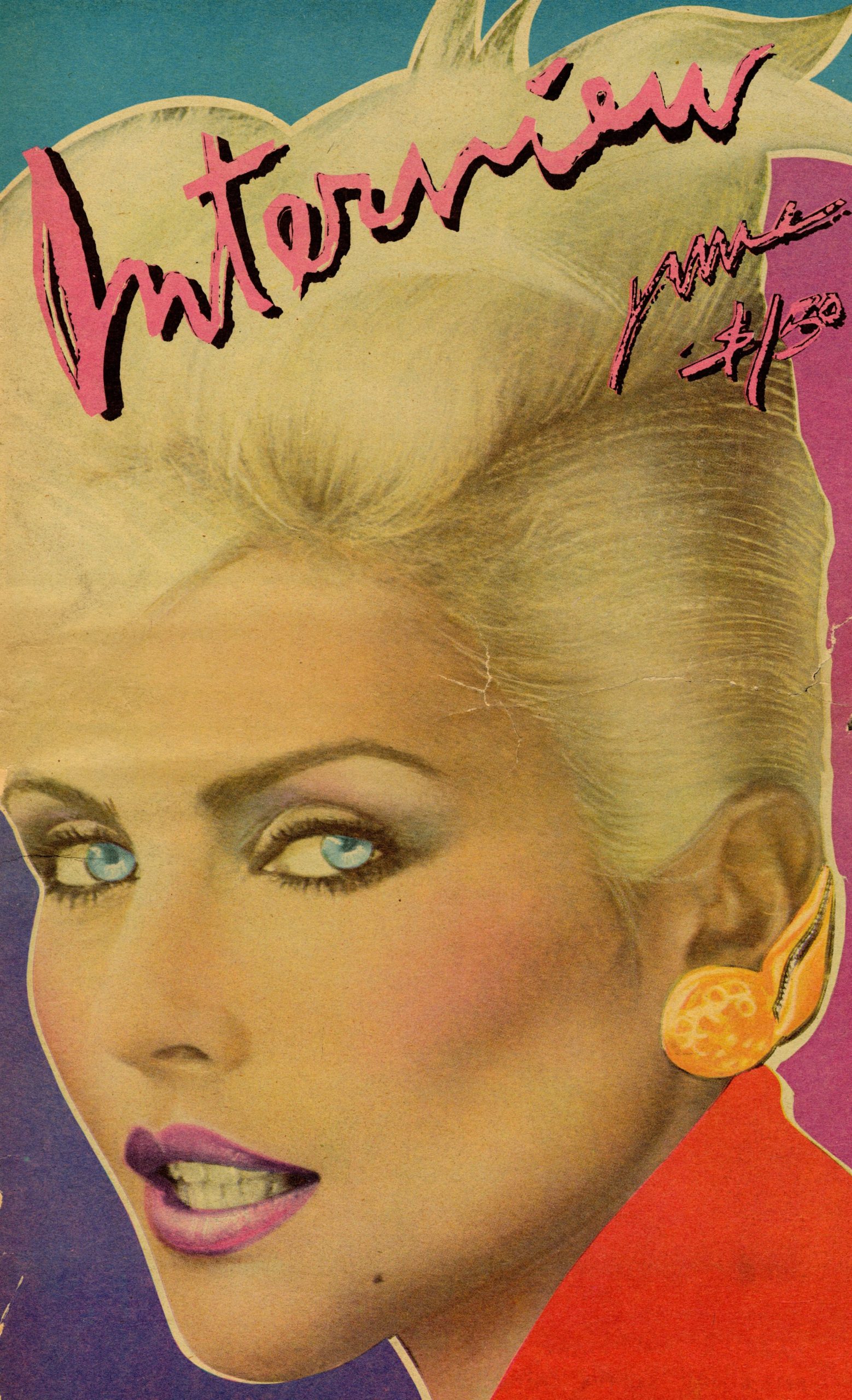
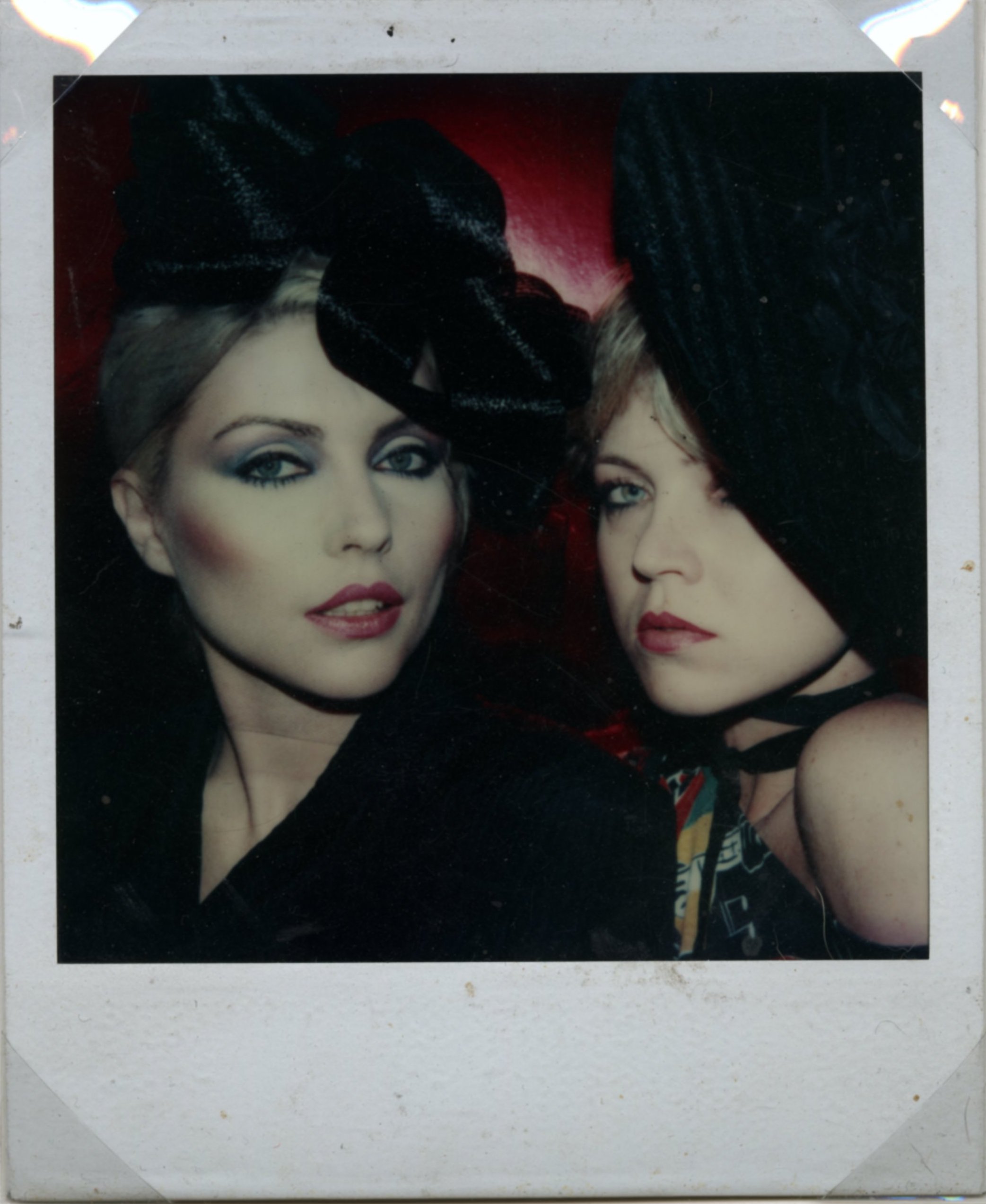
SAVAGE: Did you get to know her very well?
LINTER: I didn’t get to know Debbie, unfortunately. I did work with her a few times after that, and I always felt a warm connection to her and I felt she felt the same about me. It was something real. I didn’t try to change my accent. She could see I had an authentic kind of vibe.
SAVAGE: Speaking of accent, tell that story about Faye Dunaway.
LINTER: Oh, Faye Dunaway. This is 1995, I guess. She booked me and I’m in her hotel dragging my suitcase to her room. She’s in the hallway and she yells out, “This way, Sandy.” And I say, “Okay, I’m coming.” And she looks at me and says, “You’re too young to have that accent.” Hugh Grant said something to me too. I went to dinner with Elizabeth Hurley and Hugh Grant, this is the 90s. And he looked at Elizabeth like, “Where does she come from?” But anyway, I loved Hugh. I mean, they always made me laugh.
SAVAGE: He’s very funny, very dry. So let’s conclude by talking about Gia.
LINTER: Of course. I forgot all about Gia.
SAVAGE: When did you first meet her?
LINTER: It was a Chris von Wangenheim shoot, The Dark Prince. There are three girls, and I’ve done the makeup on two of them. And the last one walks in and she has sneakers on. She plops her feet up on my makeup table. Then she takes my punk sunglasses and she puts them on, she’s just staring at me. I noticed she’s got what looked like Clearasil or medication on her face. And right away I said to myself, “She’s trouble.” So I finish with the two girls. I get over to Gia and she’s got kind of a punk attitude. And I say, “You know I have to take all this off, whatever you’ve got on your face?” And she said, “Yeah.” So I do her makeup, but right away she has me laughing inside. And I must have passed the test because she gets up and she introduces herself to me in a very polite, formal kind of way. She said, “Hi. I’m Gia.” She was very funny and we clicked, kind of. Whatever her test was, I passed it. She either liked you or she didn’t like you.
SAVAGE: Where did her toughness come from?
LINTER: I don’t know. It just came from a kind of honesty. She was just brutally honest. She couldn’t help. That was it.
SAVAGE: How many times would you estimate you worked with her on set? Made her up?
LINTER: Not that many times. I didn’t make up Gia that much, but I’ll that first shoot was important because we bonded a little. We were walking towards the set and there was a bathroom to the left and I say, “I have some coke on me. You want some coke?” She said, “No, I’m fine.” That was that. She goes on set and after a few snaps, I saw Chris signal her and she lets down half of the top of her dress. Her left breast is totally exposed, but she’s so steady and so sure. And I just knew she would be a big star. And you know, it was Gia and Chris who really had a great bond. Photographers fell under her spell.
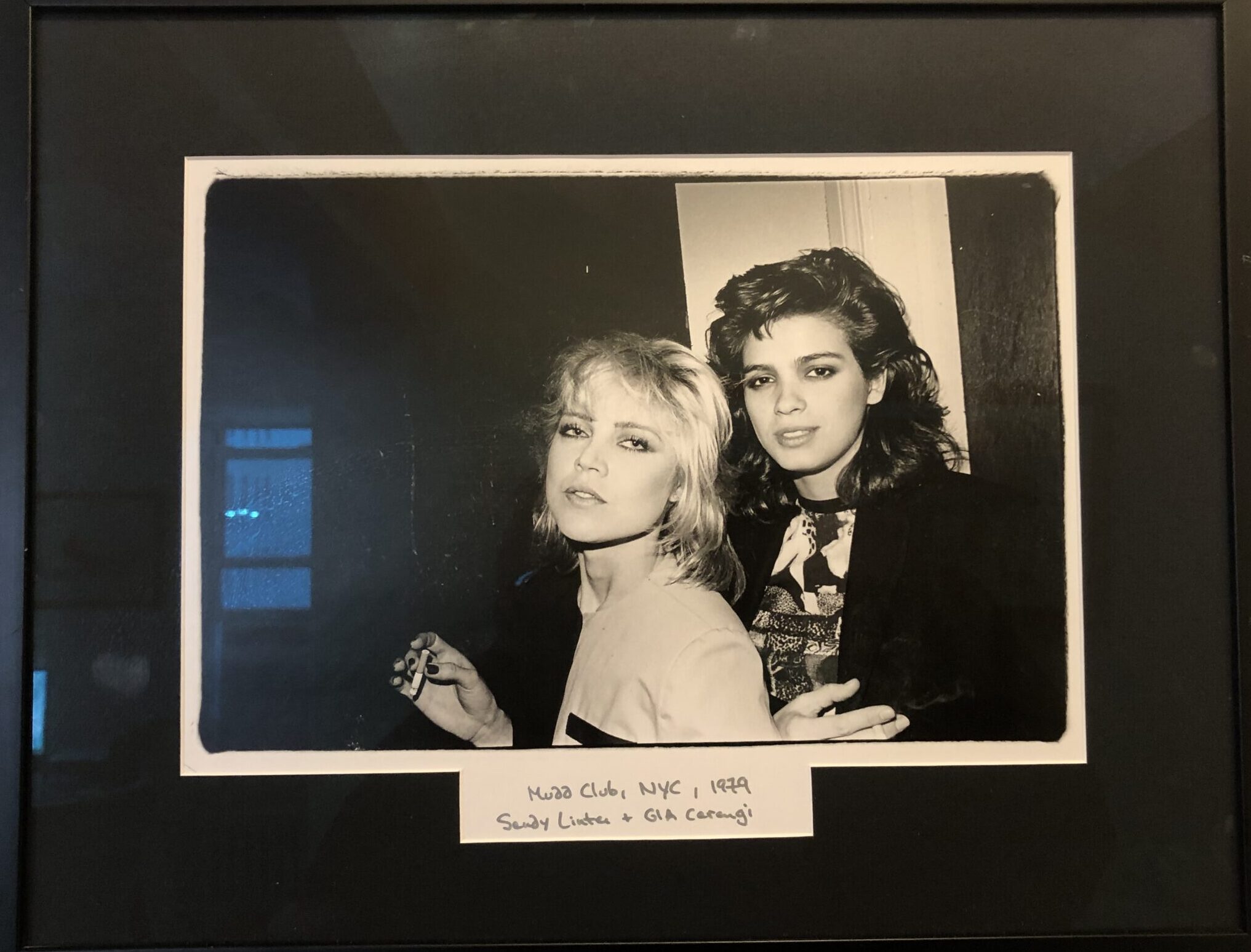
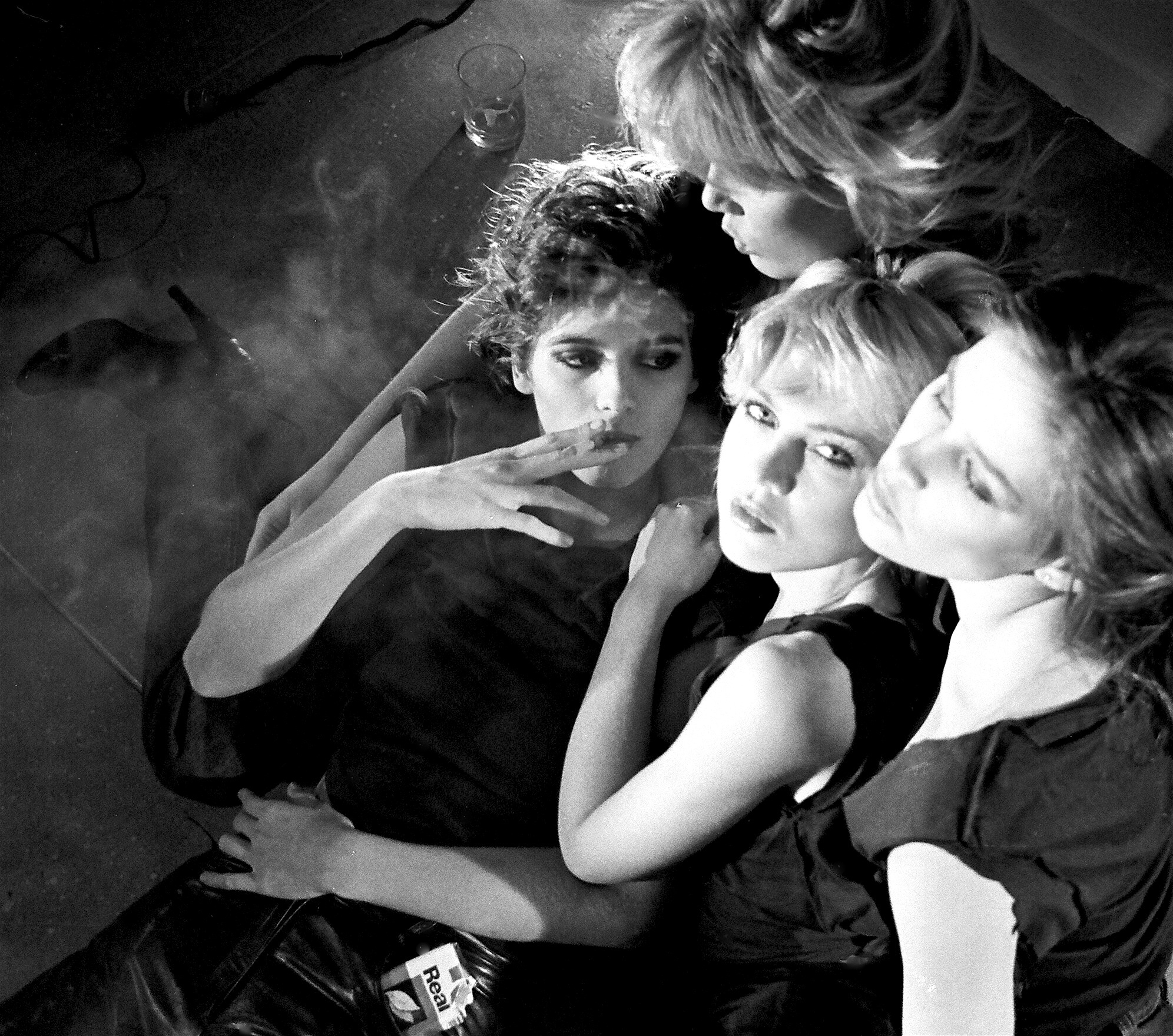
SAVAGE: Did you witness her growing addiction problems?
LINTER: Well, I did, and we didn’t know that any of this was addictive. See, I was with her during the good times when her star was rising, when she was working with all the biggest and the best photographers. But we took a trip together. The first trip to St. Barts, 1979. She was perfect. The second trip, maybe a year later, there was something wrong. She was swimming in this beautiful little pool we had in Key West. It was right outside the hotel. And I had a Polaroid camera with me. I start snapping away these Polaroids and at the very end, she puts a flower in her hair and she’s posing. One of the guys that was sitting around the pool saw this and he said, “Can I look at one of those Polaroids?” And I said, “Sure.” And that upset her.
SAVAGE: I wonder why.
LINTER: She took the Polaroid out of his hand to look at it and threw it down on the ground, then she ran back into the room. I was like, “What was that all about?” I don’t remember much of that night, but the next day she wasn’t there. So I had to go look for her. And Key West is very rural, rugged. They didn’t even have a beach. So anyway, I’m looking for her and I’m passing these dive bars that they had and I see her on a bar stool with a blanket over her shoulders. When she saw me, she got right up, very pleasant. And I said, “Come on, Gia, it’s time to go.” And the reason she loved being with me is because I never interrogated her. I was unconfrontational. I was very “live and let be.”
SAVAGE: Did you have a relationship with her?
LINTER: I had a relationship with her that was as intimate as you can get, but it wasn’t a particularly sexual relationship. And I think it would have to have been initiated by her because she’s the lesbian of the two. But I fell in love with her. I don’t care. But the drugs, so there were a lot of drugs.
SAVAGE: When she contracted HIV and then AIDS, were you still close with her?
LINTER: No. As you know, no cell phones, no computers, no nothing. So in 1986, I went to Way Bandy’s Memorial. He had just passed away in September. Everyone from the fashion industry was at the memorial. Grace Mirabella spoke. Maury Hobson spoke. And before it started, I was in a throng of people waiting to go in and someone said to me, “Gia is going to show up.” I hadn’t seen her in a long time. I don’t know what to expect. And she never showed. I never knew she was sick. Now, this is September, and she died in November. But I never knew she had AIDS.
SAVAGE: Right. So you obviously saw the impact AIDS had on the industry.
LINTER: It was a death sentence.
SAVAGE: Just by second degree, how did AIDS impact your life?
LINTER: What I did was I withdrew. There’s a lot that I could talk about, but I just withdrew. My club days were over. I was just happy to be alive. I knew I had survived, but it took me a little bit more than a year to get tested to see if I had AIDS, because I couldn’t find any place to test me. So finally I told my mother and she said, “I’ll take you to this Saint Bartholomew in New Jersey.” Two weeks later, the nurse comes to get me and she’s got a big smile on her face as she’s walking down the hall.
SAVAGE: Taking the 30,000-foot view of your career, how did you bounce back after that terrible period?
LINTER: I kept on having to reinvent myself. Reinvention is so important in this industry. Scavullo would say, “I can work with these models like Iman for the rest of her life because she keeps reinventing herself. Linda Evangelista kept reinventing herself too.” So that’s what I would do. Instead of being disco, I was wearing Ralph Lauren and going to work in boots and a little sweater.
SAVAGE: What was the toughest trend to adapt to?
LINTER: Well, I loved grunge. I loved Kate Moss. See, I lived through the hippie era of the 60s. That’s the first grunge. Of course, I made it to Studio 54 the first night, but I did not make it to Woodstock. And that bothers me. [Laughs] So of course, I loved everything about grunge. But I’m saying more about grunge and how that impacted me than I am about Madonna, and that’s not really fair because Madonna stood the test of time and I just loved her music.
SAVAGE: One last question. Do you think men should use makeup?
LINTER: You know what? You have to be comfortable in your own skin. Men hate makeup. They hate getting it on their clothes. I don’t really care if they hate it, but I know that they hate it. So I can’t imagine if they feel comfortable wearing it.