I’ve never been a gym person, so I had no idea about creatine when I was first introduced to the supplement a couple of years ago. When my partner told me how this white powder that helped him lift more in the gym was also boosting his focus, it felt too good to be true: “You’re telling me I can mix some magic dust into a cup of tea and my brain will sharpen, and there are no side effects?”
That’s not how anything in this world works. But my partner swore it was real, so I put aside my scepticism and gave it a go. To my amazement, this little chemistry experiment seemed to make the world brighten, and now I wouldn’t be without it.
I’m not alone. Creatine – an energy-boosting supplement that’s also naturally produced in the body – is no longer just the domain of gym bros looking for a power-up – women are now also flocking to the supplement, drawn in by its brain-boosting powers. It has long been proven to help with muscle performance, making it popular initially among people looking for gains in the gym – creatine helps with the regeneration of adenosine triphosphate (ATP), the body’s energy currency.
But newer research has found that creatine also helps with brain performance. We store creatine in our brains as well as our muscles, which means that an added supplement can help clear brain fog and improve alertness, attention and memory.
That’s why women like me are now turning to the supplement. The problem is that marketers have caught on that there’s a new group of consumers who might like the product to feel more “wellness” than “bodybuilder” – and the price for these rebranded products has been significantly hyped.
It’s hard to know what product to go for. A quick online image search brings up a sea of black and gold tubs that reference muscles and chemistry – the creatine that was traditionally branded to a masculine audience. But as the market expands, so do the choices – lately the Instagram algorithm has been serving me a barrage of creatine “for women who keep going”, claiming “this is how we power on”.
The packaging is stylish and elegant – but it costs £34.95 for a bottlebag that’s the same size as the Gatorade-style £10 bag that my partner buys. Especially considering that they both have the same thing listed on the back: 100% creatine monohydrate.
If the contents are the same, why is the “pretty” creatine so much more expensive? All I want is 100 per cent creatine monohydrate, which is what the research tells us works. But this feels like a creatine pink tax – women are nudged to pay more for essentially the same product that men get for far less.
Henry Chung, a lecturer in sport, rehabilitation and exercise science at the University of Essex, says there’s no reason why men and women shouldn’t take the same creatine. “There’s no real difference between a really high-end creatine and a low-end one,” says Chung, explaining that creatine is a scientific compound that is exactly the same every time. “It’s just creatine at the end of the day, like how salt is just salt.”
open image in gallery
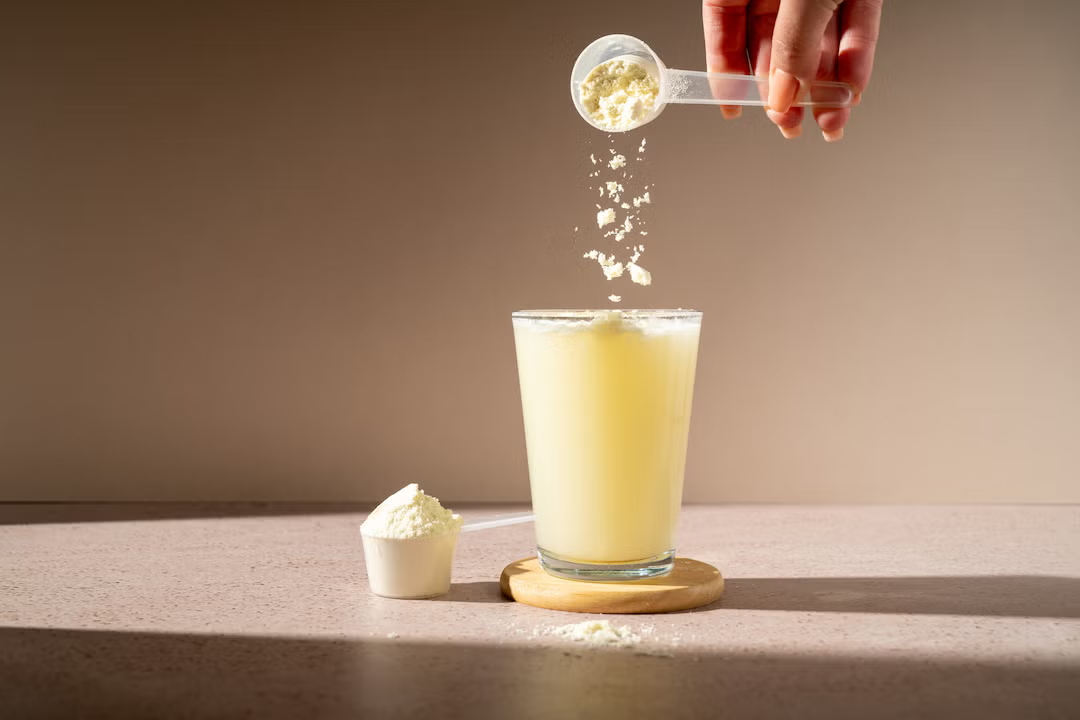
Studies have shown that creatine can support muscle health and cognitive function at any age (Getty/iStock)
There are lots of different products out there, with some having added ingredients or flavours, and sometimes it’s “micronised”, which means it will dissolve better and go down easier – but the core creatine ingredient is the same.
Studies have found that people who take creatine can lift up to 30 per cent more, as well as enjoy a whole host of other physical benefits, from injury recovery to managing chronic disease. In recent years, research has also found a number of cognitive benefits of creatine, from helping with performance if you’re sleep deprived to memory improvements, especially in older people.
Creatine is proven to be very safe: “Creatine is one of the most researched substances out there. It’s already naturally occurring in meat and dairy products,” says Chung, adding there are no proven side effects to taking creatine. Dosage depends on your goals, but 5 grams a day is proven safe and effective.
One of the most common claims in creatine advertising is that the product is “pure”, sometimes with the implication that other brands might not be safe. This was the energy in a recent ad floating past my Instagram feed, where an insistent woman cited research papers about “impurities”, while this creatine promised “super high quality clean creatine”. The cost of this purity was a staggering £28 for one month, more than five times what my partner pays.
Chung says you can get quality creatine for a lot less than that, but the purity factor is not irrelevant. “There are very slight differences in the purity of creatine,” he says. Simply put, it comes down to how many times the creatine is filtered during manufacturing, and while more is better, it’s unlikely to be as significant as some suggest.
“You might just get a slightly more potent creatine,” says Chung, who recommends checking that your product is at least 99 per cent pure, to make sure you’re buying good quality. “But these differences are minuscule. It wouldn’t have any real physiological differences, even after many years,” says Chung.
Lots of people seem to be feeling this way – the creatine usage in the UK is soaring. Market research firm Grand View believes this is only the beginning: creatine already generates more than £15m in revenues in the UK, but might reach £70m by 2030.
Some of this increase will undoubtedly come from women looking to combat brain fog and muscle loss during perimenopause and menopause, which is another growing supplements market. Already, UK women are spending an average of £1,800 a year on products to ease this transition, according to a OnePoll survey from last year. This survey also found that a quarter struggled to find a trusted source for which products to buy.
Just because a supplement is in fancy packaging, or it has the word ‘woman’ or ‘menopause’ on it, suddenly they think they can charge more
Alison Bladh
For women desperate for solutions to an understudied hormonal problem, this leaves room for clever marketing to steer women towards more expensive products by promising relief. This is problematic in general, but when the science on what works is as clear as with creatine, it can feel especially exploitative.
“Just because a supplement is in fancy packaging, or it has the word ‘woman’ or ‘menopause’ on it, suddenly they think they can charge more,” says Alison Bladh, a registered nutritional therapist who specialises in women’s health. “It’s gendered marketing – it’s basically the same product repackaged in more feminine colours, using words like empowerment, beauty and self-care. I don’t think that’s fair.”
Bladh sees this happening across lots of supplements, such as magnesium glycinate and vitamin D – all of which are great for women, but if that fact is mentioned on the box, it often will cost more. Bladh recommends looking out for fillers, sweeteners and flavourings when buying supplements, and to make sure products come in a format the body can actually use. For example, some people are drawn to creatine gummies to get away from the gritty powder, but many creatine gummies have been found to contain almost no creatine.
Bladh often recommends creatine to her clients who are looking for a little help with everyday life. “It can be beneficial when you’re stressed or tired, and when life feels tough. It can help with life tasks like lifting heavy shopping, climbing stairs or carrying children.”
The cognitive benefits are especially beneficial for women with hormonal imbalances: “Creatine can help with mood support. The brain is a strongly energy-craving organ – creatine is already present in the brain, and supplementing can help because the brain needs energy to focus,” says Bladh. But if you already feel strong and focused, it would have little additional benefit.
Social media has made it easier than ever for advertisers to target people who are interested in wellness, touting endless beautiful supplements promising to fix all our problems. Bladh thinks women are wisening up to the supplement pink tax – we’re hopefully growing more cynical.
But at the same time, it’s a market that’s complicated and confusing, so Bladh can also see why a woman might go into a health food shop and see a beautifully packaged and expensive creatine product aimed at women, and assume that’s the best one for her – even though the same good product comes in a cheap, plain tub just down in the men’s aisle.