As much as I love running (there really is no endorphin rush like it), my creaky joints don’t always thank me for all the pavement pounding, and carving out time for 10k in the middle of a busy week is easier said than done.
So, when fitness trampolines (also known as rebounders) started popping up all over my social media feed, promising a fun, heart-pumping workout in a fraction of the time and with far less impact, I was all in.
Living in a small flat, I was after a space-saving design that I could tuck away in the corner of my living room. After scouring the internet, I opted for the Domyos Cardio Fitness Trampoline Fit Trampo 100, a compact rebounder from Decathlon with over 700 five-star reviews, priced at under £40.
Wondering if you should jump on the bandwagon (sorry)? Here’s everything you need to know about rebounding, plus my verdict after putting it to the test for a month.
The Domyos Cardio Fitness Trampo 100 at a glance
Domyos Fitness Trampoline Fit Trampo 100
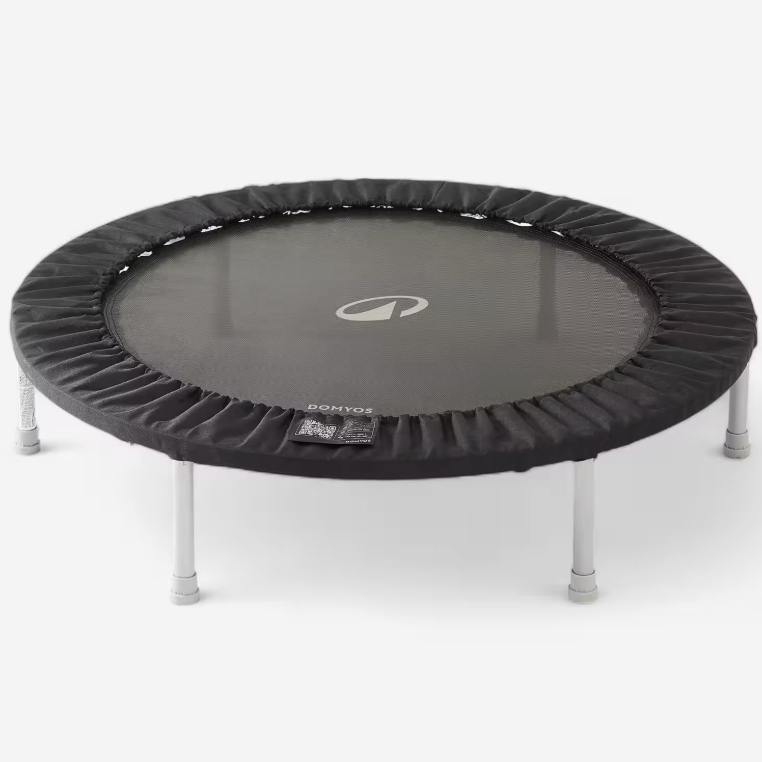
The Domyos Cardio Fitness Trampoline features a solid steel frame with 36 springs for a responsive bounce, along with six feet fitted to keep things stable as you jump.
It comes with free access to the Decathlon Coach app should you need some workout inspiration, and a two-year guarantee (with a five-year warranty on the metal frame). The rebounder weighs around 6.8kg and has a maximum user weight of 100kg.
Note, it’s not suitable for children under three and is designed primary for indoor use. It shouldn’t be left outside or exposed to the elements.
Are fitness trampolines good for you?
There’s a reason why celebs including Davina McCall, Judy Murray and Goldie Hawn are fans of rebounding workouts. “A fitness trampoline is a great workout for women in midlife, especially during perimenopause and menopause,” says women’s personal trainer and nutrition coach Sarah Campus. “This is when the body often needs exercise that’s effective but still kind to the joints and energy levels.”
Here, she breaks down some of the key benefits.
Low-impact and joint-friendly: “The elastic surface of the trampoline reduces strain on the knees, hips and lower back, but still supports bone health at a time in life when bone loss accelerates,” says Campus. “Rebounders make it easier to stay active without discomfort or fear of injury.” Supports energy levels and mood: “The rhythmic movement can be calming, helping to counter stress – a common challenge during the hormonal transitions of midlife,” notes Campus. “Even a short session can boost circulation and raise your heart rate, leading to improved mood and greater mental clarity.” Improves balance, stability and strength: “Balance and muscle tone can shift during menopause, and a trampoline gently challenges stabilising muscles and coordination in a safe way,” explains Campus. Over time, this can enhance balance, build confidence in movement and support functional strength. Boosts cardiovascular fitness and circulation: “Rebounding engages large muscle groups and supports cardiovascular fitness, without long or exhausting workouts, which makes consistency realistic,” says Campus. She adds that the jumping motion also stimulates lymphatic circulation, which may help reduce feelings of puffiness or sluggishness that some women experience during this stage. Helps with motivation: According to Campus, one of the main benefits is the fun factor. “When motivation is low or the body feels tired, having a workout that feels light, doable and energising can make all the difference when it comes to maintaining a regular habit.” Strengthens the pelvic floor: “Gentle rebounding can help build awareness and coordination of the pelvic floor, especially when paired with good posture and breath,” says Campus. “Light bouncing encourages the muscles to respond reflexively, which can support strength over time.”How I trialled the fitness trampoline 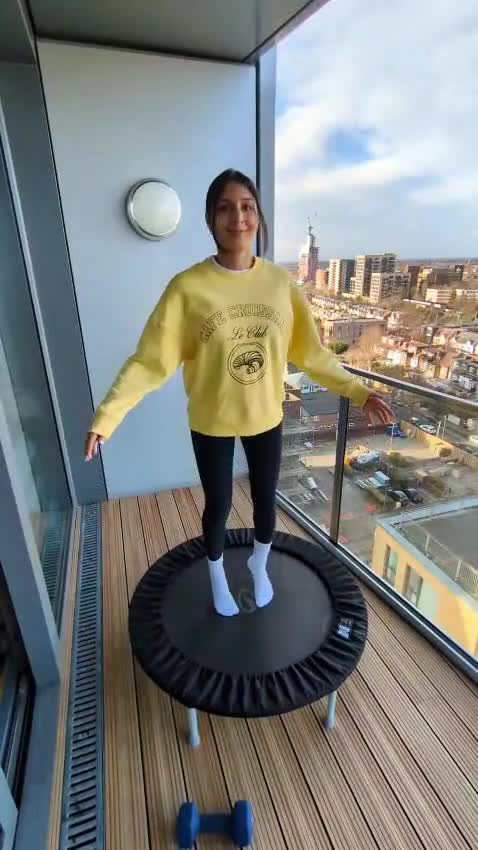
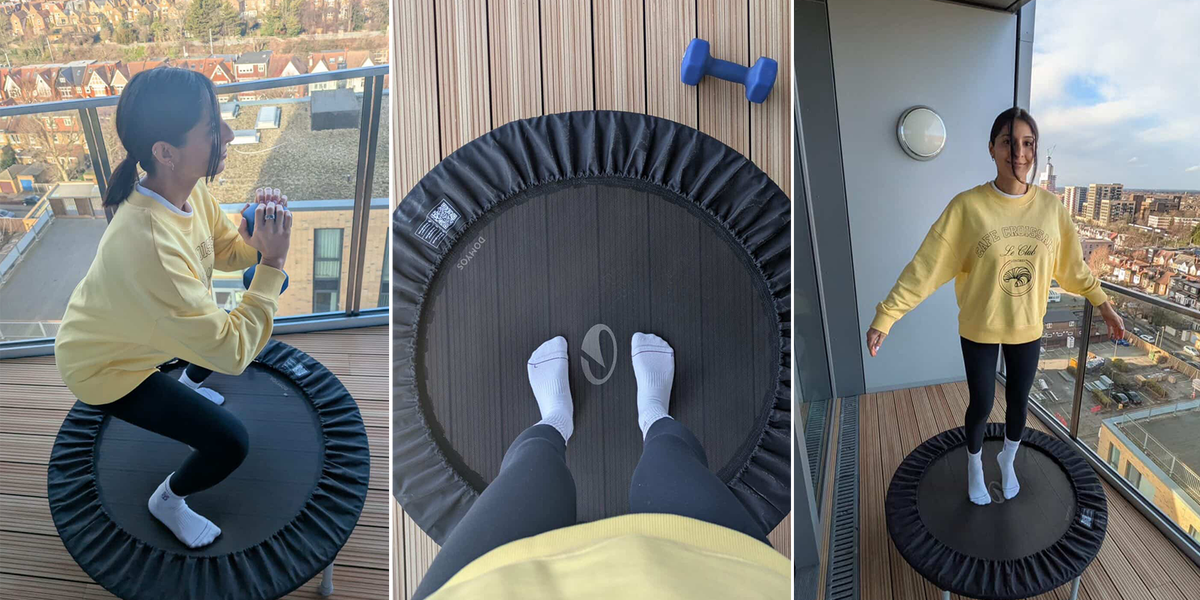
To find out if mini trampoline workouts really do live up to the hype, I decided to hang up my running shoes and commit to at least three rebounding sessions a week. As per Campus’ advice, I started out with 10- and 15-minute sessions, before working my way up to lengthier 40-minute classes.
There are plenty of rebounding workouts available on the Decathlon Coach app, but I found it easiest to blast some music and pop on a YouTube video – there are endless options to choose from, whether you’re after a strength-boosting circuit with dumbbells or a fun, feel-good dance party to shake off the cobwebs.
My Domyos Cardio Fitness Trampo 100 first impressions
My new fitness buddy arrived on my doorstep in a slim cardboard box. Weighing 9kg, I was able to manoeuvre it indoors and set it up on my own with minimal fuss (clearly, all the weight training has been paying off). Although the instruction booklet is text-heavy and fairly basic, assembly was straightforward and took me all of 10 minutes – the fiddliest part was screwing on the six legs.
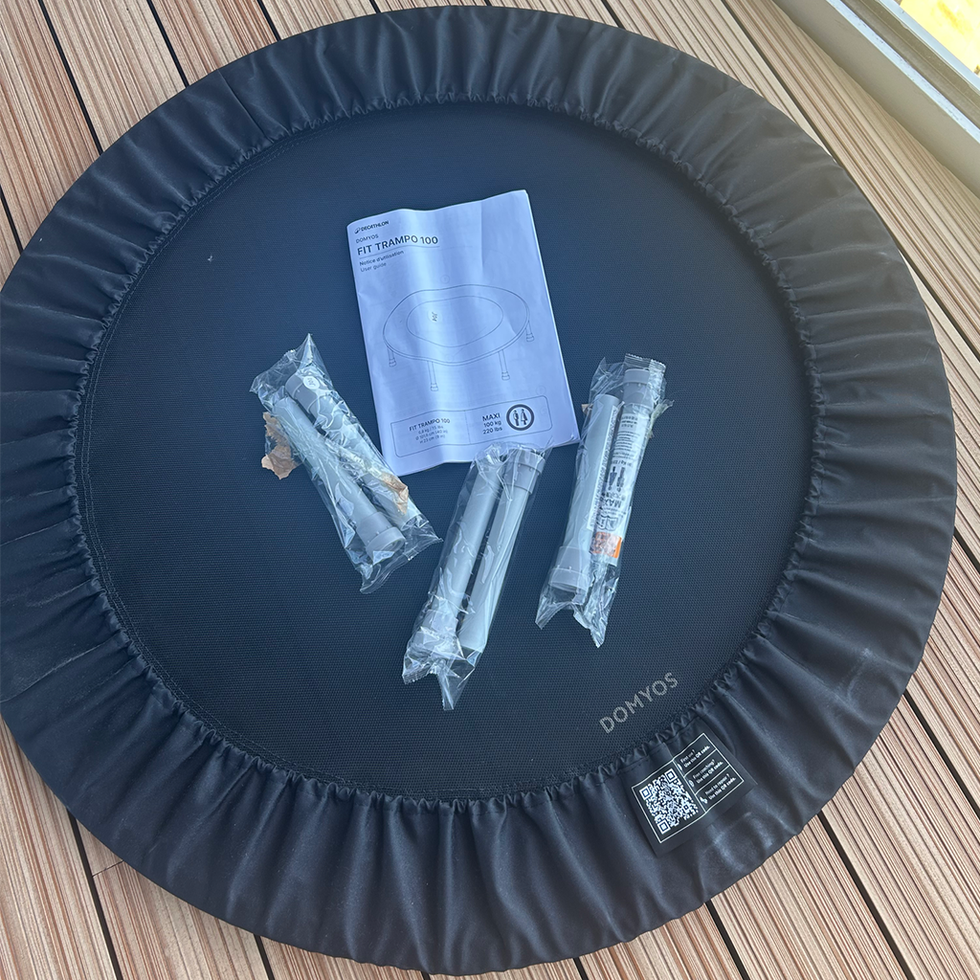
Despite the budget-friendly price tag, I was impressed with how robust and sturdy it felt. The 8cm jumping surface is large enough to bounce on comfortably and the legs feel sturdy on the floor, with no fear of slipping around. The springs are the teeniest bit squeaky, but it’s barely noticeable and certainly not distracting during sessions.
Granted, it isn’t the chicest piece of kit, but it’s nice and compact and – as I’d hoped – doesn’t take over my entire living space. It fits neatly in my exercise corner alongside dumbbells and resistance bands, and it’s easy enough to store away when I don’t want it in view.
My Domyos Cardio Fitness Trampo review
It didn’t take me long to fall in love with my rebounding routine. I’d forgotten how fun it is to bounce along to music. I definitely experienced the mood-boosting, stress-relieving benefits Campus mentioned. After a busy day in the office, I’d actually look forward to coming home and shaking it all out for 15 minutes. Usually, the thought of squeezing in a workout after a long day fills me with dread, but that wasn’t the case with the fitness trampoline.
I loved how simple it was to fit into my days – especially when I was too busy to make it to the gym. I could hop on for a few minutes between meetings or while dinner was in the oven, without having to put on a proper outfit or leave the house. It slotted easily into everyday life, which made it far easier to stick with.
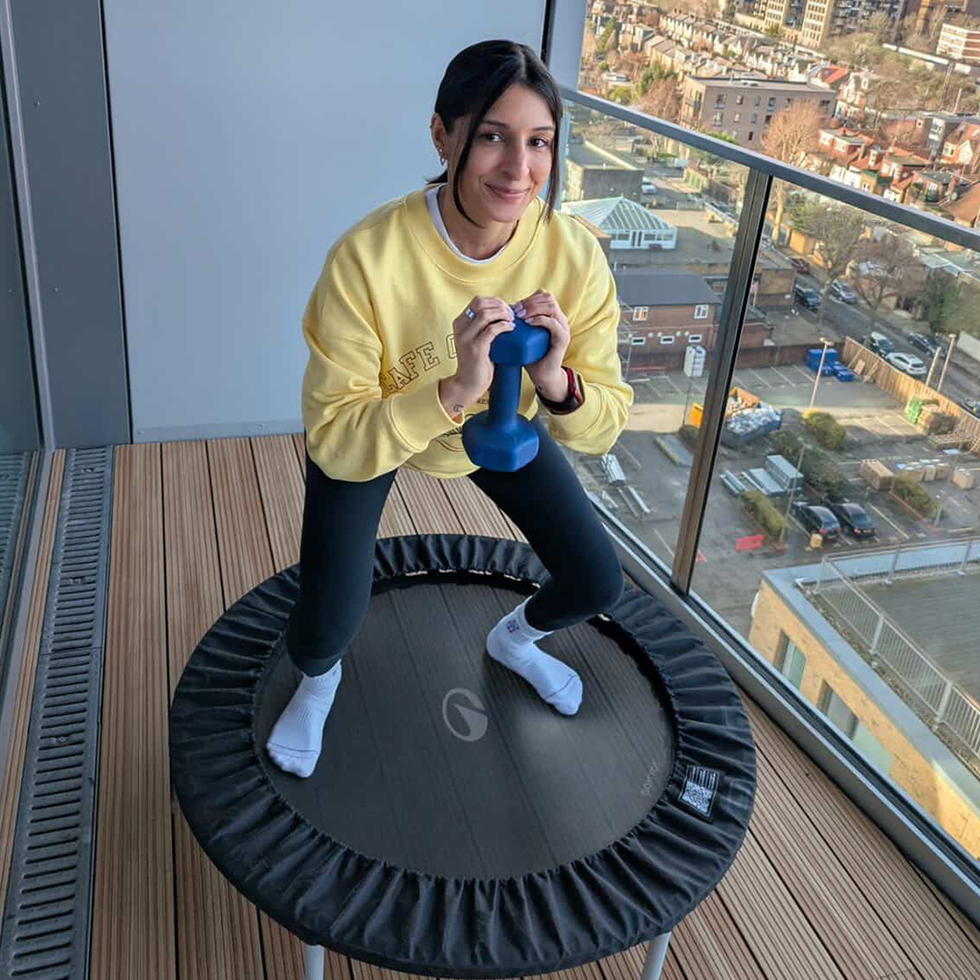
I was a little sceptical about the physical benefits, but I noticed a range of positive changes. Firstly, my achy joints felt better. The movement was kind on my knees, and I didn’t experience the same level of soreness and stiffness I do after running. Plus, it still delivered a solid cardio workout – 40 minutes of non-stop bouncing with dumbbells is no joke, let me tell you. I definitely noticed my stamina improving, too – even my Apple Watch labelled some of my more intense rebounding workouts as ‘hard’.
Perhaps most noticeably, I felt my pelvic floor get stronger. This is an area I’ve been keen to work on, so I sought out some dedicated pelvic floor rebounding routines on YouTube. During these sessions, I focused on small, controlled bounces while engaging and lifting through the pelvic floor. Over the weeks, I became more confident in activating the right muscles and felt steadier and more secure while bouncing.
The final verdict
My 30-day rebounding challenge might be over, but it’s become an integral part of my weekly fitness routine. It’s such a fun way to stay active. I’d highly recommend the Domyos Fit Trampo 500 – it’s compact, great value and, crucially, has held up brilliantly over time. Consider me converted.
Domyos Fitness Trampoline Fit Trampo 100
Fitness trampoline FAQs How do you use a rebounder?
“Focus on a gentle, controlled bounce rather than jumping high,” advises Campus. “Keep your feet in contact with the mat, your knees softly bent and your core lightly engaged. The movement should feel springy and smooth, not hard or forced.”
“Good posture makes a big difference. Stay tall through your spine, relax your shoulders and let your arms move naturally, “she continues.
Most importantly, listen to your body. “If you feel dizzy or tired, slow down or end the session. A calm, steady bounce that feels sustainable is far more beneficial than pushing yourself too hard.”
How long should you bounce on a rebounder?
If you’re new to exercise or just getting back into it, Campus recommends starting with just five minutes a day. “Many women find that 10-15 minutes is plenty to boost energy, mood and circulation, without feeling wiped out.”
“You can always build up gradually or break it into short sessions if that feels better for your body,” she adds.
Who should avoid using a fitness trampoline?
Despite the many benefits, fitness trampolines aren’t suitable for everyone.
“Anyone with active pelvic floor symptoms, such as prolapse, leaking or a feeling of heaviness, should hold off until they’ve been cleared by a pelvic health professional,” explains Campus. “Even gentle bouncing can worsen symptoms if the pelvic floor isn’t ready.”
She adds that people with acute joint injuries or ongoing neck or back pain should avoid rebounding until fully healed, and those with balance issues and certain neurological or heart conditions should seek medical advice first.
“If bouncing causes pain, pressure, dizziness or discomfort during or after, that’s a clear sign it’s not the right form of exercise for you right now,” she says.
More fitness equipment to add to your routineWhy the viral Bala Bangles are the best wearable weights to add your exercise regimeFrom exercise bikes to dumbbells, the Good Housekeeping Institute has found the best home gym equipment for all spaces and budgets Read our Corength Weighted Vest review to see how it can improve your walking workouts and boost strength
Priyankaa is our sleep and wellness expert, specialising in expert-tested reviews and roundups on the latest health and fitness products. From walking boots to running machines, Priyankaa has written about hundreds of products and is passionate about providing in-depth, unbiased reviews. Plus, as an avid runner and gymgoer, she knows exactly what to look for when finding the right gymwear, fitness tracker or earphones.
Priyankaa has an MA in Magazine Journalism from Cardiff University and over five years’ experience in health and fitness journalism. Priyankaa has written for Stylist’s Strong Women Training Club, where she regularly wrote about diversity in the fitness industry, nutrition tips, training advice and her experience completing various fitness challenges. She has also written for a variety of publications including Business Insider, Glamour, Bustle, Metro, HuffPost UK, gal-dem and more. Outside of work, Priyankaa can usually be found trying out a new gym class, seeking out London’s best eats or watching a Spanish TV show in a bid to keep up her language skills.