Your support helps us to tell the story
From reproductive rights to climate change to Big Tech, The Independent is on the ground when the story is developing. Whether it’s investigating the financials of Elon Musk’s pro-Trump PAC or producing our latest documentary, ‘The A Word’, which shines a light on the American women fighting for reproductive rights, we know how important it is to parse out the facts from the messaging.
At such a critical moment in US history, we need reporters on the ground. Your donation allows us to keep sending journalists to speak to both sides of the story.
The Independent is trusted by Americans across the entire political spectrum. And unlike many other quality news outlets, we choose not to lock Americans out of our reporting and analysis with paywalls. We believe quality journalism should be available to everyone, paid for by those who can afford it.
Your support makes all the difference.Read more
Irritability is one of the most common and distressing problems teenagers and their families face.
Its main symptom is an excessive reaction to negative emotional stimuli, resulting in temper outbursts and severe irritable mood.
While current treatment options such as psychotherapy and medications are helpful for some, they can be inaccessible or poorly tolerated.
Our new research, based on a double-blinded, placebo-controlled clinical trial, shows broad-spectrum micronutrients (vitamins and minerals) can significantly reduce severe irritability in teenagers.
Teens with severely disruptive behaviour experienced especially large improvements.
This offers a safe, scalable and biologically grounded alternative to conventional psychiatric treatments.
 Irritability is one of the most common and distressing problems teenagers and their families face (Getty/iStock)
Urgent need for more effective treatments
Irritability cuts across many psychiatric presentations, including anxiety, depression, attention deficit/hyperactivity disorder (ADHD) and other disruptive behaviour disorders.
The need for interventions that directly target irritability, have fewer side effects and are available to all communities is urgent.
Statistics on mental health in young people are especially concerning. Youth mental health has been declining globally over the past two decades and has now reached a “dangerous phase”, according to a Lancet commission.
Despite this, research consistently highlights a lack of effective and accessible treatments for severely irritable youth. This suggests a significant unmet public health need.
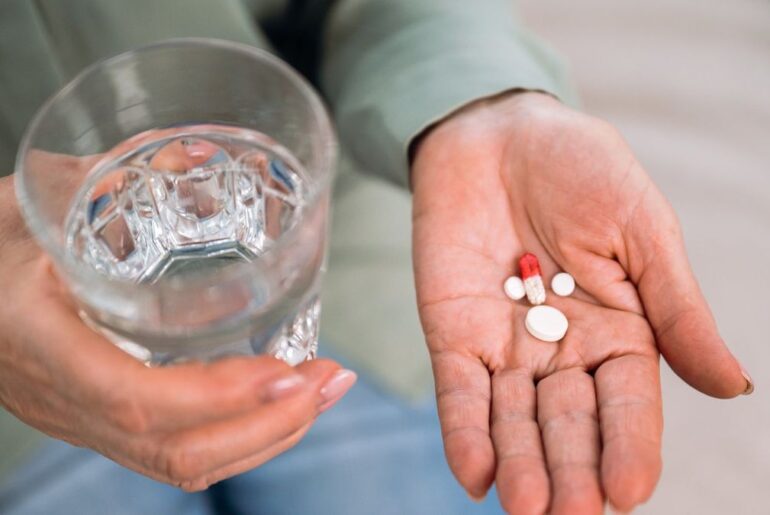
Our research findings are based on the Balancing Emotions of Adolescents with Micronutrients (BEAM) trial, in which 132 unmedicated teenagers (aged 12 to 17) with moderate to severe irritability were randomly assigned to micronutrients (taken as four pills three times a day) or an active placebo for eight weeks. They were monitored monthly online by a clinical psychologist.
The placebo response was high, suggesting that simply participating in the study helped many teens feel able to improve their behaviour. But micronutrients still outperformed the placebo across key clinical measures such as irritability, emotional reactivity and overall improvement.
We saw the strongest effects in teenagers with disruptive mood dysregulation disorder (DMDD), with 64 per cent responding to micronutrients compared to 12.5 per cent on placebo. This demonstrates an unusually large effect for a psychiatric intervention.
About the authors
Julia J Rucklidge is a Professor of Psychology at the University of Canterbury.
Angela Sherwin is a PhD Candidate in Nutrition at the University of Canterbury.
Joseph Boden is a Professor of Psychology and Director of the Christchurch Health and Development Study at the University of Otago.
Roger Mulder is a Professor of Psychiatry at the University of Otago.
This article was first published by The Conversation and is republished under a Creative Commons licence. Read the original article.
Parents of participants receiving micronutrients rated the teens’ conduct and prosocial behaviour much higher compared with those of teens on placebo.
Micronutrient treatment was also associated with more rapid improvements in clinician‑rated irritability, parent‑reported dysphoria and teen‑reported quality of life, stress and prosocial behaviours.
One of the most notable and reassuring findings was that suicidal ideation, which about a quarter of study participants reported at the start of the trial, improved over time for both groups, but with a greater change for teens on micronutrients. Self-harm behaviour also decreased for both groups.
Only one side effect differed significantly between groups: diarrhoea was more common on micronutrients (20.9 per cent) than placebo (6.2 per cent). But this side effect was typically temporary and resolved by taking the nutrients with food and water.
A minority (fewer than 10 per cent) found swallowing pills a challenge. Other side effects reported equally in both groups included occasional headaches, stomach aches or a dry mouth. These tended to dissipate within the first few weeks.
Socioeconomic background matters
The response to treatment was moderated by the teens’ socioeconomic status.
Participants from lower socioeconomic backgrounds were more likely to benefit from micronutrients. This is particularly meaningful for both clinical practice and public health.
Lower socioeconomic status is typically associated with greater exposure to nutritional insufficiencies, chronic stress, reduced access to health services and higher rates of mental health difficulties.
Our findings suggest micronutrients may help address underlying nutritional vulnerabilities that may be more prevalent or more severe in disadvantaged groups.
This pattern also indicates that micronutrient supplementation, if publicly funded, could function as a low‑cost, scalable intervention, with the potential to reduce health inequities.
Many evidence‑based psychosocial or pharmacological treatments require resources – time, transportation, specialist access – that disproportionately disadvantage lower‑income families.
In our trial, all meetings between the psychologist and the teen with their family were conducted online and the micronutrients were couriered across the country, making this intervention accessible, particularly to rural communities.
Micronutrients may represent an intervention that is both accessible and responsive to the specific needs of youth who are most at risk yet often least well served by traditional care pathways.
This study was developed alongside Māori health providers and fits within a tikanga (traditional) Māori framework. It had a high percentage of Māori participants (27 per cent) and worked closely with them, their families and health providers to assist in improving mental health outcomes.
The BEAM trial provides robust evidence that a simple nutritional approach can meaningfully improve symptoms, including emotional reactivity, conduct difficulties and even suicidal ideation.
These results are relevant for parents, clinicians, teachers and policymakers seeking safe and practical interventions, especially for young people who cannot access or do not respond well to existing treatments. The results also highlight important equity implications, as teens from lower income families showed stronger responses.
Our results cast a new lens on the cause of some psychiatric problems, often conceptualised as chemical imbalances or family dysfunction. They reframe some cases of irritability as a possible nutritional and metabolic vulnerability, one that might be addressed with greater attention to the quality of our food alongside some supplementation with broad-spectrum micronutrients.