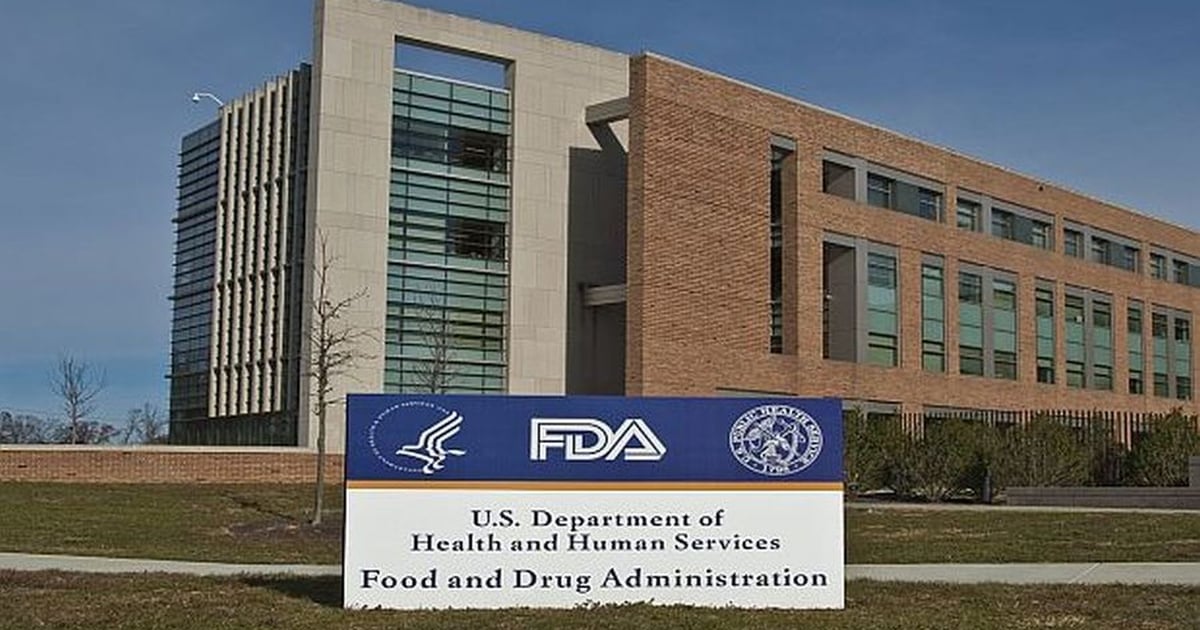
The Food and Drug Administration has announced a public meeting that will delve into definitional questions that figure in to the filing of new dietary ingredient notifications (NDINs).
The meeting, set for March 27, is intended to define more specifically what is included in the phrase “dietary substance for use by man to supplement the diet by increasing the total dietary intake” that is part of the language of the Dietary Supplement Health and Education Act of 1994 (DSHEA) that created the modern supplement industry.
The aforementioned phrase is the fifth entry under the scope of what is defined as a dietary supplement. The others are much more specific: a vitamin, a mineral, an herb or other botanical, and an amino acid. Further clarifying language adds that a dietary ingredient can be a concentrate, metabolite, constituent, extract or combination of these ingredients.
Broadness of category has created problems over the years
As can be plainly seen, the fifth definition is a catch-all that could include a wide scope of ingredients. This has led to some confusion on the subject of which new ingredients fit this definition and has been the subject of some rejected NDINs. FDA has a practice of rejecting, out of hand, submissions on ingredients that the agency believes don’t qualify as a dietary ingredients.
In addition to clarifying definition E, the meeting is also meant to delve into the question of new production techniques. Ever since FDA first issued its draft NDI guidance in 2010, this has been an open question. How much of a change in the production method and resulting chemical composition of an existing ingredient transforms it to the point that a new NDIN with new safety data on the altered ingredient might be necessary?
Another question that has been hanging fire is the notion of bioidentical ingredients produced via precision fermentation. At one point in the drawn-out NDI guidance process, FDA had issued an opinion that bioidentical botanical ingredients did not qualify as dietary ingredients because they could not trace their origins back to the plant, even if their chemical composition might match that of a true botanical extract. FDA has apparently not enforced this ruling, however.
The meeting will also, according to the official announcement, look at “[s]pecific ingredient types, including proteins, enzymes and microbials.”
In early January, FDA had rejected a call from the Natural Products Association (NPA) to schedule such a meeting. In a letter, Daniel Fabricant, Ph.D., NPA’s president and CEO, had requested a meeting that would include the scope above, as well as tackling questions around the drug preclusion clause of DSHEA and issues surrounding the exploding market of unregistered peptide ingredients.
FDA has now responded with a meeting whose agenda, at least on the surface, excludes those questions in favor of focusing on the definitional items only.
IPA attorney: Resolution of issues is a long time coming
Attorney Ivan Wasserman, managing partner of Amin Wasserman Gurnani, who also represents the International Probiotics Association (IPA), responded to the news of the meeting with this statement:
“I’m thrilled that the FDA has called this important meeting to continue the dialog that was started at a public meeting held several years ago. I hope and believe that FDA will be an active listener and will work cooperatively with the industry to bring greater clarity to these questions that have lingered for so long.”