Fitness, recovery and racket sports took center stage at this year’s PGA Show, signaling how private clubs are adapting to changing preferences among golf consumers
For decades, the PGA Show has been a barometer for where the golf course and country club sector is headed, and this year the signals were unmistakable – the future isn’t just about golf, it’s about what surrounds it, namely, wellness and racket sports..
Held earlier this year at the Orange County Convention Center in Orlando, the 73rd PGA Show attracted more than 30,000 attendees, and over 1,100 brands and exhibitors. Across the show floor, conversations extended well beyond golf equipment, focusing instead on fitness, recovery, longevity and racquet sports like pickleball and Padel as key drivers of club growth.
The takeaway was clear. Golf may remain the anchor, but clubs are rapidly evolving into full-spectrum health, fitness and social ecosystems designed to attract new members, retain existing ones and keep more people on the property longer.
Fitness brands that once occupied the periphery of the show commanded meaningful space and attention. According to David Poirier, sales associate at Perform Better, that shift has been years in the making.
“Operators are much more sophisticated now when it comes to understanding the importance of fitness and wellness in their clubs,” Poirier told Athletech News. “We’ve exhibited for several years and used to get less action. Now, there’s real engagement.”
That sentiment echoed across nearly every fitness and wellness booth. Steve Wilkinson, key account manager at Life Fitness, noted a marked increase in both the number and quality of operator conversations.
“There’s a much bigger presence of fitness and recovery brands this year than ever before,” Wilkinson said. “And the operators walking the floor are energized, informed and looking for the right products for their members.
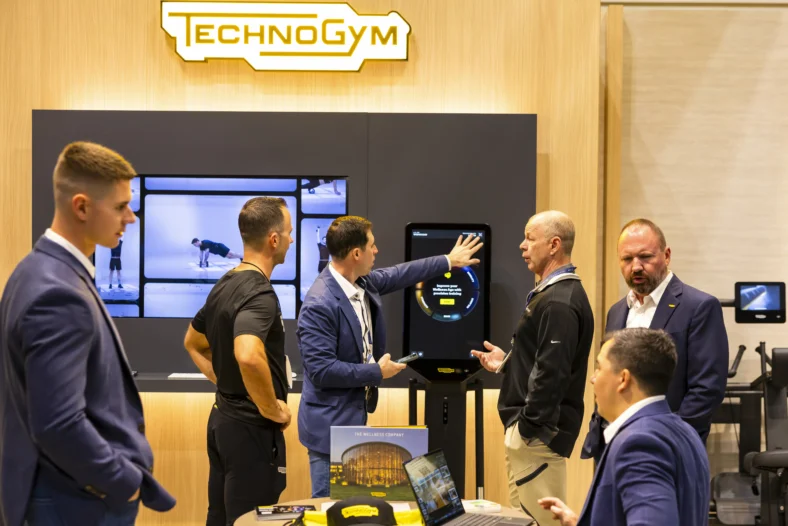
This year also felt different for Technogym.
“We’ve been coming to this show and serving private clubs for several years,” explained Joe Aiello, a sales manager at the fitness equipment and technology giant. “This year, we’re seeing a larger demand and a much larger presence of operators who are actively interested in fitness.”
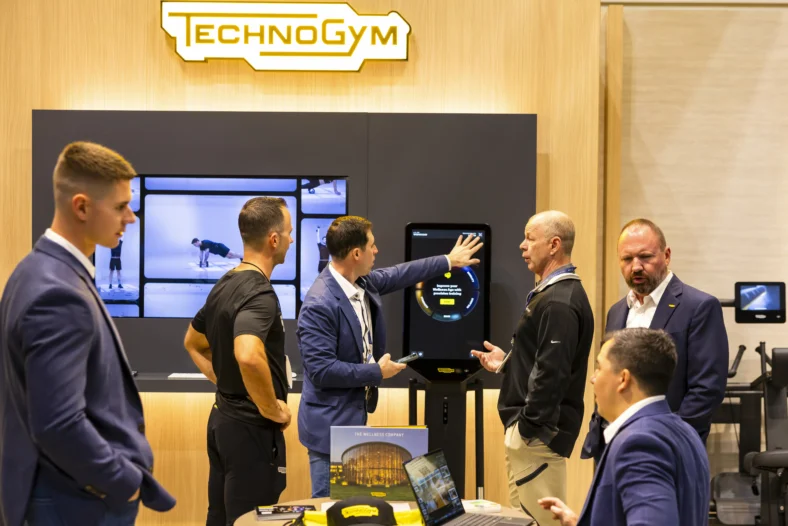 Technogym had a presence at the PGA Show 2026 (credit: PGA Show)
Aiello noted that while interest is rising, decision-making has become more nuanced. “Budgeting can be a challenge because there are more stakeholders involved, which means decisions take longer,” he said. “But at the same time, technology adoption is shifting. Operators and members are seeing the value in it.”
Members increasingly view clubs as a third space – not just a place to play golf, but a place to spend valuable time in – training, playing, socializing and investing in long-term health.
“Health and wellness is non-negotiable now for these clubs,” said Garry Lewis, director of commercial sales at Power Plate.
Lewis also highlighted one of the biggest operational challenges clubs face: space. Many older clubs weren’t designed to accommodate today’s wellness demands. As a result, compact, multifunctional solutions from vibration platforms to recovery tools are gaining traction because they allow clubs to modernize without massive renovations.
Supporting recovery is now directly tied to how often members show up and how long they stay engaged. “It’s a huge dimension for athletes, and it cannot be ignored by clubs,” said golf performance coach Lance Gill.
Racquet Sports Are Reshaping the Club Experience
When it comes to revenue opportunities, racquet sports are a game-changer.
Pickleball and Padel were impossible to miss at this year’s show, both in presence and conversation. According to Joola’s Robin Martin and Eric White, the growth has been exponential.
“We first exhibited at the show in 2022 and there were a few 10×10 booths when it came to pickleball,” Martin said. “Now. there are multiple courts being activated continuously, huge presentations and a whole section dedicated to racquet sports.”
White says what’s driving the surge isn’t vendors. “The demand is being driven by members. They’re asking for pickleball, and clubs have no choice but to respond.”
 credit: PGA Show
And the clubs are, but many are testing first. Selkirk Account Manager Sander Nauenberg described a pattern he’s seen repeatedly.
“Clubs dip their toe in by converting a tennis court to pickleball,” he explained. “Every single one sees the benefits. You now have four people on a court instead of two. Members stay longer. Golfers bring their families. It’s social and that’s good for business.”
Pickleball’s accessibility brings in demographics golf alone often can’t, including younger members, families and fitness enthusiasts. Padel signals premium positioning and global influence.
According to Amie Stanton, vice president of marketing at Gamma Sports, the conversation has evolved.
“Early growth was about adding pickleball quickly,” she said. “Now clubs are being more intentional. They are investing in better courts, professional staffing and long-term programming.”
She also says that intentionality reflects a broader trend: “Racquet sports aren’t replacing legacy offerings, they’re future proofing them.”
Clubs Are Becoming Wellness & Social Hubs
One of the clearest shifts at the show was how clubs are rethinking their role altogether – moving beyond recreation and toward fully integrated health and wellness destinations.
Clubs are increasingly integrating physical therapists, chiropractors, nutritionists and recovery specialists onsite. As Johnna Ward of Bubs Naturals put it, “Clubs are becoming ‘health and fitness hubs,’ not just recreational destinations.”
David Jones, director of sales and marketing at WaterRower, emphasized that operators are being more deliberate than ever, too.
“They’re being very intentional and thoughtful about what they bring in,” Jones said. “They want to learn about the different aspects of products and make the right decisions.”
Another telling development was the presence of FIBO, the global fitness and wellness trade show operated under the same RX Global umbrella.
“This is our first time at the PGA Show, and the synergies are obvious,” said Florian Brauer, senior global brand manager at FIBO. “These industries are deeply interconnected.”
He says FIBO is completely committed to helping bridge fitness, wellness and private club ecosystems, recognizing that today’s members don’t separate golf, training, recovery and social connection into silos.
That crossover opens new growth opportunities and shows that the future of private clubs is less about one main activity and more about integrated experiences.
The Business Case Is Clear
For golf and country clubs, adding fitness, recovery and racquet sports isn’t a “nice to have.” It’s a smart business decision.
These offerings drive:
Higher acquisition by attracting new demographics
Stronger retention through daily engagement
Increased dwell time across generations
New revenue streams through apparel, equipment, coaching and programming
Pickleball alone opens the door to racquets, shoes, apparel, balls, accessories and instruction. And importantly, these investments reinforce one another. Pickleball players are often fitness enthusiasts, and fitness-minded members value recovery, which keeps members healthy enough to return day after day.
Perhaps the most striking observation from the floor wasn’t any single product or trend, it was the energy around the scale of opportunity this evolving ecosystem represents.
“There is significant growth and revenue to be unlocked here,” said FIBO’s Brauer. “The convergence of these verticals is coming together in a very real way – and it’s creating a true win for operators, brands and members alike.”