
Maggie Luo
In Centreville’s plazas—where Korean bakeries sit next to Taekwondo dojos, and K-pop echoes faintly from storefronts—K-beauty products line the shelves of local shops: the Face Shop, Aritaum, and even H-Mart.
For many Korean American teens and young adults in the area, these products aren’t just makeup or skincare. They’re part of growing up in a community where Korean culture feels as familiar as home.
For Jennie Chun, a William & Mary junior who grew up in Centreville, K-beauty has always been her go-to. “I love using Korean lip products and eye makeup,” she said. “I love [brands like] Rom&nd and Colorgram… Etude is good, too. Yeah, there’s so many good ones.”
She buys her products at the Korean stores she grew up frequenting—or online. But she still gravitates to the same brands she saw when she was younger. More than anything, she feels that K-beauty suits her best. “I think just because it suits more Asian facial structures… and more Asian skin tones,” she said. “Also, I like lighter makeup as well, so I tend to buy Korean products.”
Her early exposure wasn’t a coincidence. Growing up in Centreville—one of the most prominent Korean American hubs in Virginia—meant that beauty culture wasn’t happening on TikTok first. It was happening in classrooms, friend groups, and at home.
“Oh, definitely,” Chun said when asked if her peers and community influenced her makeup habits. “Since I was in middle school, a lot of my friends watched Korean beauty makeup tutorials and loved to do makeup themselves. I’d look for the products they used. My mom also recommends a lot of Korean skincare.”
For others, the connection to K-beauty is even more direct. Chae Han, a 2023 graduate who grew up in the area, not only prefers Korean brands—they’re the only products in her routine.
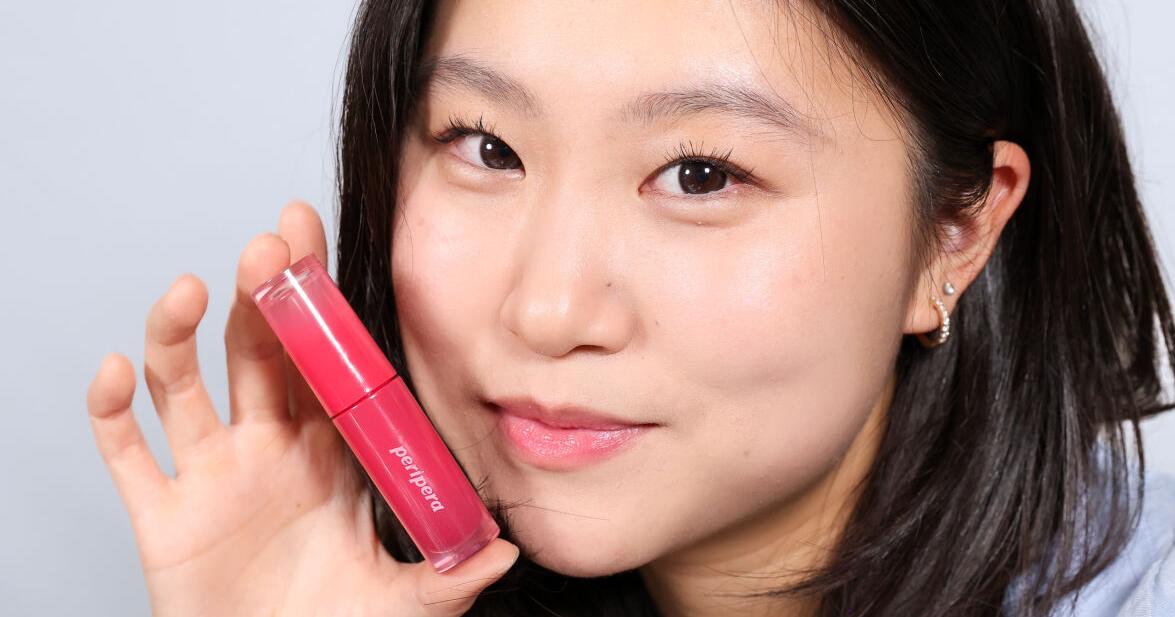
“I exclusively use K-beauty for all my products,” she said. “I use the Clio cushion powder, Peripera blush, the Hera mascara, and COSNORI as well—that’s another favorite eye product.”
So, why exclusively Korean products? For Chae, it’s an aesthetic and practical match.
“I like the quality better,” she said. “Especially the eyeshadow—I like how it’s a little less pigmented than American eyeshadow brands. I like a more natural look. The pricing is also really fair.”
But where she shops for these products might be the most telling detail about how deeply tied these habits are to culture and identity. “I usually get it straight from Korea,” Han said. “I just go to Korea and buy K-beauty at Olive Young.”
Even outside Centreville’s Korean-owned stores, the influence is showing. At Sephora, K-beauty has been becoming more mainstream in recent years, both in shelves and shoppers.
“Korean beauty’s been so popular these past couple of years because of its vitality in social media,” said Mina E., a beauty advisor at the Sephora in Fair Oaks Mall. “Brands like Sephora and Ulta recognize that and saw a demand.”
While Mina herself doesn’t use K-beauty, she says her sisters do. “They have eczema-prone skin, and they really like Aestura because the ingredients are more gentle.”
The shift is visible across the store. More teens reach for Laneige, Glow Recipe—“not a lot of people know it’s Korean-owned,” Mina added—Biodance, and Innisfree. What once required a trip to a specific K-beauty shop can now be found at the mall.
Still, for Korean American teens and young adults, the appeal goes deeper than trend cycles or viral product drops. The rise of K-beauty in Centreville reflects something more subtle: a sense of recognition. Products feel tailored to their features. Shade ranges match their undertones. Textures and pigments align with a beauty philosophy they grew up around, one rooted in softness and subtlety rather than boldness.
And just as importantly, it’s part of home.
As K-beauty grows nationally, with local makeup stores continuing to expand their offerings, its local presence in Centreville isn’t fading; if anything, it’s becoming even more woven into community identity.
For Jennie, Chae, and many others, these products aren’t just cosmetics. They’re a link to culture, family, childhood trends, and to a shared sense of belonging in a community where Korean culture shapes everything from food to beauty.