“Handmade pieces sourced close to home will become more valuable than ever. They stand as a quiet rebellion against the culture of convenience, offering longevity, uniqueness, and meaning.”
Artisan Emily Ridings, Country Living Magazine, February-March 2026
Dear Reader,
Dot’s friend is a quilter, who creates spectacular works of art with scrap fabrics and a needle and thread — and a lot of patience and creativity. (Check out this Bluedot story about a Boston business that upcycles novelty tees into quilts. Maybe you have a drawer full of old concert t-shirts that could have a second life as a blanket!) My son’s girlfriend knits and crochets, and one year she produced a Christmas stocking for my husband using an Irish pattern reflecting his “Kelly” heritage. One only has to stroll through Etsy’s online store to appreciate the human desire — and talent — to create art.
In a world of cheap and poorly made goods, let’s not forget to elevate and celebrate handmade goods that, as today’s quote points out, “stand as a quiet rebellion against the culture of convenience.”
Sign up for our newsletter, The Hub, and keep up with the latest uplifting climate action news, sustainable living advice, and Earth-conscious recipes.
Sign Up Now.
Artfully,
Dot
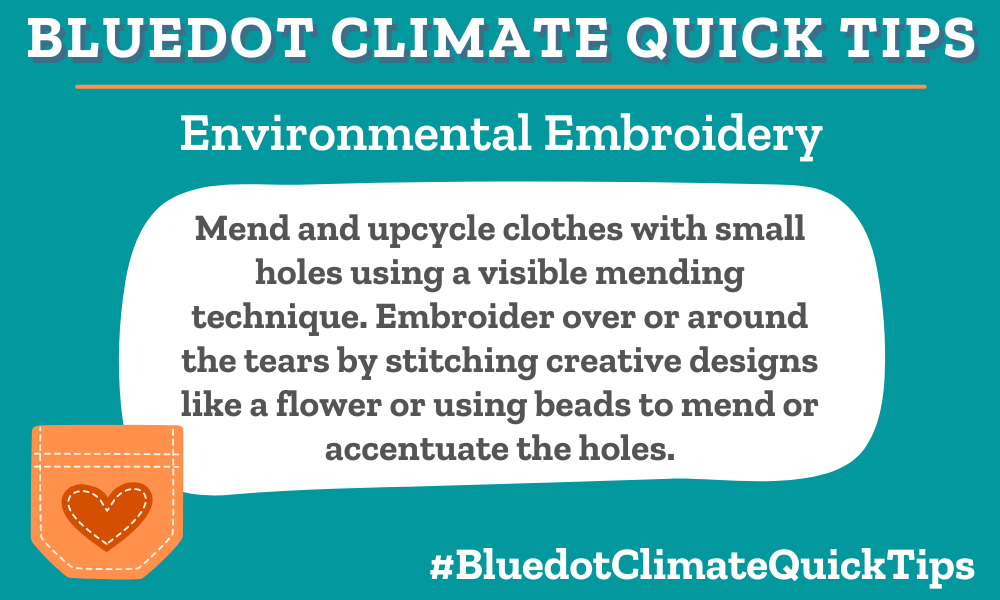
Don’t let your clothes contribute to textile waste. Instead, use visible mending to stitch and embroider simple designs using colorful string or beads to cover or accentuate the flaws.
For more Bluedot Climate Quick Tips, click here.
Got a question for Dot? Let her know here: