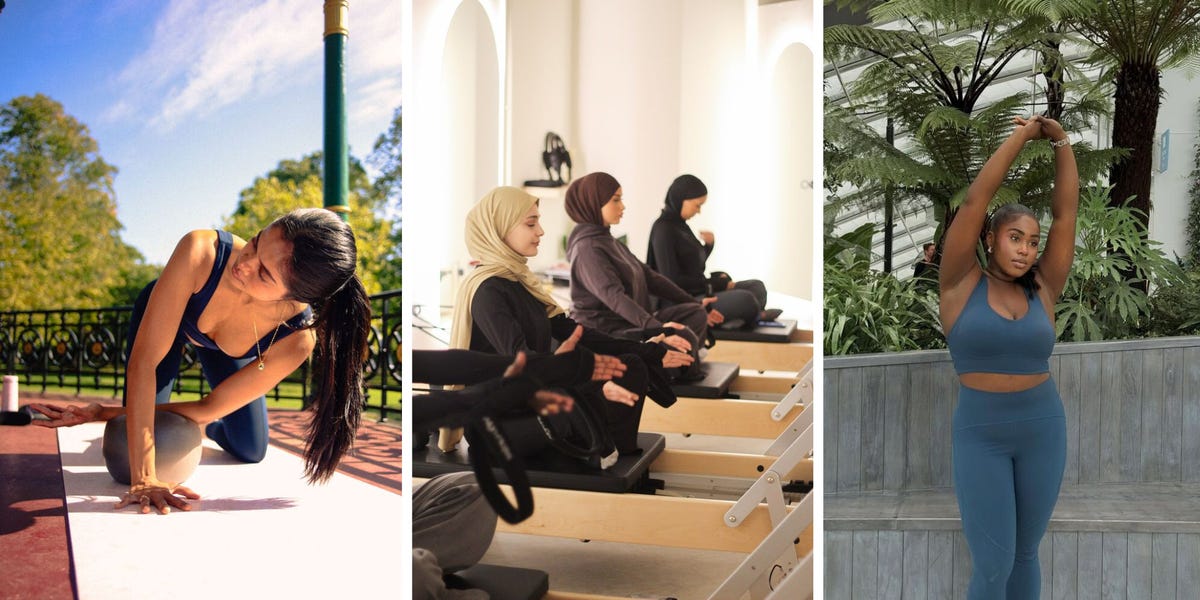
Once considered the preserve of a certain type of person, Pilates is experiencing a reckoning on representation. Here, Women’s Health meets the women holding a megaphone to the mantra that the mat is a place for every body.
Pooja Naik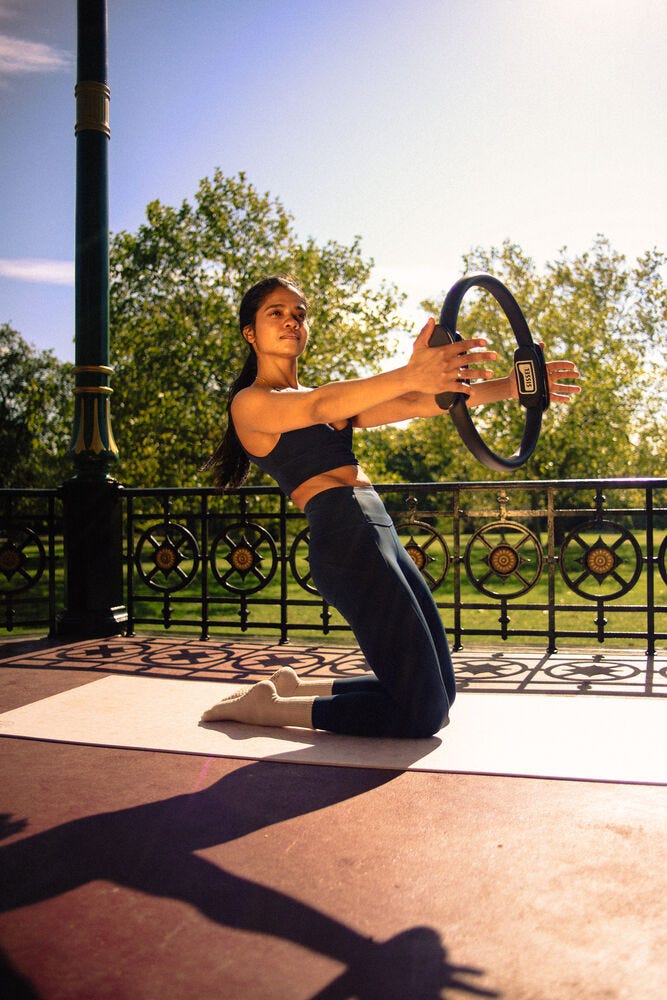
Pooja Naik
Pooja Naik, 33, from north London, Pilates instructor at Ankor Pilates, Mica Yoga and The Movement Studio
Growing up in a South Asian family in India, I watched the women around me manage exhausting, physically demanding lives, often at the expense of their health. It was those memories that inspired me to make Pilates accessible to South Asian women: offering them a way to care for their bodies – and find moments of calm in their busy lives.
I first started practising reformer in 2019; I’d moved to the UK to study dance at Liverpool’s Institute of Performing Arts – and in Pilates, I found a form of movement that helped with my physical alignment while protecting me against injury. But it was moving to London that cemented my obsession.
During the two years I spent earning my master’s in dance science, I became fascinated with the biomechanics of Pilates, along with its ability to calm and strengthen the nervous system. Shortly after graduating, I became a certified mat-work and reformer Pilates teacher.
Around the same time, my mother was diagnosed with breast cancer back in India. Determined to what I could to support her from afar, I suggested Pilates as a form of low-load body conditioning that could help her manage her stress during a difficult time.
The habit stuck – after years of prioritising others, she found something that nourished her. And witnessing that change in her was all the motivation I needed to make Pilates more accessible to women like her.
I knew that Pilates wasn’t just about exercising, but about a feeling of belonging – and a space to find friendships and fun. So I wanted to create a community where culture, comfort and shared experiences could be respected, while emphasising the significance of Pilates’ mental benefits, too.
Key to my mission, too, was reminding South Asian women that they could be anything they wanted to be; I started my career with a chemical engineering degree in 2010, today I’m a Pilates instructor and dancer.
A year since I started teaching in studios, I have regulars who tell me they feel more inspired with me as an instructor, since they see themselves in me; some South Asian women tell me they choose my classes because they see my name on the studio timetable and recognise my heritage – it offers them a sense of familiarity.
For Pilates to be inclusive, diversity should be obvious; it isn’t enough to have a few minority studios or teachers. Inclusivity needs to be woven into the industry at every level, from teacher training to events and the way the discipline is represented within the media.
That last part is particularly important to me. When I first arrived in the UK, I struggled with low self-esteem. With my darker skin tone, I couldn’t help but feel like I stood out. Pilates helped me respect my body – a feeling everyone deserves to have.
Lola Akande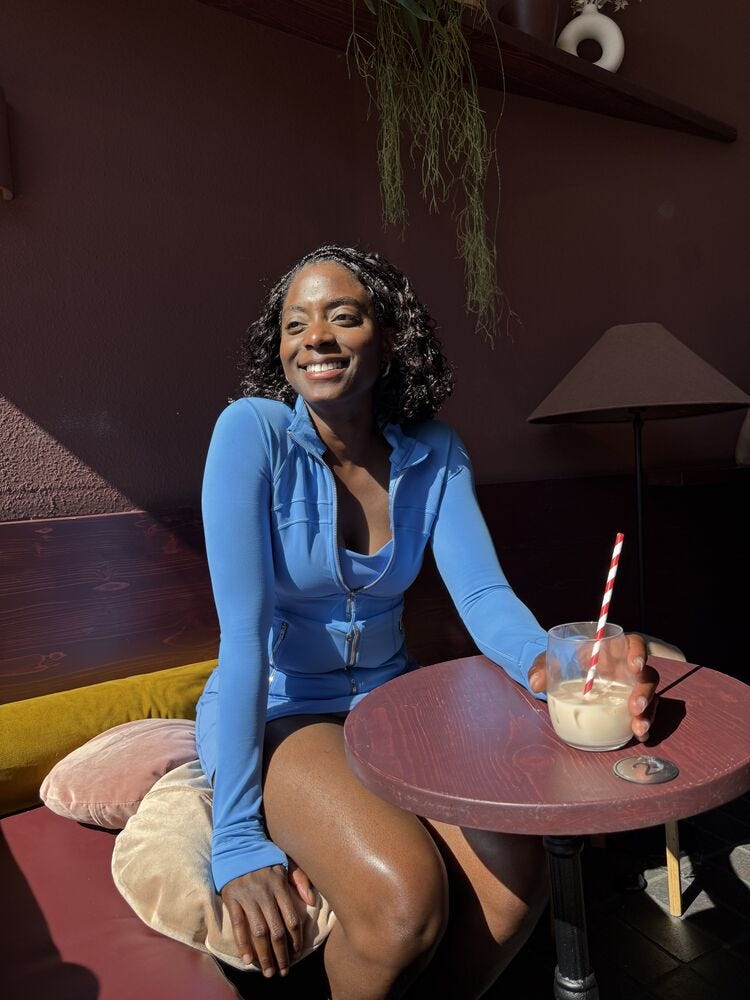
Lola Akande
Lola Akande, 35, from south London, founder of Plum Pilates in Peckham
I’ve always been an active person; in my twenties I went spinning, moved my body through sun salutations and performed The Hundred atop a reformer. I loved the control and precision of Pilates so much that I went on to train as a mat instructor, qualifying in 2018.
For two years, I taught evenings and weekends alongside my corporate job – but it was major abdominal surgery in 2020 that led me to level up my practise. Doing it twice a week for rehab, I felt the benefits almost immediately. So much so that I decided to complete my reformer training, too.
Attending boutique studios, I never felt excluded – either as a client or as an instructor. But that doesn’t mean I never felt shortchanged by workouts that weren’t necessarily right for my body type. I never forgot that feeling – and when I opened PLUM in January 2025, I put inclusivity front and centre of my offering.
I knew from the offset that the ‘Pilates princess’ aesthetic was something I wanted to challenge; some of our strongest clients are women in their mid-forties and fifties and men who started with us in January are already telling us how Pilates has cured years of pain.
A year on, we hold regular instructor workshops, we’re constantly sharing ideas for what does and doesn’t work in a session – including modifications for different body types -and we hold events to champion marginalised groups and body type, like classes exclusively for Black or plus-size clients.
We welcome clients of all genders, cultures and backgrounds, and all of our instructors are equipped to adapt exercises for heavier bodies or pregnant women and people. Our ethos is rooted in kindness and respect so that everyone who walks through our doors leaves feeling better than they did when they arrived.
More than anything, my goal is to raise expectations of what a Pilates session should be. I’ll often meet clients who’ve been practising Pilates for a year without ever learning what the Hundred is (it’s a classic Pilates move) or how to do it with good form. We focus on creating results that last – because Pilates shouldn’t be about what it looks like, but how you feels in your body.
Hanadi Othman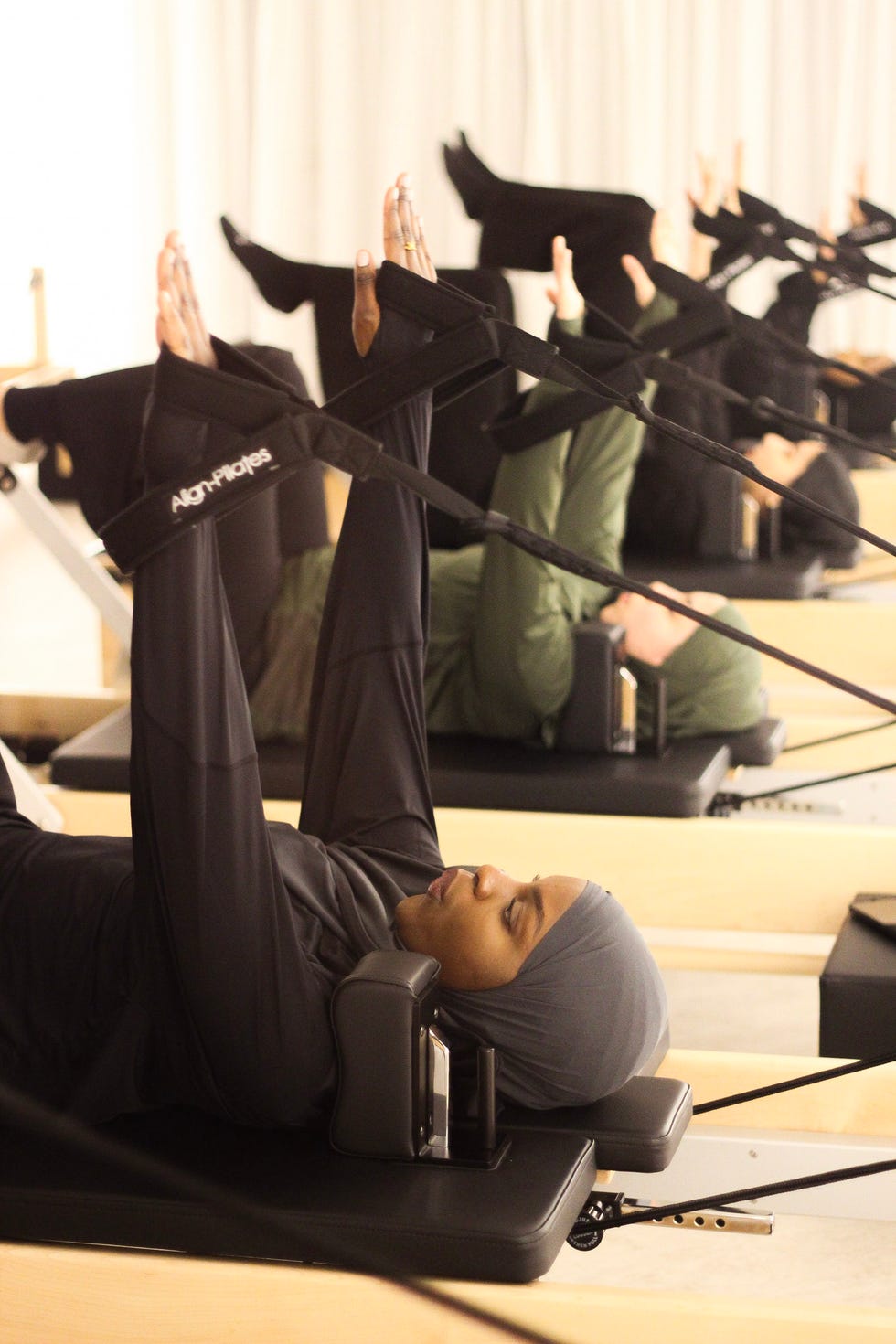
Prive Pilates
Hanadi Othman, 29, from Hackney, founder of Prive Pilates, London’s first Muslim-led women-only reformer studio
After having my second child, motherhood took over. For the first couple of years after my children were born, life was looking after my babies. I didn’t exercise, nor did I pay much attention to my nutrition – and I began to put on weight.
The day I realised I’d reached 100kg on the scales was the day I knew something had to change; it wasn’t about aesthetics, I wanted to be healthy – and I wasn’t. I tried going to the gym, but with two children under two – and no childcare – building a consistent routine proved impossible.
Discovering Pilates changed everything. I loved that it allowed me to exercise daily from home, with instructor-led, 50-minute sessions that left me feeling energised to look after my children. And after months of consistent sessions, I felt ready to take my practice to a studio.
But as a Muslim woman, I struggled to feel comfortable in classes. When men were present, I became wary – of my clothing, my movements; in my culture, women are expected to dress modestly. Consistency was a challenge, too – if one of my children needed me at home, I’d have to cancel.
That I couldn’t find a single studio that catered to the needs of Muslim women, or mothers who needed to exercise comfortably and confidently while respecting their values, felt significant. Sensing an opportunity to create meaningful change – along with a viable business – I set plans in motion for opening my own studio.
In February 2025, I opened the doors to Prive Pilates – the first Muslim-led women-only reformer Pilates studio in London. My goal is to provide a space for women who wouldn’t otherwise attend mixed-gender studios, whether that’s because of their religious beliefs, trauma or comfort, while adhering to Muslim values.
The studio is in a hidden and private location, away from footfall, with a no-filming policy and CCTV monitored by women only. Our entire team of staff and instructors are female, and having a play area for children – and rocking chairs for babies – means women can exercise knowing their children are safe and close by.
The studio was born out of passion, but necessity, too – to finally give Muslim women and mothers a space that understands them. But we warmly welcome women of all backgrounds, ethnicities, beliefs and sexualities who are seeking a private, supportive space to move without judgement.
My ultimate vision for Pilates is for everyone to have a space where they feel seen and represented. Some may say – as a women-only, Muslim studio – Prive is not inclusive, but I argue that we’re an addition to the diverse range of fitness spaces, ensuring that another underrepresented group has a place where they feel comfortable and respected.
No single space can be everything to everyone, and just as other fitness studios cater to different communities, our studio exists to serve a specific group of women who otherwise struggle to find a place where they truly belong.
Rayanna Raye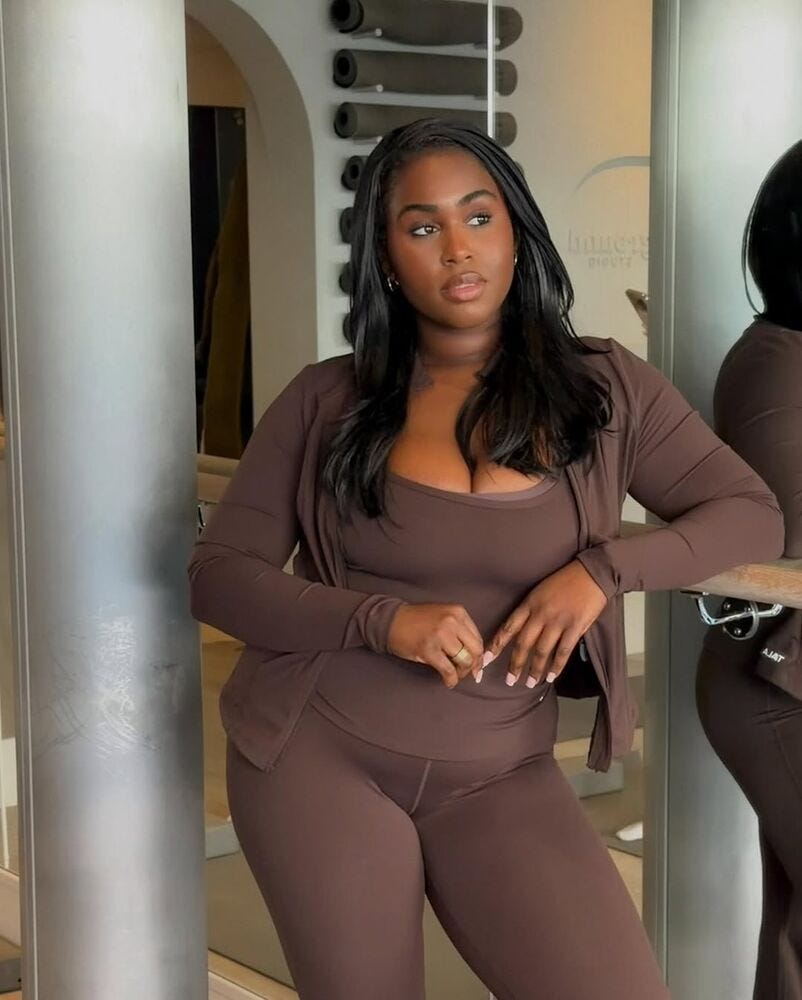
Rayanna Raye
Rayanna Raye, 31, from south London, influencer and Pilates instructor at Avalon Pilates, Everybody Reformer, Power Pilates and Plum Pilates
For my 28th birthday, I treated myself to my first reformer class; I didn’t know then that it would change how I felt about movement entirely. I left that first class feeling stronger, but more confident, too – like I could finally trust my body, without the exhaustion that accompanied endless gym sessions.
Shortly after, I started exploring studios across London. But as much as I enjoyed moving my body in this way, there were moments when I felt out of place. I was usually the only Black woman in class, often the only curvy person, too. And I rarely saw instructors who looked like me.
I considered myself to be confident. Yet here I was, questioning if I belonged in these spaces; I feared the feelings that I was pushing against week after week would be enough to put another woman off entirely. And so I decided to create something different.
In 2023, I started my mat and reformer Pilates teacher training. The courses confirmed for me that Pilates isn’t just physical; it’s incredibly empowering, and that made me even more determined to make Pilates an inclusive space.
Movement should never sit behind a closed door – and representation plays a huge part in that. As a Pilates instructor and influencer, I know that when someone resonates with your experiences, body or background, they show up more fully and experience the benefits more deeply.
Teaching teenagers at a girls’ sixth form recently reminded me that early exposure to accessible fitness can genuinely shape someone’s future relationship with their body, while a woman in her forties told me the other day that showing up at my class was the first thing she’d done for herself in years.
In every space I teach, accessibility is key. I adapt exercises to suit different spinal shapes, strengths and mobility levels, offering modifications and personalised guidance so clients can move safely and confidently – all the while reiterating that it’s not about how you look or how many reps you can do, but how you feel.
I also use my social media to challenge the narrow image often associated with Pilates. By showing my body type performing Pilates, I hope to reshape the idea of what a ‘Pilates body’ is and who the practice is for. I often get DMs from women who look like me expressing their appreciation.
My ultimate goal is to shift Pilates from an aesthetics and performance-focused practice to something accessible, empowering and fun. Some classes I’ve attended in the past have felt performative, with advanced exercises to impress, without any attention to mindfulness or control.
With the 70+ people I teach each week, it’s about understanding each client and guiding them without judgement. I won’t rest until Pilates is a practice where people feel confident, supported and excited to move – regardless of their age, their shape or their background.
RELATED STORIES
As Women’s Health UK’s fitness director and a qualified Pilates and yoga instructor, Bridie Wilkins has been passionately reporting on exercise, health and nutrition since the start of her decade-long career in journalism. She secured her first role at Look Magazine, where her obsession with fitness began and she launched the magazine’s health and fitness column, Look Fit, before going on to become Health and Fitness writer at HELLO!. Since, she has written for Stylist, Glamour, Cosmopolitan, Marie Claire, Elle, The Metro, Runner’s World and Red.Now, she oversees all fitness content across womenshealthmag.com.uk and the print magazine, spearheading leading cross-platform franchises, such as ‘Fit At Any Age’, where we showcase the women proving that age is no barrier to exercise. She has also represented the brand on BBC Radio London, plus various podcasts and Substacks – all with the aim to encourage more women to exercise and show them how.Outside of work, find her trying the latest Pilates studio, testing her VO2 max for fun (TY, Oura), or posting workouts on Instagram.