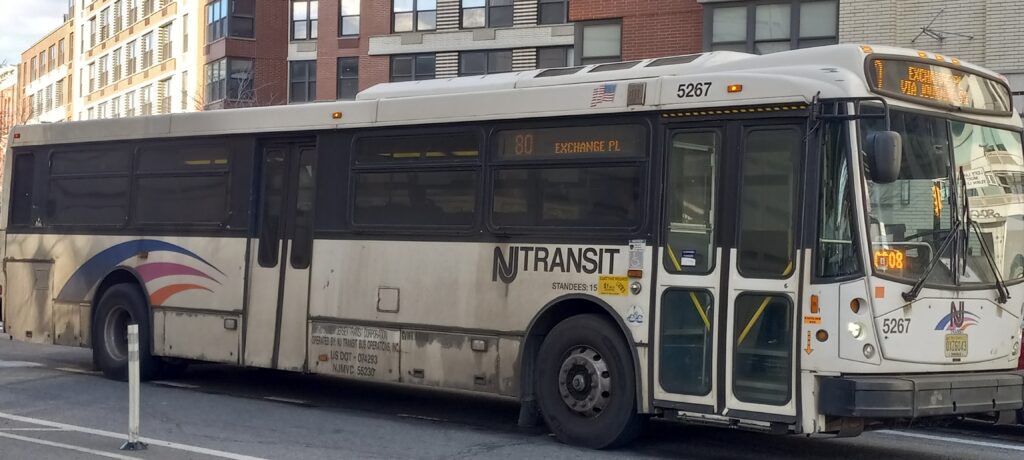
The US Supreme Court on Wednesday ruled that New Jersey Transit Corporation (NJ Transit) is not an “arm of the State” of New Jersey, and it cannot claim sovereign immunity against personal injury lawsuits filed out of state.
The case, Galette v. New Jersey Transit Corporation, consolidated two cases from the Pennsylvania Supreme Court and the Court of Appeals of New York. Both cases involved individuals who were struck by NJ Transit buses in Pennsylvania and New York, respectively, and each plaintiff sued NJ Transit for negligence in their home state courts.
NJ Transit sought dismissal in both cases, arguing it enjoyed New Jersey’s interstate sovereign immunity. Pennsylvania ruled for NJ Transit, finding it was an arm of the state, whereas New York ruled against NJ Transit, finding the opposite.
The unanimous decision, written by Justice Sonia Sotomayor, resolved the court split, holding that NJ Transit is not protected under state sovereign immunity. The court’s analysis centered on whether NJ Transit qualifies as an “arm of the State” under federal law. If so, NJ Transit could claim immunity under a constitutional doctrine rooted in the 11th Amendment and expanded through court precedent, which generally prevents individuals and private entities from suing a state without the state’s consent.
The ruling identified three primary factors under which sovereign immunity is judged: whether the entity was structured as a legally separate corporation; whether the state bears formal liability for the entity’s judgments; and the degree of state control exercised over the entity.
Under the first factor, the court found that NJ Transit’s corporate structure was strong evidence of legal separation from the state. The state legislature established NJ Transit in 1979 as a “body corporate and politic with corporate succession” with full powers to sue and be sued, enter contracts, and hold property. The court also noted that New Jersey’s Tort Claims Act excludes entities with sue-and-be-sued authority from its definition of “State.”
On state liability, justices found that New Jersey carried no formal liability for NJ Transit’s debts or judgments. On state control, the court acknowledged that while the governor holds appointment and removal powers over the NJ Transit board, this was not fully determinative in the current matter, as this type of control exists over almost all state-created entities.
Last, the court rejected NJ Transit’s argument that its receipt of state funding warranted immunity, reasoning that the question centered on legal structure rather than public purpose or financial dependence.
The opinion reversed the Pennsylvania Supreme Court’s judgment and affirmed the ruling from the New York Court of Appeals, and both cases were remanded for further proceedings. The case sets an important precedent, further clarifying the bounds of state sovereign immunity.