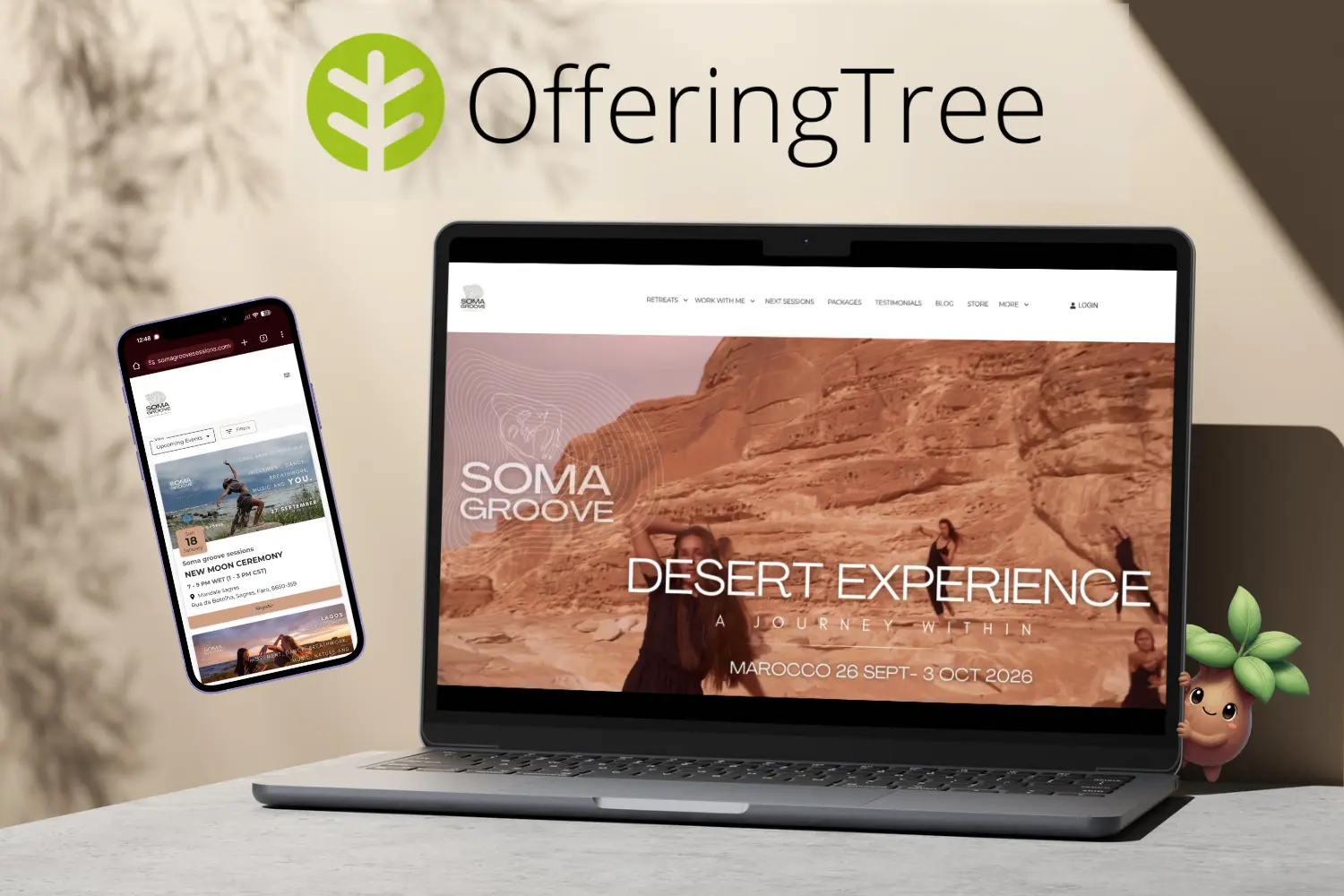
Sprout, OfferingTree’s new website assistant, is designed to eliminate one of the biggest challenges for studios: the time, cost and complexity of building a site that actually works
Independent studio owners juggle nearly every role inside their business — teaching classes, managing schedules, marketing, answering client questions and running day-to-day operations, often on their own. Within that already full workload, one unexpected bottleneck consistently slows momentum: building and maintaining a website.
For many operators, that single task can stall momentum before a studio ever reaches its potential.
OfferingTree has spent years working alongside yoga, Pilates and fitness professionals, and the pattern became impossible to ignore. Website creation wasn’t just a technical hurdle. It was a growth barrier.
“We didn’t start by saying we needed to build a new tech feature,” says Eddie Arpin, CEO at OfferingTree. “But we kept seeing studio owners get stuck at the same point. The blank page problem is real — people know what they want from their website but they don’t know how to build it. That gap alone can stop a studio from launching or growing.”
So instead of telling operators to learn code or hire expensive designers, the company built a solution designed to remove that friction entirely.
Built by Insiders
OfferingTree isn’t a generic software company entering the wellness space from the outside. Its founders come from the industry itself, and that background shapes how the platform is built and how the company operates.
The platform functions as an all-in-one business management system for studios and solopreneurs, combining scheduling, payments, marketing and operations in one place. But what users often notice first is the culture.
“We’re a small company in a way people can feel,” Arpin says. “Our users regularly interact with real people here, often even the founders. That level of support and connection matters to us.”
Clients also gain access to an active community that includes coaching calls, webinars and shared resources designed to help studios succeed, not just use software.
The company operates on month-to-month pricing rather than annual contracts, which McWhorter describes as a decision rooted in philosophy rather than sales tactics.
“We feel strongly about earning a business owner’s trust every single month,” he says. “That’s why all of our pricing is transparent and publicly listed. That kind of openness shouldn’t be rare, but it still is.”
What Sprout Actually Does
Sprout is OfferingTree’s optional website-building assistant designed specifically for wellness businesses. Instead of forcing owners to design pages from scratch, it guides them through the process conversationally and generates a polished site based on their brand voice, services and goals.
It can design layouts, apply branding, structure content, optimize for search visibility and build pages for events, campaigns and retreats while allowing owners to edit anything at any time.
“If you can describe what you want, Sprout can build it,” Arpin explains. “It takes the technical weight off your shoulders so you can focus on what you actually want to share.”
It also gives owners and operators what they need most – more time.
“Many studio owners spend 10 to 15 hours per week keeping up their websites,” Arpin says.
“Sprout saves me time, a lot of time, when I’m creating pages for my website,” says Ana-Alexandra M., an Offering Tree client, who also praised its ease of use.
OfferingTree’s exceptionally close relationships with their customers translates to insights that truly shape their offerings.
“We built this because of customer feedback,” Arpin says. “Studio owners told us this was a real barrier. They want to teach, serve their communities and grow their businesses. They don’t want to become web designers.”
“Sprout is brilliant,” says another Offering Tree client, Jane D, of The Sound. “It is so intuitive, knows my website, makes everything so easy and quick. I have recently used it to create a landing page. It created exactly what I needed in seconds. The branding, layout, everything was perfect.”
 credit: OfferingTree
By simplifying one of the most time-consuming operational tasks, Sprout helps owners reclaim time to focus on the parts of the job they actually started their business to do.
The company understands that yoga studios, Pilates studios and fitness facilities don’t communicate the same way, therefore their websites shouldn’t look the same.
“One of the biggest issues we saw across website builders was that everything looked the same,” Arpin says. “Studios were being pushed into templates that didn’t match their identity.”
Sprout adapts to different tones, visual styles and messaging approaches so each business can reflect its own brand.
“A good website respects a visitor’s time,” he adds. “Clear scheduling, simple booking paths and intuitive navigation matter more than flashy design.”
Designed with People and Planet in Mind
The wellness community can be skeptical of AI when it comes to environmental impact.
OfferingTree chose not to sidestep that concern. The company supports the Arbor Day Foundation and the Bonneville Environmental Foundation to compensate for the estimated carbon and water usage associated with their AI tool at a rate that is slated to significantly exceed its usage.
“We never want someone to feel like using our tools conflicts with their values,” Arpin says. “Environmental responsibility matters deeply to us and to our community.”
The company also knows that technology can sometimes feel at odds with industries built on personal connection, so they intentionally designed Sprout as a collaborative tool, not an automated decision-maker. Owners stay in control, and they can use it as much or as little as they want.
“This was incredibly important to us,” he says. “We had a lot of internal conversations about how to design something that supports studio owners without replacing their voice. It should never make decisions that humans should make.”
In the end, OfferingTree doesn’t see Sprout as just a technology platform release. It sees it as part of a broader shift in how software should serve wellness professionals.
That philosophy reflects a larger shift in how wellness technology is being designed.
“Ultimately what’s needed is less complexity, more control and more time for the work that actually matters. It gives humans the tools — and the time — to show up fully for their communities.”