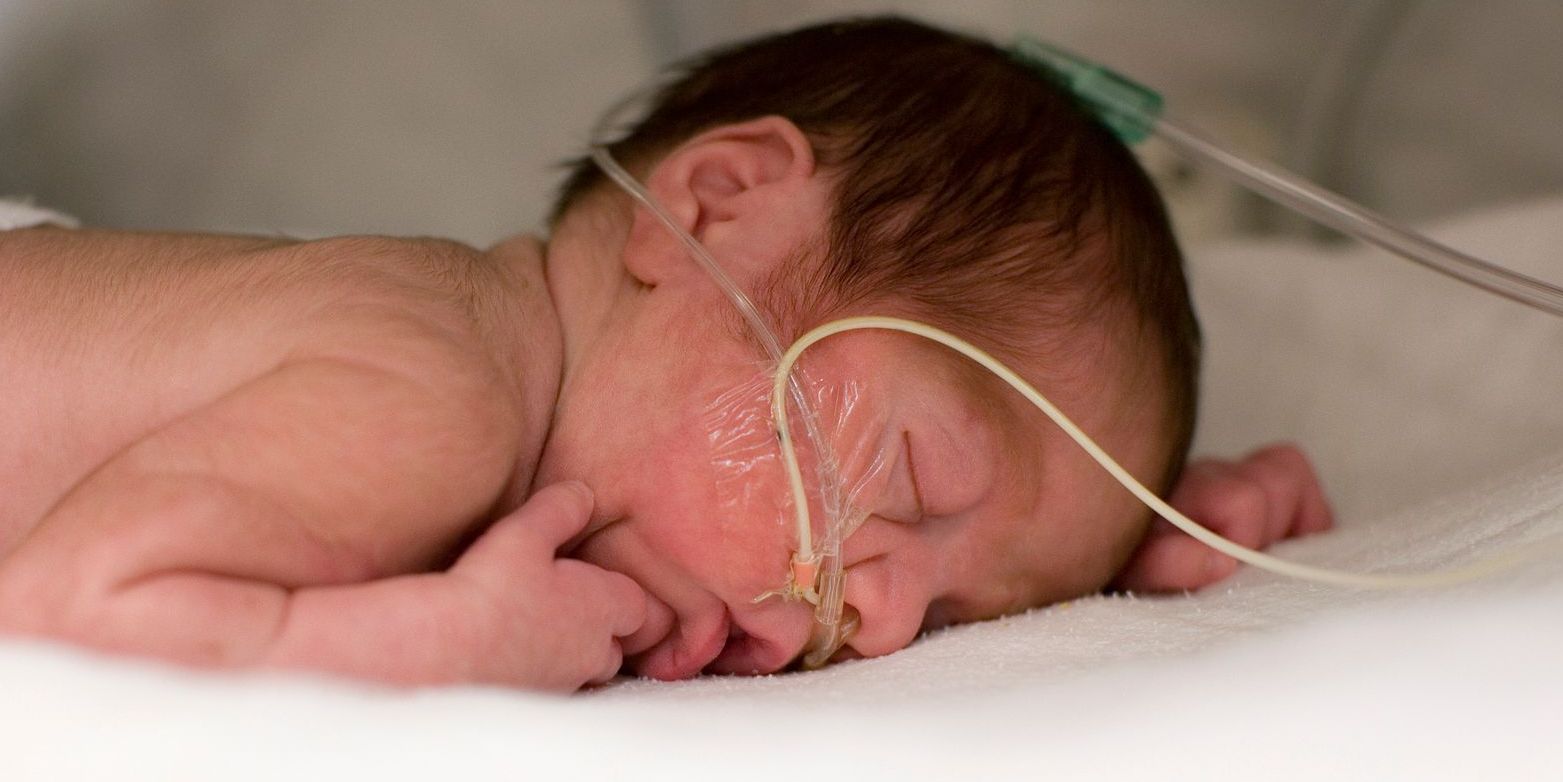
Enteral arachidonic acid (AA) and docosahexaenoic acid (DHA) supplementation nearly halved the risk for severe retinopathy of prematurity (ROP) for extremely preterm infants, with benefit observed across multiple clinical risk strata, according to a research letter published in JAMA Ophthalmology.
“Our findings suggest that AA and DHA promote retinal vascularization, regardless of the risk factor for severe ROP,” wrote corresponding author Pia Lundgren, MD, PhD, of the Sahlgrenska Academy at University of Gothenburg, Sweden, and colleagues.
What the Analysis Showed
To identify risk factors affected by AA and DHA supplementation and their interactions with severe ROP, the research team conducted a secondary analysis of the Mega Donna Mega (MDM) randomized clinical trial. The researchers evaluated 177 infants (100 boys [57%] and 77 girls [44%]) born before 28 weeks’ gestation (mean gestational age, 25.6 weeks) who received enteral supplementation with AA 100 mg/kg/day and DHA 50 mg/kg/day from birth to term-equivalent age or standard care. They defined severe ROP as stage 3 or higher and/or treated ROP.
“Severe ROP developed in 37% of those receiving standard care (34 of 93) vs 19% of those receiving AA and DHA (16 of 84) (difference, 18% [95% CI, 5%-30%]; P=.01; relative risk [RR], 0.52 [95% CI, 0.31-0.86]),” the authors reported. “Other morbidities were equally common in both groups, and no safety issues with supplementation occurred.”
Analysis showed that severe ROP risk rose with several familiar exposures: 14 or more days of parenteral nutrition in the first month (RR, 8.86), hyperglycemia (RR, 5.83), patent ductus arteriosus (PDA; RR, 2.51), thrombocytopenia (RR, 2.40), and necrotizing enterocolitis (NEC; RR, 2.22).
“Regardless of presence of the evaluated risk factor, infants who received AA and DHA vs standard care showed reductions around the overall 48% lower risk of severe ROP, with 95% CIs covering the corresponding RR of 0.52,” the researchers wrote.
The research team acknowledged the single‑country setting as a key study limitation and noted that baseline serum vitamin levels would have strengthened the analysis, given their potential impact on an infant’s risk of severe ROP.
Nonetheless, the authors concluded, “Our findings highlight the potential importance of AA and DHA for extremely preterm infants to reduce the incidence of severe ROP and preserve vision development.”
Clinical Implications
Consider AA 100 mg/kg/day plus DHA 50 mg/kg/day enterally from birth to term-equivalent age for infants born at less than 28 weeks’ gestation.
Maintain vigilance for known ROP risk factors (prolonged parenteral nutrition, hyperglycemia, PDA, thrombocytopenia, NEC) but anticipate benefit despite their presence.
Coordinate with nutrition, ophthalmology, and neonatology to standardize dosing, monitoring, and follow-up visual assessments.