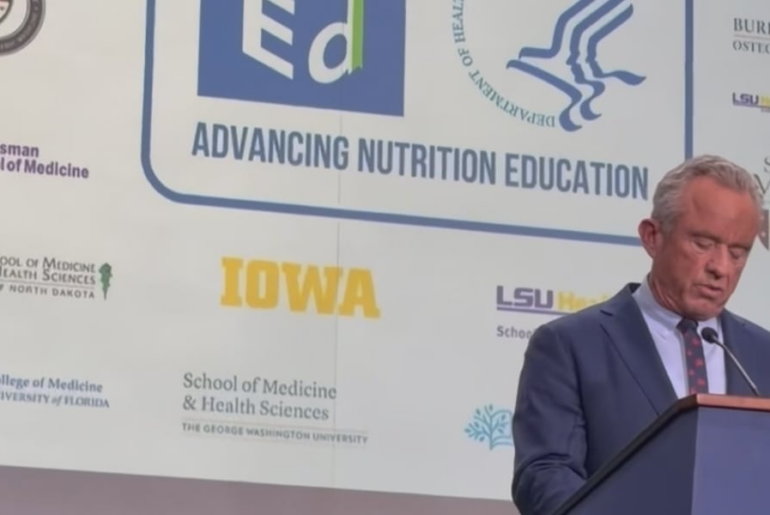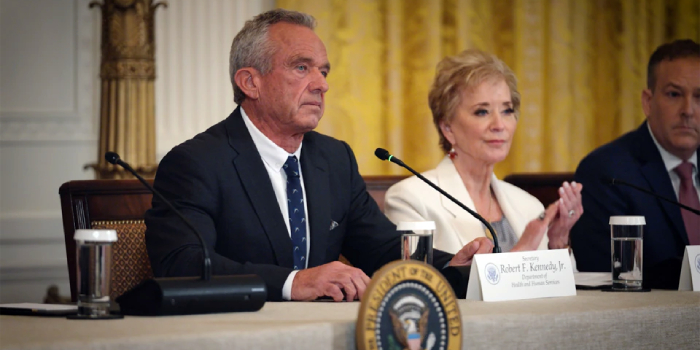
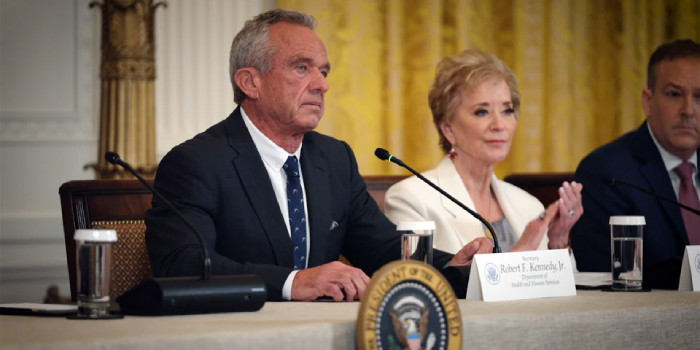
The U.S. Department of Health and Human Services and the U.S. Department of Education convened leaders from 53 of the nation’s top medical schools across 31 states to announce commitments to require meaningful nutrition training for future doctors beginning in the next academic year. The medical schools, representing 31 states, will provide at least 40 hours of nutrition education, or implement a 40-hour competency equivalent, for students starting in the fall of 2026. Photo from U.S. Department of Health and Human Services.
News Release
WASHINGTON — Federal health and education officials said Thursday, March 5 that more than 50 U.S. medical schools, including the Indiana University School of Medicine, have agreed to increase nutrition education for future doctors beginning in the 2026 academic year.
The announcement came during a meeting at the U.S. Department of Health and Human Services that included leaders from 53 medical schools in 31 states, according to the agency. Officials from the U.S. Department of Education also participated.
Under the commitments, participating schools plan to provide at least 40 hours of nutrition instruction or an equivalent competency requirement for medical students starting in fall 2026.
Robert F. Kennedy Jr. said poor nutrition contributes to chronic disease and that increasing training for physicians could help improve patient care.
“Chronic disease is bankrupting our health system, and poor nutrition sits at the center of that crisis,” Kennedy said in a statement.
Linda McMahon said the effort aims to place more emphasis on prevention and public health in medical training.
Leaders from several medical organizations attended the event, including Bobby Mukkamala of the American Medical Association; David Skorton of the Association of American Medical Colleges; and Robert Cain of the American Association of Colleges of Osteopathic Medicine. Jeffrey Gold also attended.
Officials said the initiative comes as studies suggest nutrition education has historically received limited emphasis in medical training. A 2022 survey published in the Journal of Wellness reported that medical students receive an average of about 1.2 hours of formal nutrition education per year. The survey also found that about three-fourths of U.S. medical schools do not require clinical nutrition courses and only 14% of residency programs include a nutrition curriculum.
The federal government also plans to provide $5 million through the National Institutes of Health for a multi-phase challenge aimed at encouraging medical schools and related health training programs to integrate more nutrition education into their curricula. The funding is intended to support coursework development, clinical training opportunities and research initiatives focused on nutrition science.
In addition, officials said officers in the U.S. Public Health Service Commissioned Corps will be required to complete continuing education focused on nutrition as part of their professional development.
See the HHS fact sheet for further information, including the participating medical schools.