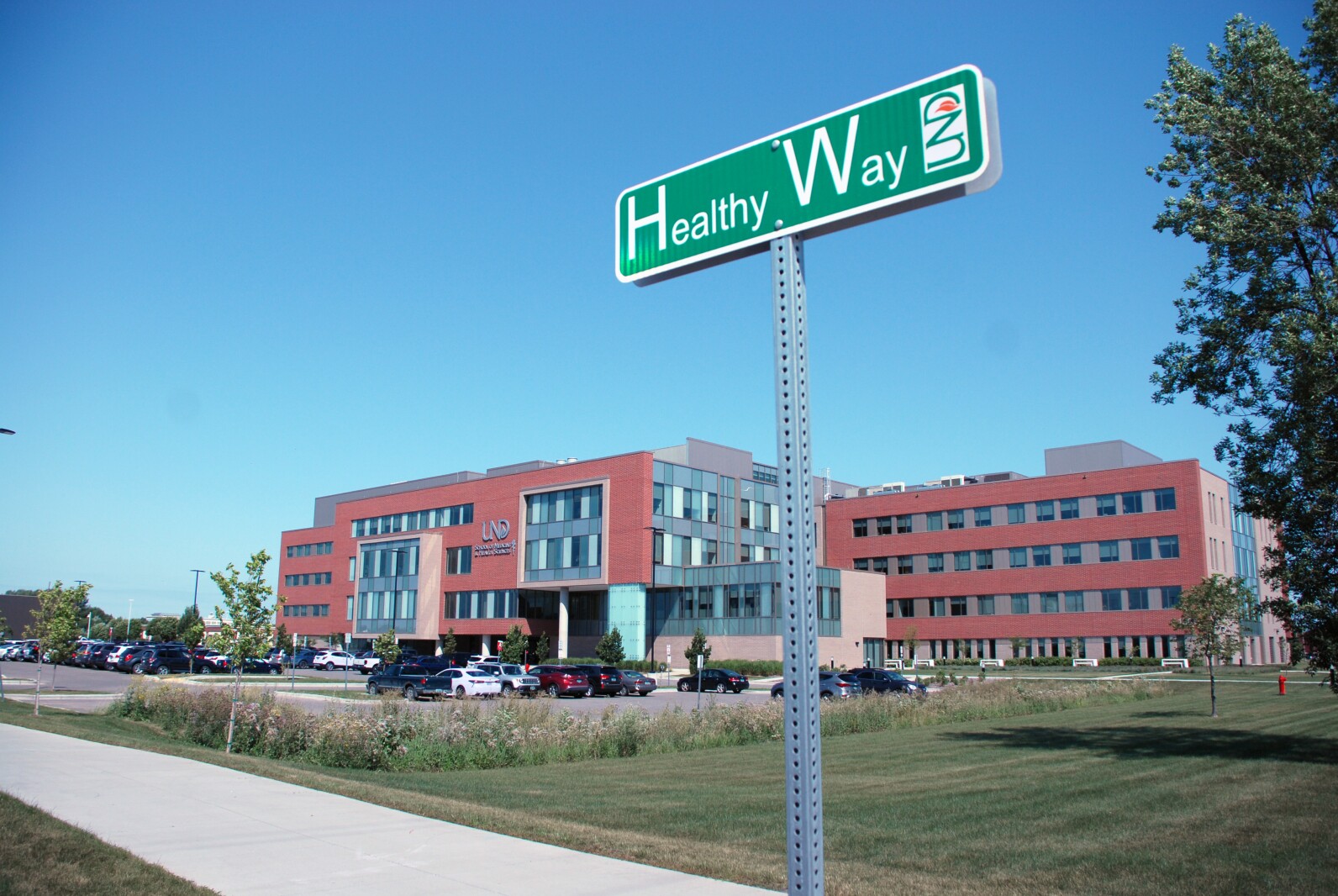
GRAND FORKS – The University of North Dakota School of Medicine and Health Sciences was one of 53 medical schools recognized by U.S. Health and Human Services Secretary Robert F. Kennedy Jr. for committing to increasing nutrition training for future doctors.
The HHS unveiled the list of committed medical schools on Thursday. The 53 schools on the list – spanning 31 states and making up roughly a third of medical schools nationwide – have agreed to provide at least 40 hours of nutrition education, or implement a 40-hour competency equivalent, for M.D. students starting in the fall.
The UND School of Medicine has had this requirement in place since 2020, according to the list.
Dr. Marjorie Jenkins, dean of the UND School of Medicine, was present at the announcement in Washington, D.C., as a guest of U.S. Sen. Kevin Cramer, R-N.D.
“We must stop chronic diseases before they begin – otherwise, a healthier America will remain beyond our reach,” Jenkins said in a statement. “This initiative empowers and educates the next generation of health care providers. Food is medicine, and it’s a testament to the faculty and students at our university that they were having these conversations about nutrition and disease years ago.”
The 40-hour commitment challenge was announced as part of the “Make America Healthy Again” agenda driven by Kennedy and President Donald Trump. The MAHA agenda prioritizes nutritional education as a way to help address rising rates of chronic disease in the U.S., according to DHS.
“Chronic disease is bankrupting our health system, and poor nutrition sits at the center of that crisis,” Kennedy said in a statement. “Today medical schools are committing to change how America trains its doctors – by putting nutrition back where it belongs: at the heart of patient care.”
In a statement, U.S. Secretary of Education Linda McMahon called nutrition education an essential but often overlooked aspect of public health. Speaking at the D.C. event, American Medical Association President Dr. Bobby Mukkamala added that in medical school, nutrition has historically been regarded as an elective in medical school rather than basic foundational training that affects every patient.
According to the DHS, medical students in a 2022 survey reported receiving an average of 1.2 hours of formal nutrition education each year.
Dr. Pat Carr, associate dean for medical education at the UND School of Medicine, said the nutrition requirement at UND was implemented during the COVID-19 pandemic, when the medical school revised its curriculum.
“There was an intentional increase in nutritional content when we implemented what we called ‘Curriculum 2.0 in 2020,” Carr said in a statement, referencing biochemistry and nutrition faculty who developed additional nutrition lectures for medical students. “Nutrition content was increased due to both best practice guidelines and our students’ request that they get more nutrition education.”
The UND School of Medicine is the only medical school in North Dakota. The University of South Dakota’s Sanford School of Medicine also appears on the HHS list. The full list of schools can be found at hhs.gov/nutrition-education.
Our newsroom occasionally reports stories under a byline of “staff.” Often, the “staff” byline is used when rewriting basic news briefs that originate from official sources, such as a city press release about a road closure, and which require little or no reporting. At times, this byline is used when a news story includes numerous authors or when the story is formed by aggregating previously reported news from various sources. If outside sources are used, it is noted within the story.