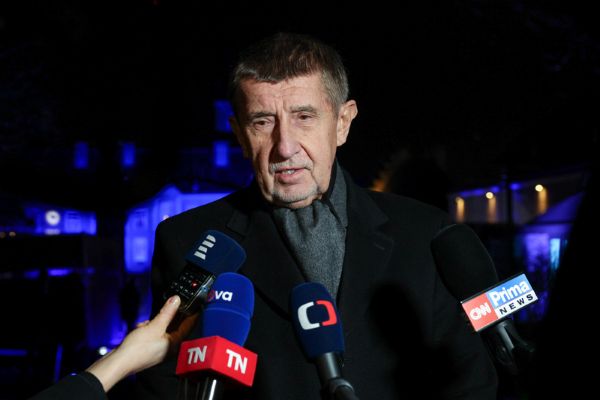
On 5 March, a coalition between far-right and right-wing extremists in the Czech Parliament rejected a motion to lift the immunity from prosecution of Prime Minister Andrej Babiš in a $2 million fraud case involving European Union subsidies. The motion was dismissed by a vote of 104 to 81 in the 200-seat lower house of Parliament, with one lawmaker abstaining and 14 absent from the vote. Had the motion been approved, it would have allowed the Municipal Court in Prague to address the case and issue a verdict.
Previously, the court had acquitted Prime Minister Babiš twice; however, those rulings were overturned by an appeals court. The appeals court determined that the lower court had not adequately assessed the evidence and instructed that a retrial with a request for a guilty verdict should be undertaken. Due to the rejection of this recent motion, Prime Minister Babiš can only be tried after the conclusion of his term in the house in 2029. He has consistently maintained his innocence, asserting that the case is politically motivated.
The prosecution initially sought a suspended sentence and a fine for Prime Minister Babiš, who commenced his third term in December. The case centres on a farm known as the Stork’s Nest, which received EU subsidies after ownership was transferred from Babiš’s Agrofert conglomerate to his family members. Subsequently, Agrofert regained ownership of the farm. The subsidies were designed for small- and medium-sized enterprises, rendering Agrofert ineligible. The conglomerate later returned the subsidy.
Additionally, Jana Nagyová, a former associate of Babiš who signed the subsidy request, is scheduled to face retrial. She is currently serving as a member of the European Parliament, which has already lifted her immunity. Prime Minister Babiš returned to power following his ANO (YES) party’s victory in the October election, forming a governing coalition with two smaller political entities: the right-wing extremist Freedom and Direct Democracy (SPD) party and the far-right Motorists for Themselves. His coalition holds a majority in the lower house, and its agenda includes shifting away from support for Ukraine and rejecting certain key EU policies.
In a separate case, lawmakers also declined to authorise the prosecution of lower house speaker Tomio Okamura, the leader of the SPD, on charges of inciting hatred.
This article used information from The Associated Press.