 4 min read
 Scientists uncover one food that they say lowers LDL cholesterol fast.In a recent study, participants who ate only oatmeal for two days showed roughly a 10% reduction in cholesterol.Here’s what experts want you to know about the findings.
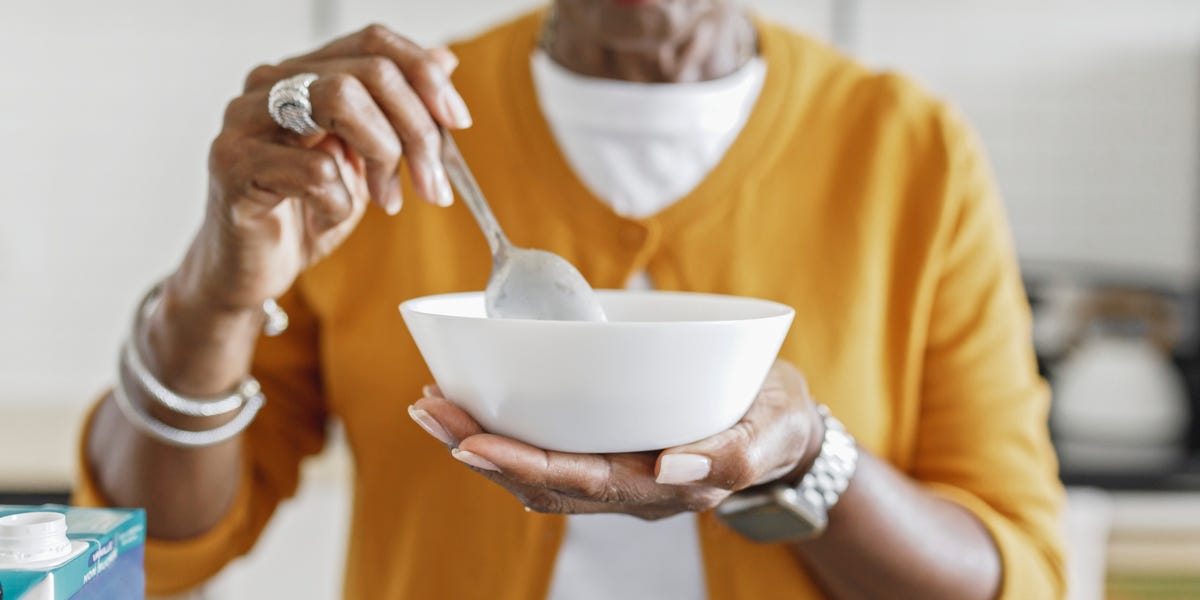
Finding natural ways to lower cholesterol is often a first step in boosting heart health. While there are many foods to help lower yours, one in particular may be worth considering. Scientists found that eating oatmeal may lower LDL, or “bad” cholesterol levels by 10%.
Meet the experts: Cheng-Han Chen, M.D., board-certified interventional cardiologist and medical director of the Structural Heart Program at MemorialCare Saddleback Medical Center in Laguna Hills, CA; Andrew M. Freeman, M.D., F.A.C.C., board-certified cardiologist; Keri Gans, M.S., R.D.N., C.D.N., author of The Small Change Diet.
A small study in Nature Communications looked at the effect of oat-based dietary changes on cholesterol and other markers of heart health. The researchers examined 66 people who all had metabolic syndrome, or a series of biomarkers that put them at risk for type 2 diabetes and heart disease, including high blood pressure, elevated blood sugar, above-average body weight, and abnormal blood lipid levels. Then, 32 of the participants completed a short-term change in their diet, while 34 sustained the change for longer.
The short-term participants were randomly assigned to two groups, an “oat group” and a control group. The oat group ate three oat-based meals for two days and then returned to their habitual diets for the remainder of the six-week study. The control group was given three standardized meals a day for two days that had similar macronutrient content to the oat group but did not include oats, and then returned to their regular diets for the six weeks.
The long-term dietary change participants were also divided into an oat group and a control group. This time, the oat group replaced one meal a day with oatmeal for six weeks while maintaining their regular diet for other meals, while the control group participants maintained their regular diets without oats for the full six weeks.
Follow-up scans at the end of the study revealed that the two-day oat diet was the most effective in lowering cholesterol, decreasing LDL levels by about 10%. Ahead, experts break down the findings and discuss if it’s worth adding oats to your menu.
Why are the findings significant?
Addressing high cholesterol plays a big role in setting people up for better overall heart health. “High cholesterol is a known significant risk factor for developing heart disease,” explains Cheng-Han Chen, M.D., board-certified interventional cardiologist and medical director of the Structural Heart Program at MemorialCare Saddleback Medical Center in Laguna Hills, CA. “Finding different ways to lower cholesterol will help us reduce the burden of heart disease in our society.”
What’s particularly promising about the study’s results is both how quickly cholesterol levels were lowered and that the reduced LDL levels seemed to have some staying power, according to Andrew M. Freeman, M.D., F.A.C.C., a board-certified cardiologist. “It suggests a clinically meaningful LDL-cholesterol reduction can happen quickly in people with metabolic syndrome, a group at high risk for future cardiovascular disease,” he says. “The authors note cholesterol values tended to remain below baseline during a six-week oat-free follow-up, hinting at a potentially durable physiologic ‘reset’ in some participants.”
As for what makes oats so beneficial for heart health? The key is their high levels of “soluble fiber, or beta-glucan,” says Keri Gans, M.S., R.D.N., C.D.N., author of The Small Change Diet. This reveals “that the cholesterol-lowering effect of eating oatmeal might be a result of the breakdown products of oatmeal in our gut,” Dr. Chen adds.
Do oats have other health benefits?
The beta-glucan levels present in oats help with more than lowering LDL, according to Gans. “Beyond cholesterol, oats may also help stabilize blood sugar levels and increase feelings of fullness after meals, thanks to their soluble fiber,” she says. “This can lead to fewer energy crashes and better appetite control, which may support weight management over time.”
What might this mean for you?
“The major takeaway is dose and context,” explains Dr. Freeman. “A brief, intensive oat-based pattern (three oat meals a day) produced clearer lipid improvements than a moderate oat addition layered onto an otherwise Western diet.”
While the study showed replacing all of your meals with oats may lead to quicker results, it isn’t exactly feasible. According to Gans, “consistency matters more than extremes…While larger effects are observed with higher oat consumption, even moderate, consistent intake can be beneficial.”
Still, a diet heavy in oats isn’t for everyone, and it’s always important to be cautious when making significant changes to your routine. “Those with celiac disease or gluten sensitivity should choose certified gluten-free oats, and anyone increasing fiber intake should do so gradually to prevent digestive discomfort,” Gans warns.
Luckily, if making oats a major part of your diet isn’t going to work for you, there are other ways to increase your consumption of beta-glucan that may have a similar effect. “Aim for more soluble fiber (oats, beans/lentils, apples/citrus) and a higher total fiber intake overall,” Dr. Freeman suggests. “This is one reason a more plant-forward, lower-fat, higher-fiber pattern is consistently associated with better cardiometabolic health.”
The bottom line
The study’s results show that adding more oats to your diet may significantly improve cholesterol levels fast, but there’s still more to consider. “The most significant LDL reductions were achieved through a short-term, intensive oat plan that isn’t sustainable long-term,” Gans explains. “While oats can support heart health, they aren’t a replacement for prescribed medication when it’s medically necessary; instead, they are a helpful component of a comprehensive heart-healthy diet.”
The study’s demographic was also pretty small and specific, as “participants were mostly older adults with metabolic syndrome and obesity,” Dr. Freeman points out. “So, results may not generalize to younger or lower-risk populations…calorie restriction [also] differed between the short high-dose and longer intervention—so some benefit may reflect weight/calorie effects, not oats alone.”
Still, there’s reason to be optimistic. “The practical message is not ‘oats are a magic trick,’ but ‘fiber-rich, minimally processed plant foods can meaningfully improve cholesterol—especially when they displace saturated-fat–rich and refined foods,’” Dr. Freeman says. So next time you’re at a loss for what to eat for breakfast, it may be worth giving oatmeal a try.
Related stories