/Editor’s Pick
Weighted vests are newest fitness trend
1 / 4
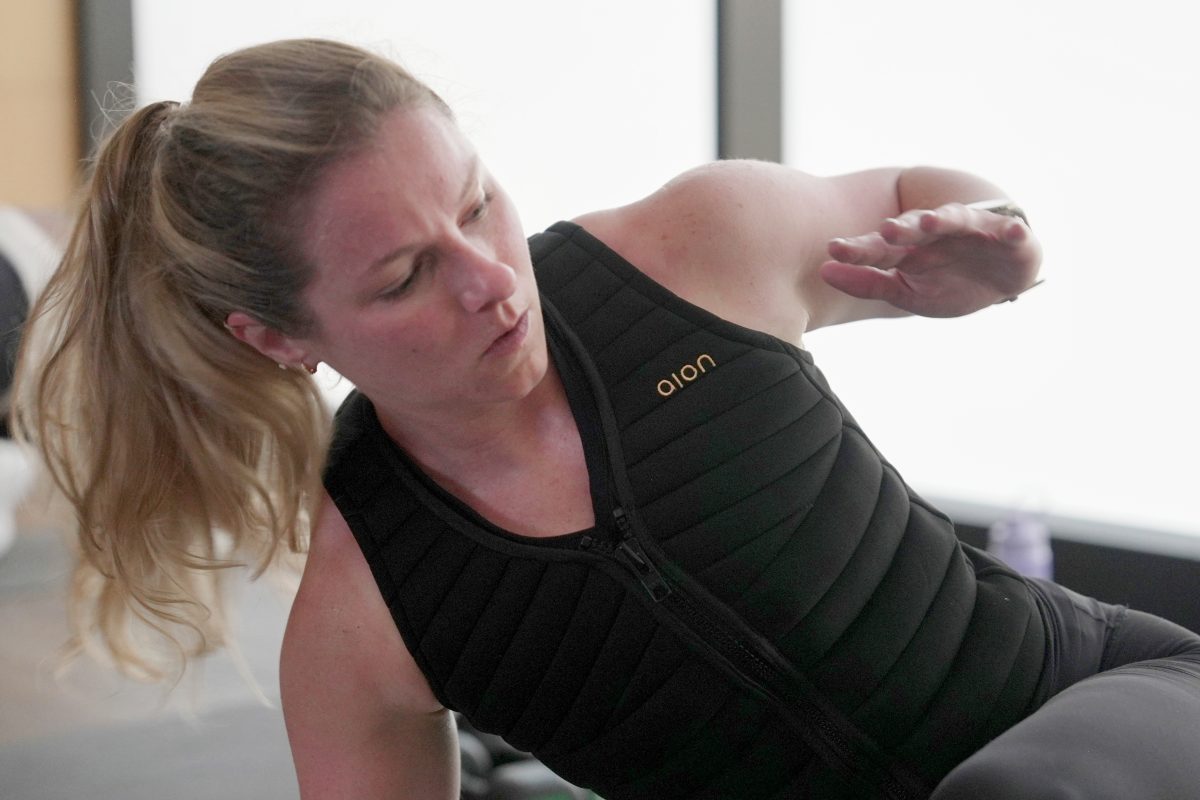
Nora Capocci wears a weighted vest during an MB360 workout class at the Life Time health club in New York last August. [Associated Press]
2 / 4
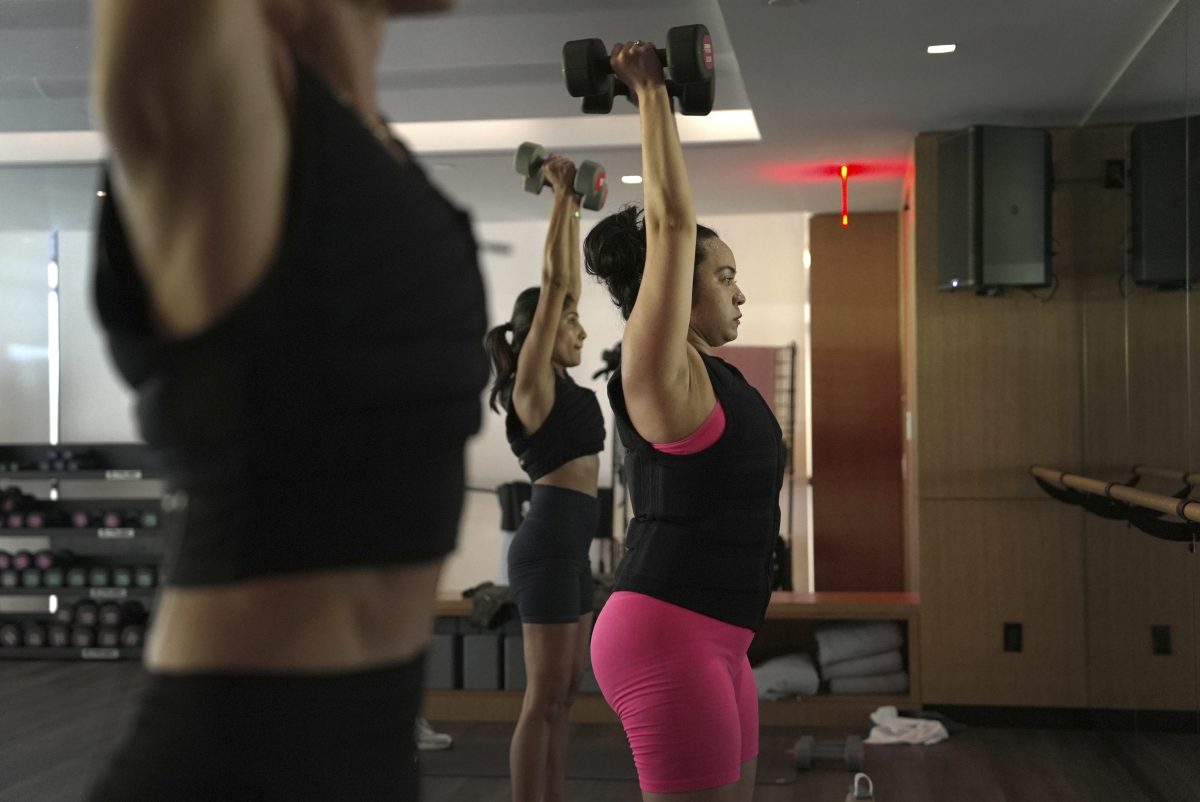
Jannelliz Barragan, center, wears a weighted vest during an MB360 workout class at the Life Time health club in New York last August. [Associated Press]
3 / 4
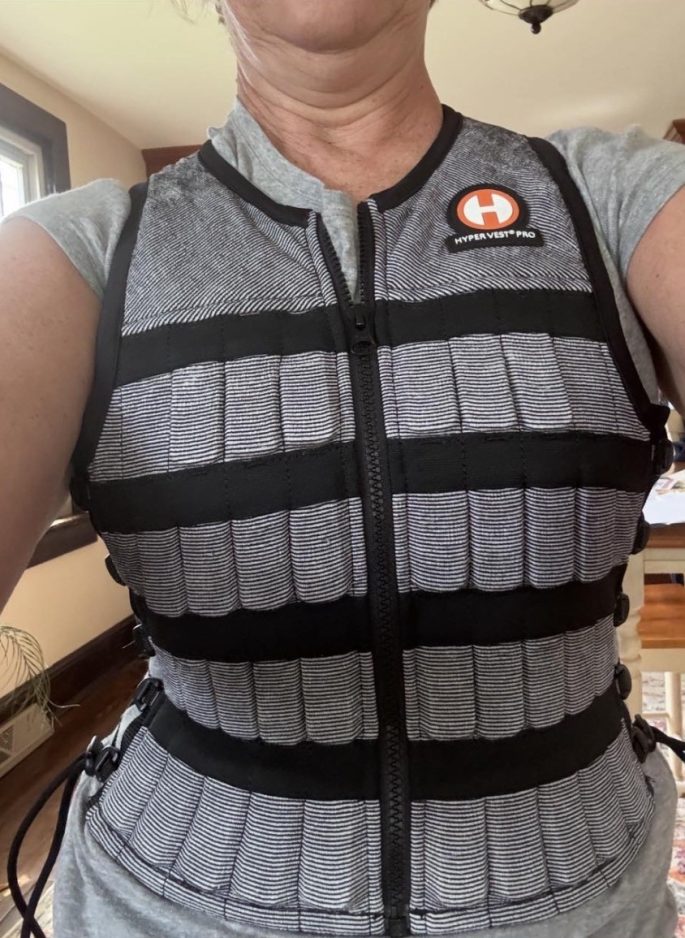
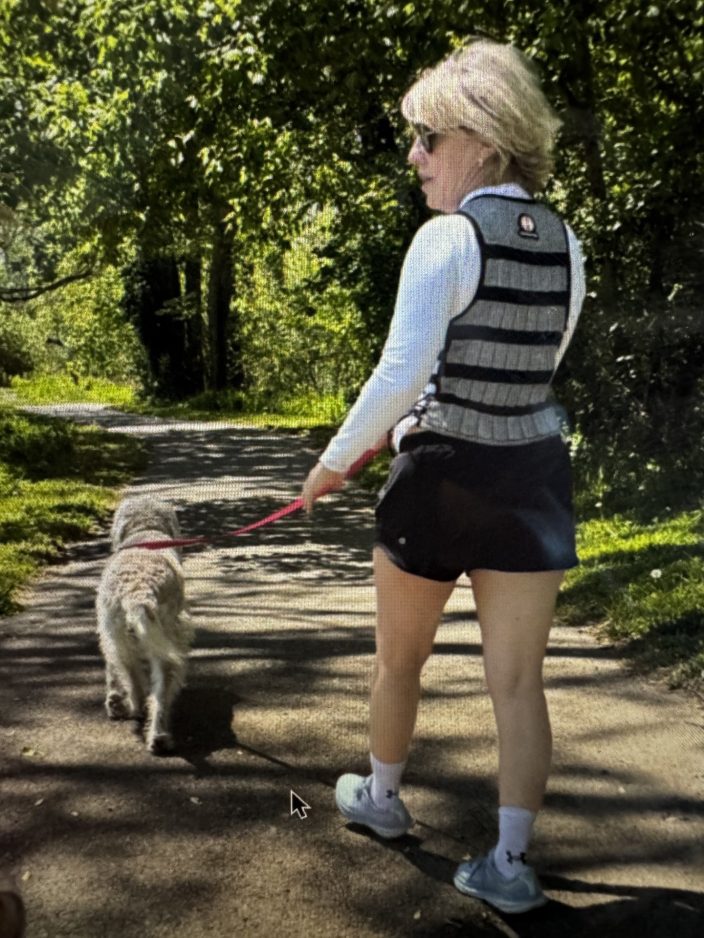
Weighted vests have beome a popular fitness tool. There are several styles available, including vests with pockets that weights can be inserted into. [Submitted]
Courtesy of Adrienne Freeland
4 / 4
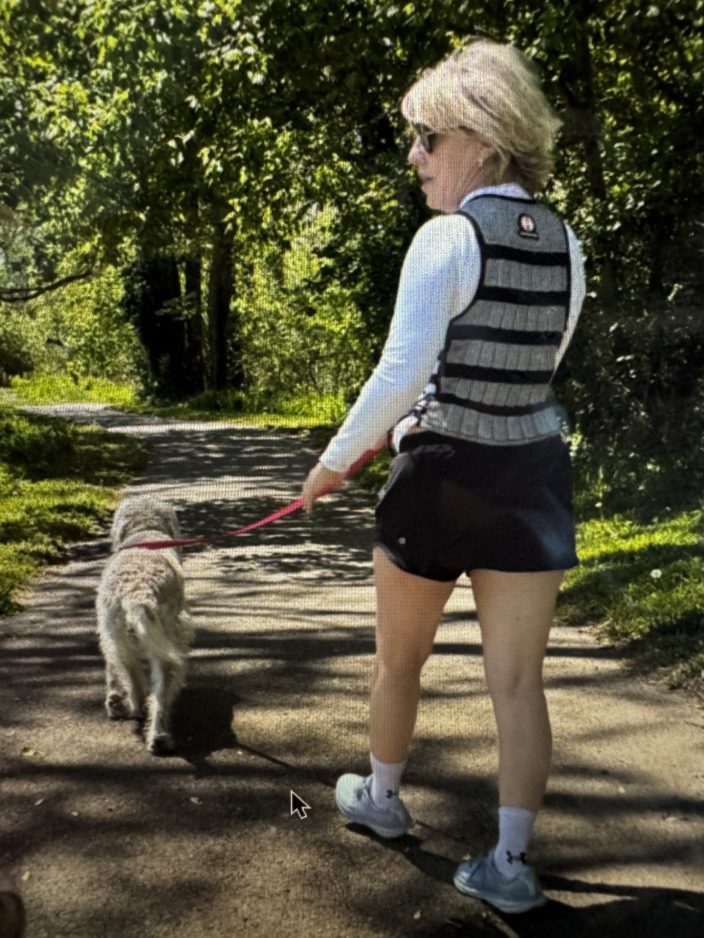
Washington native Adrienne Freeland wears a weighted vest while on a walk with her dog. Freeland has incorporated the vest into her fitness routine. [Submitted]
Courtesy of Adrienne Freeland
[expand]
close
Weighted vests are everywhere.
It’s hard to walk on a trail or in a park, or work out in a gym without seeing someone wearing one.
“Rucking,” or wearing extra weight on your back, isn’t new – weighted workouts have been standard in the military for decades.
But, said Dr. Steven Magister, an orthopedic surgeon at UPMC Washington, the vests have grown in popularity in recent years, boosted by social media influencers who tout their benefits.
The market for weighted vests is expected to grow to more than $310 million by 2031.
“I would agree that there are a lot of benefits to wearing weighted vests, with one of the biggest benefits being increased calorie expenditure,” said Magister. “The more weight you carry, the more calories you expend per distance walked.”
Mallori Diamond, owner and trainer at BoxStrong, a gym in Aliquippa, started wearing a weighted vest about six years ago.
“The biggest benefit of a weighted vest for me has just been building realistic strength. For example, the small amount of load – 10 pounds – on my torso mimics daily life activities, like carrying my kids or groceries,” said Diamond.
And, while research on the weighted vests and bone health isn’t clear right now, Magister said wearing a weighted vest “could theoretically strengthen bones by putting more force on them and improving bone density.”
That’s important, especially for women as they get older and begin to lose bone density – it plummets in the five to seven years after menopause – which can lead to osteoporosis. It’s estimated that half of women over the age of 50 will break a bone because of osteoporosis.
“It’s not going to dramatically change your bone mineral density, but I do think it is a useful tool for some people to maintain bone density, and along with weight exercises, those can play off each other.”
Diamond, who is in her 30s, said maintaining healthy bone density is a motivator for her.
“Honestly once you hit your mid-30s, that’s when your bone density tends to decline, so that is a big factor for me both as owner of Boxstrong and personally, finding ways to keep my skeletal structure strong,” she said. “Anytime we stress the bones, we build them up. Walking and lifting with those weighted vests offer micro-opporutnities to strengthen your bones.”
Adrienne Freeland, a Washington County native who is a clinical mental health counselor, began wearing a weighted vest after a battle with breast cancer. She was diagnosed in 2021, and after undergoing radiation, Freelend was required to take an estrogen blocker for five years (she will complete the five-year regimen in October).
“This keeps the cancer at bay but unfortunately weakens the bones,” she said in an email, noting the connection between bone loss and osteopenia and osteoporosis.
She zips on a 10-pound vest “with room to go up.”
Freeland, who also offers equine assisted learning and psychotherapy at her stable, wears the vest on walks and to complete farm chores.
There are other benefits, including improved muscle weight, and improved posture and balance from strengthening core muscles.
“It helps me mindfully improve my posture,” said Diamond. “Instead of letting the load weigh me down, I use my core to resist collapsing and stand proud.”
So, how do you get started adding a weighted vest to your exercise routine?
As with any workout activity, start slow, Magister advised. The general rule of thumb, he said, is to choose a vest that’s 5 to 10% of your body weight, and then gradually increase your duration and intensity.
If you weigh 150 pounds, for example, that would mean adding a total of no more than 15 pounds to the vest.
“Increase distance or increase load, not both,” said Magister. “It puts a lot of strain on the body. If you put a 40-pound weighted vest on and walk four miles, your body’s going to feel that.”
And, he said, there are a lot of weighted vests on the market, including fixed weight vests with weights sewn directly into the vest, and adjustable vests with removable plates, sand bags, or metal block weights.
Diamond owns three weighted vests – 10-pound, 14-pound, and 20-pound – filled with sand.
“There are a lot of different brands out there, and it’s not a one-size-fits-all fitness accessory,” said Magister. “Try on different weighted vests – holster vests, rucking vests that have all the weight in the back – and see what’s comfortable and fits for you.”