You wouldn’t be alone in thinking you were seeing a lot more of one word at the supermarket: protein. As Aussies become invested in their health and fitness, food companies are responding to the trend by hyping up how much protein is in their products.
But shoppers are being warned not to focus solely on that macro nutrients when you’re cruising through the aisles of Woolworths, Coles, Aldi, IGA or other grocer. While something might be high in protein, it could also be high in sugar or carbohydrates, which could mess up your goals.
Fitness coach and sports nutritionist Austen Gillard told Yahoo Lifestyle that it’s “definitely worth” checking the back of the packet.
RELATED:
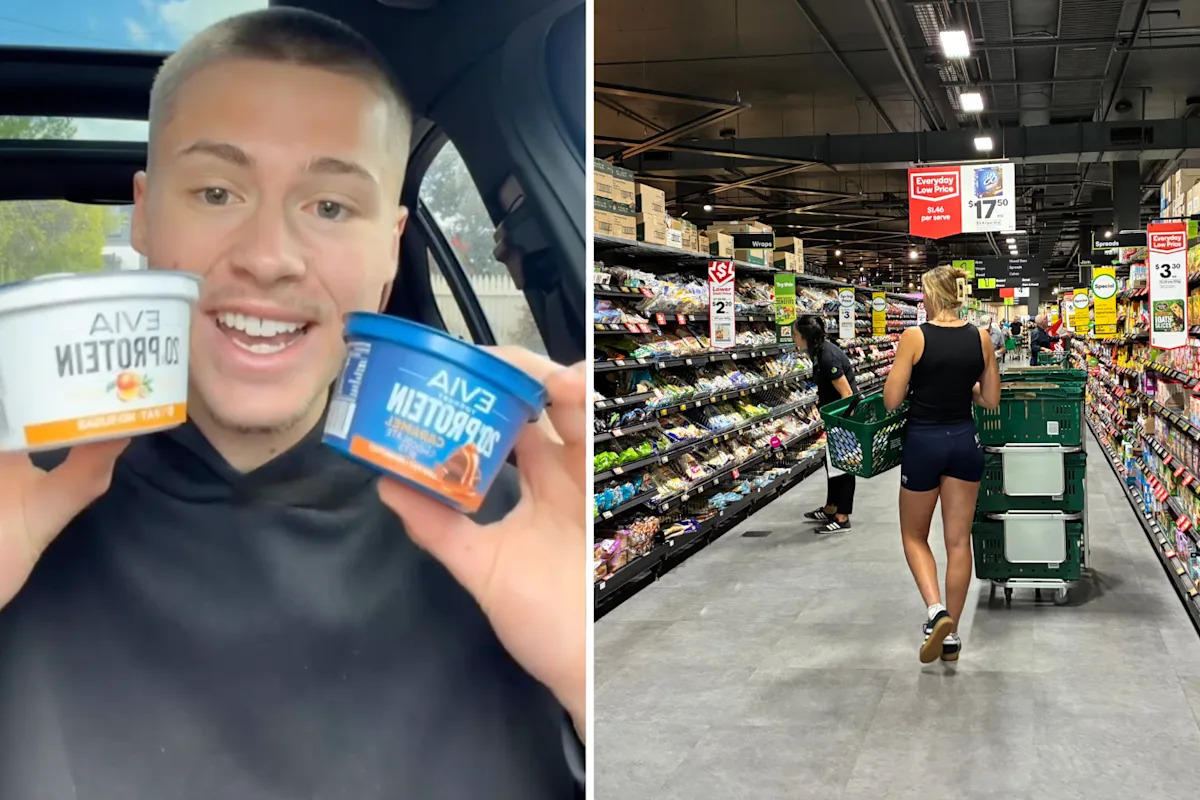
This was highlighted in a recent video by food influencer Nectorious Papi, who was showing off Muscle Nation’s new Protein Cheesecake.
The two-pack snack cost $13 at Coles, and they come in two flavours, raspberry and caramel.
They boast an impressive 20 grams of protein for each one.
So, if you ate both in one sitting, you’d be getting 40 grams of protein.
Do you have a story? Email stew.perrie@yahooinc.com
But you’d also be getting between 19.6 to 20.4 grams of sugar in that same snack.
Australia doesn’t have daily sugar intake guidelines, but the American Heart Association said men should only consume up to 36 grams of sugar per day, while women are recommended to only have 25 grams.
According to Dieticians Australia, adult women should consume 0.75g of protein for each kilogram of body weight per day, while adult men should have 0.84g per kilogram of body weight per day.
So, if you weighed 80kg, you should consume 60-67.2 grams of protein per day.
Don’t be lured in by the ‘health halo’
In an article for The Conversation, UNSW senior lecturer in nutrition, dietetics and food innovation, Emma Beckett, urged consumers to not be lured in purely by protein claims.
“When one attribute of a food is seen as positive, it can make us assume the whole product is health-promoting, even if that’s not the case,” she said.
“This is called a ‘health halo’.
“For protein, the glow of the protein halo can make us blind to the other attributes of the food, such as added fats or sugars. We might be willing to pay more too.”
A study found that people associate food with a protein label as being healthy.
It found 57.3 per cent of respondents would be more likely to purchase a protein version of a product and 27.9 per cent would pay a premium for it.
But this protein craze has become so ubiquitous at supermarkets that it’s morphed into a meme on social media.
Thousands of protein-rich items at Aussie supermarkets
When you search ‘protein’ on Coles and Woolworths’ websites, you get more than 2,000 results.
There’s a Dairy Farmer’s Protein Smoothie for just $4.50 that has 30 grams of protein in it, but also 18.4 grams of sugar in the 400ml bottle.
But it’s not just sugar to be wary of when you’re doing your shopping.
You can grab Obela’s Hi-Protein To Go Jalapeno Hommus pack that has crackers and dip for just $4.50.
It has a decent 13 grams of protein in it, which is impressive for being such a small packet of food.
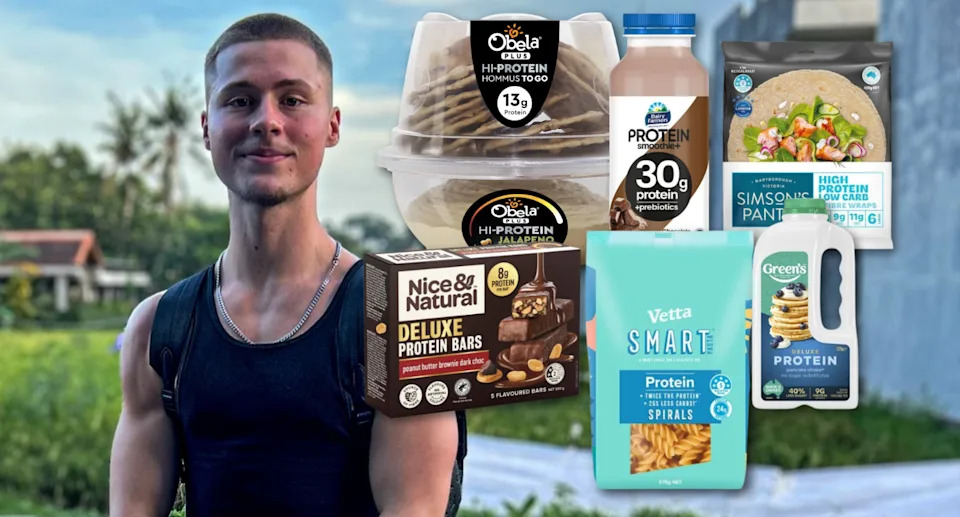
Fitness coach and sports nutritionist Austen Gillard said while protein is an important part of any diet, you should check each food packet to see what ingredients they have. Source: Facebook/Austen Gillard/Coles/Woolworths
But Austen told Yahoo Lifestyle he was dubious about some of these items.
“A lot of the time, you actually don’t need to be getting these extra little bits of protein from these foods,” he said.
“You just need to be getting protein through actual protein sources, such as non-fat yogurt, protein powder, chicken breast, extra lean beef, or kangaroo.
“The rest of your intake should be from natural whole food products.
“A lot of these high-protein marketed things, it’s just processed food with a little bit of added whey protein, which can actually be not so good for some people’s digestion.”
Why some products labelled as ‘high’ protein might not be that high
Austen gave an example of peanut butter in how checking products against their competitors matters.
There’s a $5.80 version of the spread available at Coles that’s labelled as being “high” in protein at 6.4 grams per serving.
But there’s a $4.90 normal version of peanut butter that has 5.3 grams of protein per serving.
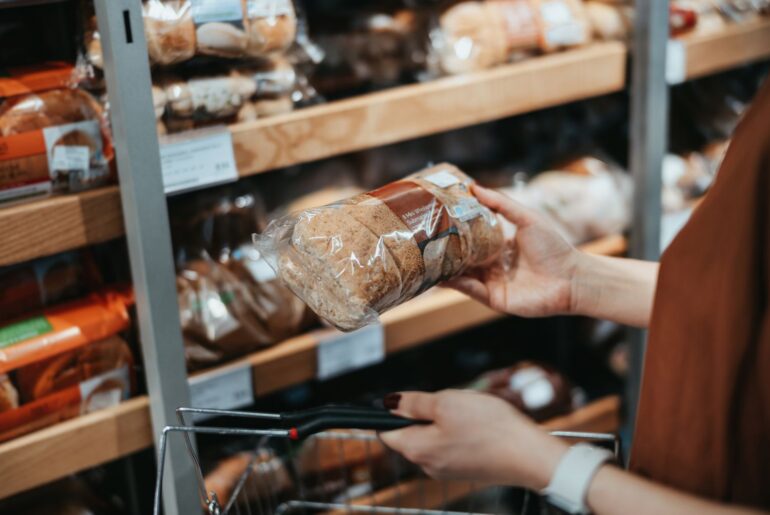
The same could be said for the bread, cheese, pudding, chips, and crackers talking up their protein content on the packaging.
Babybel has a protein version of its iconic mini cheeses and has 5 grams of protein per serving. But the original version has 4.6 grams of protein.
“It’s not actually going to make much of a difference, and you should realistically just be sticking to the more natural products,” Austen said.
Want the latest lifestyle and entertainment news? Make sure to follow us on Facebook, Instagram, and TikTok.