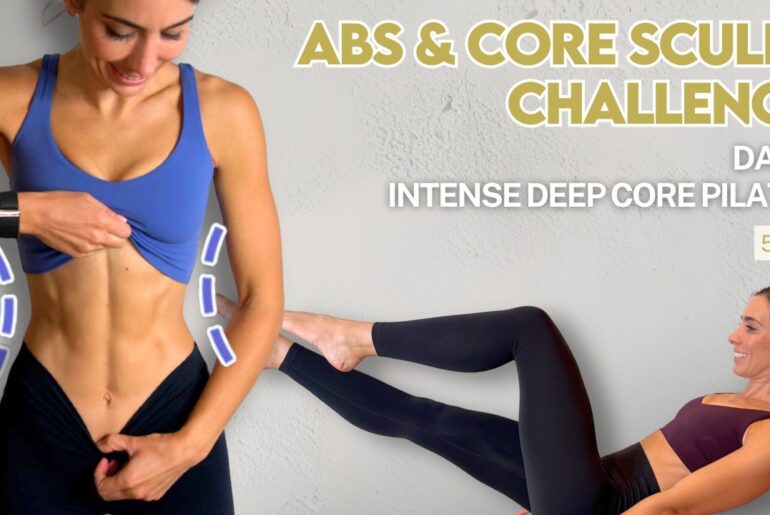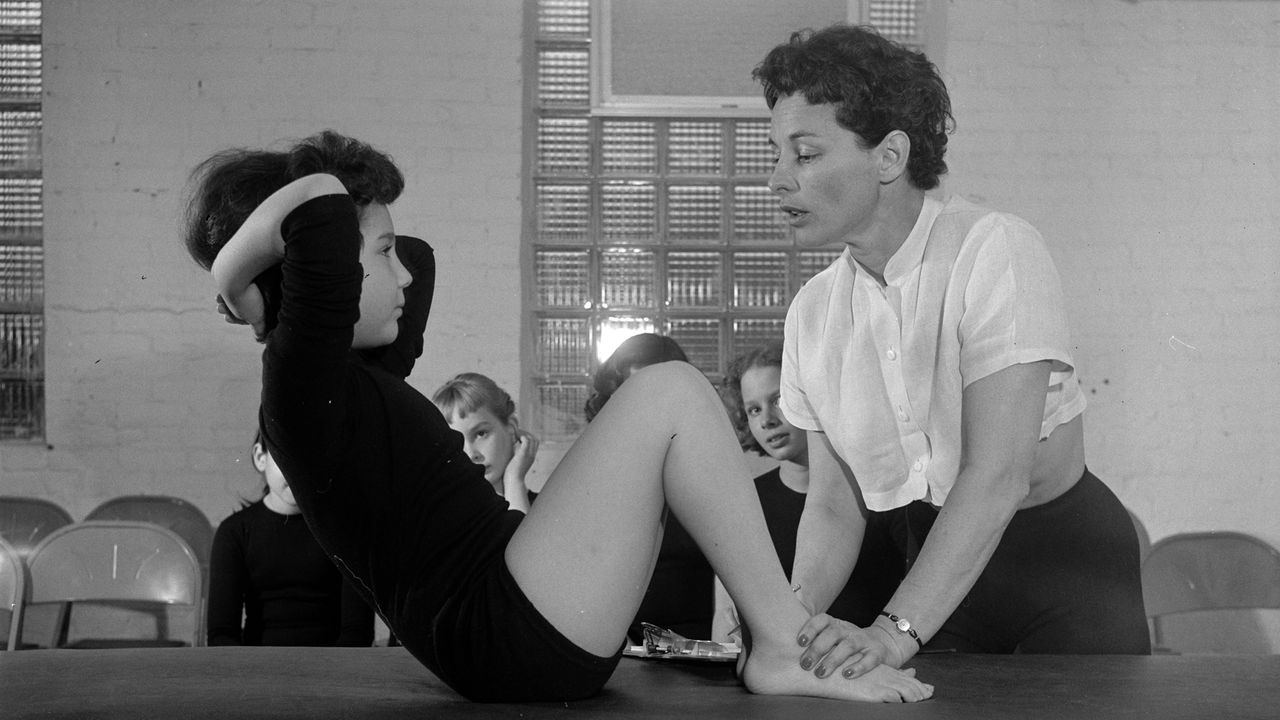
There were a few early critics of the test. One congressman from Missouri pointed out, in 1955, that the study that inspired the test purported that American kids were absurdly wimpy: it held that European kids were seven times more fit. “Simply on the mathematical surface, this is a ridiculous statement,” the congressman said. In fact, the study was investigating back pain among Americans, and was mostly a test of core strength and flexibility. It had little to do with over-all fitness. One exercise instructed participants to lie face down and lift their feet off the ground. Another had them reach down and touch their toes. European participants were drilled in exercises like these in school, which probably explained their superior performance. The council, anyway, showed little interest in finding out if the Presidential test was effective; they rarely collected any data to determine if kids were improving. There’s not much evidence to suggest that it promoted physical activity in the long term. Kids weren’t tripping over themselves to sit and reach in their free time. The Obama Administration gave this as a rationale for ending the program, in 2012. Few people complained.
There was always something odd about a fitness test being set forth by the President, invariably an aging man who would lose miserably in his own competition if pitted against, for example, me. I hold a job that I perform mostly on the couch, and am otherwise a modestly skilled but enthusiastic recreational softball and tennis player, and yet I would destroy even the more youthful Presidents; I’ve seen Obama’s jump shot. Trump could beat me in golf, which is O.K. Golf—a sport you play only when age or incompetence prevents you from playing actual sports, and which few people, if they are being honest with themselves, actually enjoy—isn’t a proxy for how well someone might do on the test.
Trump and the other modern Presidents would almost certainly fail their own fitness tests. The mile and the shuttle run would present problems, given their ages, but the real obstacle would be the pull-ups. Pull-ups are hard. At Michigan, Ford was the center on the football team, won two national championships, and was voted the team M.V.P., but he was sixty-one when he came into the White House and around two hundred pounds. Is he getting thirteen pull-ups, the threshold for seventeen-year-olds to qualify for the Presidential commendation? He is not. I’m not even convinced that he could’ve done so as a hundred-and-ninety-pound teen-age lineman. As for Trump, I would not bet on him running a mile in six minutes and six seconds at the moment, nor even in his physical prime, given his bone spurs.
Fitness testing has been around almost as long as schools. One constant across societies is the belief, among the older generations, that the kids have gone soft. An early physical-education scholar noted that boys in Sparta went through similar assessments, including “what might be considered periodical tests of [the] capacity to endure, for at one of the annual festivals the flogging of youths was an essential feature, often carried to the drawing of blood.” Today, kids in Europe are tested in plate-tapping, hand-gripping, and something called the “flamingo balance test.” Some students in Australia are assessed on how far they can throw a basketball. No one needs an enumeration of all the positive effects of exercise, on health, on social connections, on self-esteem, or otherwise. Still, only a quarter of Americans get sufficient exercise, according to the C.D.C. Critics of the fitness test have pointed out that, by ritually humiliating a large portion of the kids involved, it probably discouraged exercise.
Obama’s response was to eliminate the testing portion and to encourage activity in other ways. But testing has its virtues. We test in math or reading to make sure students have the minimum levels of proficiency necessary to thrive in society. We could do the same for physical activities. No one needs to be taught how to touch their toes, and everyone who can run knows how to. But why not allow students to pick a more technically difficult activity to be tested on, like swimming or skating? The idea is to leave school proficient in some activity that might make you happy. The ability to swim in the ocean or skate on a frozen lake is a gift, a license to partake in some of the joys of being alive. Kids could learn how to hit a baseball, or to fly a kite—or to fish or to play wheelchair basketball. For kids who like boredom and pain, Trump could even create a proficiency test for golf. This could be a bulwark of democracy, not, as Kennedy envisioned, as a defense against armies of ripped Italian teens but, rather, as fertilizer for areas of common interest. At least it might provide counterpoints to the phone, or a small source of contentment.