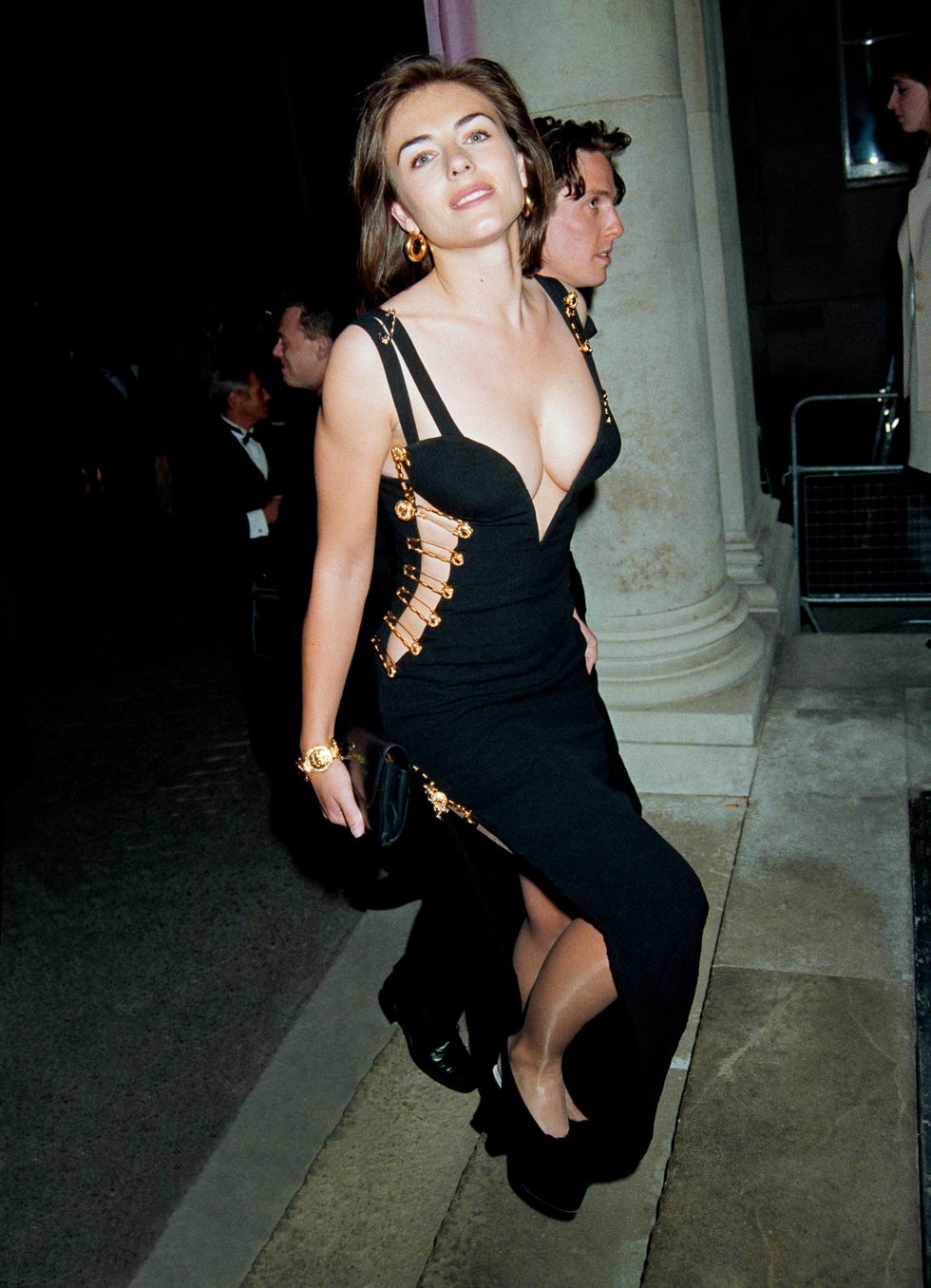
What black magic is this? Liz Hurley, now 60, has just been photographed wearing a slinky black Versace dress that she last wore back in 1999. Twenty-seven years ago. I don’t know about you, but I can barely remember 1999, let alone resurrect its wardrobe.
But: ‘Viva Versace!’ wrote Liz on Instagram. ‘For this weekend’s adventure in India, I dug into my archives and unearthed one of my favourite pieces, which I last wore to the Met Gala in 1999 – 27 years may have passed, but some loves never fade.’
Given that I’d never have fitted into the dress in 1999, my chances of now slipping into Liz’s size-tiny clothes are (no pun intended) ‘slim’ to none. Still, it does raise the question: how does Liz do it? What mad gym routine is required to maintain this sort of Dorian Gray glamour?
Actually, it seems she may not be trying too hard. ‘One question I get asked all the time is, how do you stay in shape and what do you eat?’ she recently wrote in another Instagram post. ‘So here goes. My mantra is: don’t eat too much, too fast, too often or too late. Or, put another way, eat smaller meals, chew properly, ban snacking and eat dinner earlier… Other than diet, my other advice is to move more. I don’t go to the gym or do any set exercise but I’m extremely active. There endeth the sermon.’
Can it really be this simple? Well, perhaps. Last year, Researchers from the University of Sydney analysed data from the UK Biobank and found everyday activities, like household chores and gardening, may lead to significant health and longevity benefits.
Looking at 25,000 participants, none of whom formally exercised, they found that those who put a bit more ‘ooomph’ into daily activities – moving around a bit more briskly in other words – had a lower risk of early death than people who were inactive.

Cindy Ord/VF25
Nor is this the first study to highlight the benefits of ordinary, everyday movement. One study on women aged 65+ found that just half an hour a day of light activity, including house cleaning, was associated with a 12% lower risk of death compared with being mostly sedentary.
Researchers term this sort of exercise NEAT – and not just in a cute American way. Actually, it stands for ‘non-exercise activity thermogenesis’ – the energy you expend while just… living your life: climbing the stairs, carrying the shopping, doing the vacuuming or the gardening.
On average, NEAT makes up around 50% of your TDEE (total daily energy expenditure, or how many calories you burn across each day) compared to planned workouts (typically only counting for around 10%). So how you use this time and do these activities really can make a big difference to your fitness levels. And it seems Liz really leans into this.
‘I can’t remember when I last went to a gym,’ she was reported saying last year. ‘I don’t like that sort of exercise. But when I’m in the country, I’m very active outside, plus I spend my life running up the stairs carrying things. Cleaning the skirting boards, you can burn a lot of calories. There are things we can do that aren’t yawn, yawn, going to the gym.’
So, if you don’t have a Hurley-sized garden, or several sweeping staircases to climb, how can you make your NEAT count?
 Dave Benett
Liz in her famous safety-pin dress in 1994.
Research conducted by Dr James Levine, a pioneer in the field, suggests you can make small but important changes to even sedentary tasks. Sitting, rather than lying down in front of your computer burns about 5% to 7% more calories. Fidget in your chair, and you can tot up another few points. Stand instead of sit, and you can double your calorie burn.
Walking at the leisurely rate of one and a half to two miles an hour can double your metabolic rate, showing the value of walking to the shops instead of driving. Vacuuming, the laundry or gardening can also burn a few hundred calories in an hour. The differences are small, but they do add up.
In fact, one study measured how much energy older adults expended from physical activity, including exercise, over a fortnight. For every 287 calories each one burned per day, researchers found, they had about a 30% lower chance of dying in seven to 10 years time. Those most protected? Not those who did the most formal exercise – but those who worked NEAT into their lives.
Related Stories