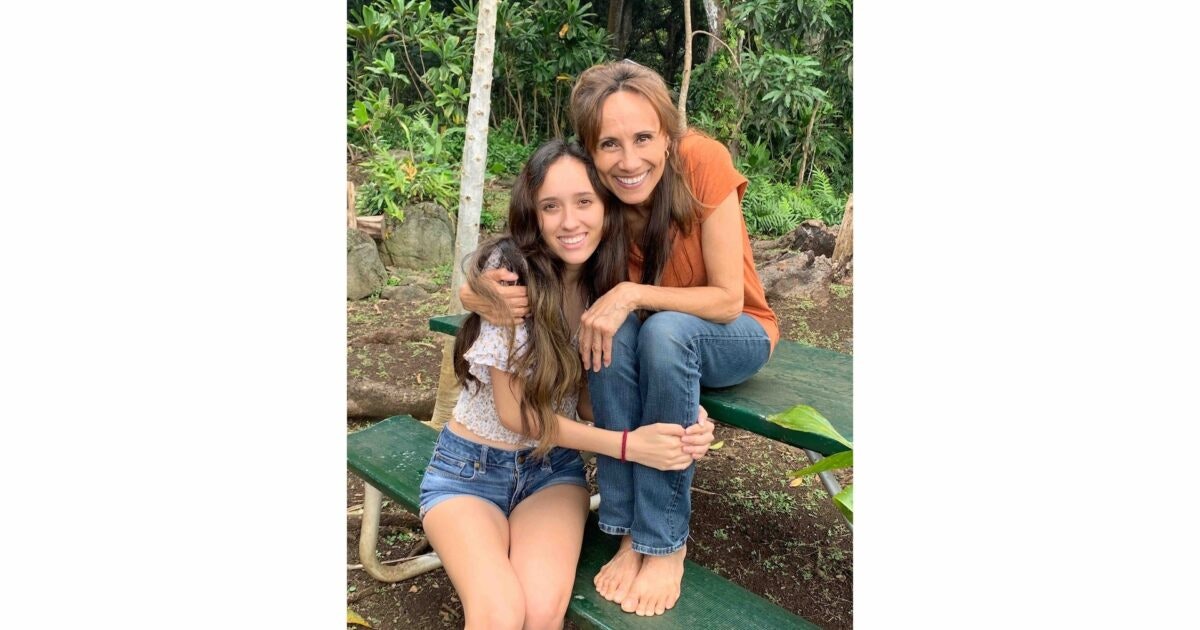
Malia Smith, who grew up in Nānakuli and lives in Waimānalo, remembers completing a 200-page food analysis for the state Department of Agriculture in 2013.
“Back then, no one was really talking about food deserts, food swamps and sustainable models relative to food and nutrition. And everything was measured by weight — a thousand pounds of Twinkies is not the same thing as a thousand pounds of cattle,” she told Aloha State Daily.
She added that both communities she’s called home are case studies for food deserts and food swamps, meaning those locations “are low income, high Native Hawaiian or Polynesian populated areas, that are fraught with convenience, liquor and grocery stores that don’t offer a lot of organic choices, and typically, [if they do,] it’s more expensive in those communities.”
In 2015, such research led her to open plant-based restaurant, ʻAi Love Nalo, in Waimānalo between the two 7-Eleven stores along Kalanianaʻole highway.
“Our intention is to offer healthy alternatives to this community. It became successful and was going really great,” said Smith, who has more than 15 years of experience in health research and plant-based nutrition.
Shortly after the business’ launch, an individual asked her for help losing weight. She replied, “I will help you, but you got to eat my food and I’m going to teach you some things.”
Pleased with the results, he told a friend about her program, who told a friend, and so on, Smith said.
By 2017, she took a near 40-member halau through a one-year program, which included meals and food-related excursions before partnering with health plans and providers until the onset of the Covid-19 pandemic. “I used that time to create a formalized meal plan,” Smith said, adding that with the help of her daughter, Kapiʻolei Smythe, they also put course material online.
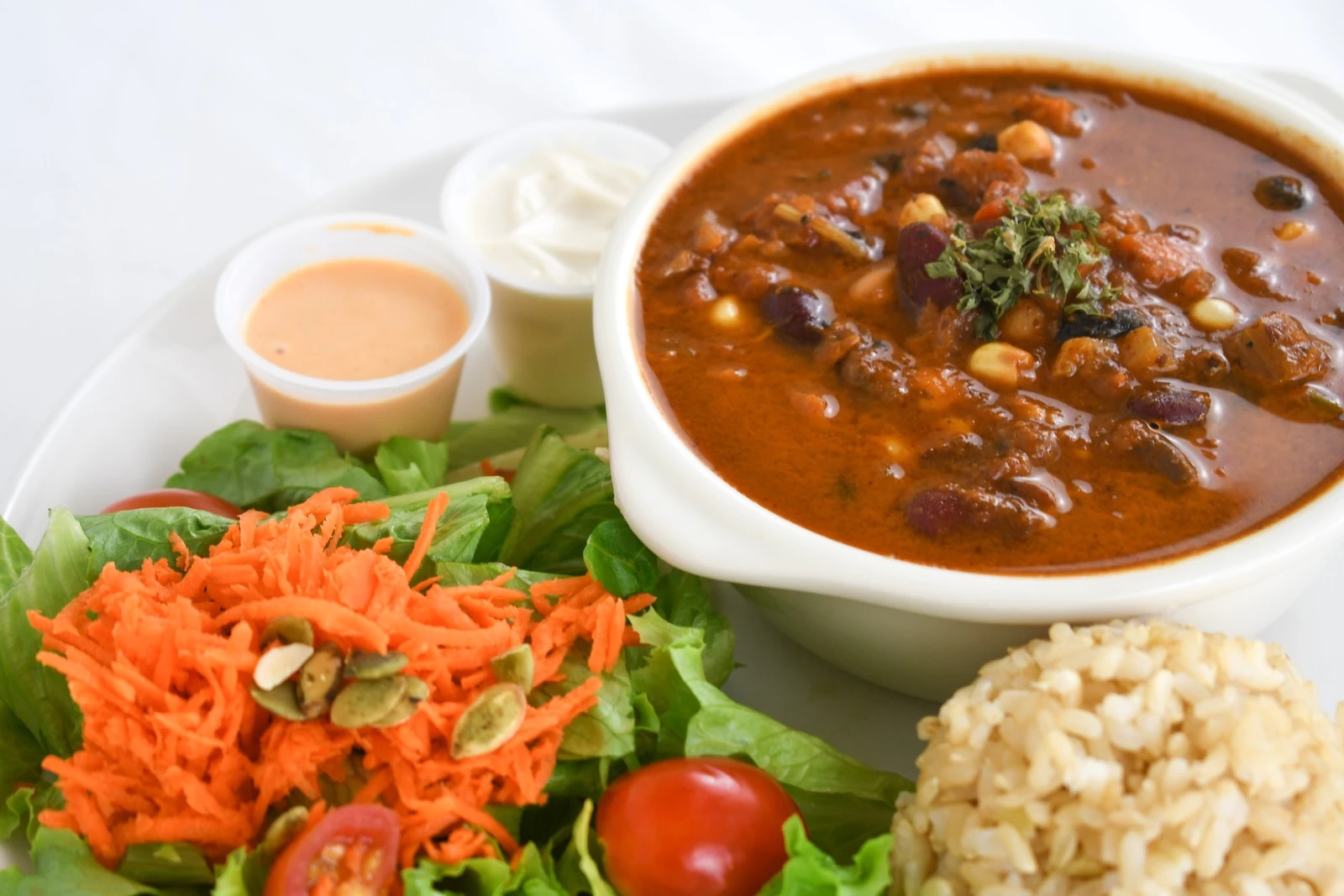 Plant-based medically tailored (MTM) meal plans by nonprofit We the Well Beings. (Courtesy Malia Smith)
Groups continued to show interest in what would eventually be called, Hā’ehuola Wellness Program. To date, 11 different groups have piloted the program, with four more currently in process, Smith said.
The initiative out of Waimānalo Health Center has helped individuals lose weight and decrease body mass index, improve sleep quality and blood pressure ranges, and reverse pre-diabetes and cholesterol, among other results.
‘Forward-thinking’ partnerships
Smith and Mary Frances Oneha, CEO of Waimānalo Health Center, met while working together on a separate program that collected data for pre- and post-biometric outcomes.
“Mary was interested in identifying how to help Medicaid patients through this federally funded program in relationship to ‘food is medicine,’ and it was kind of this beautiful, perfect storm,” Smith said.
“We’ve seen people regain not just their health, but their sense of hope,” Oneha said in a recent statement about the Hā’ehuola Wellness Program. “One participant who struggled with illnesses for 25 years told us, ‘I got my power back. I felt like a victim until I started taking notice that my actions really do have an effect.’ She went from being too sick to work, living in a tent, to finding employment and helping others. That’s what this program does — it transforms lives.”
From establishing the program to benefit the health center’s patients, the next step was reaching out to local health insurers to aid its members,
“Because I’m here in Waimānalo, I want to partner with people that we can work with here, together, because collaboration is the best way to heal the community,” Smith noted.
The AlohaCare Foundation granted $75,200 to Waimānalo Health Center, launching their Hā’ehuola Wellness program, which ran from April to September 2025. Participants each received 200 entirely plant-based meals over the course of 20 weeks, as well as the program’s online wellness course and hands-on experiential learning activities.
“What really moved me was hearing that participants didn’t just learn what to eat — they learned why it matters and how to sustain healthier habits for life,” said Francoise Culley-Trotman, chairperson and president of AlohaCare Foundation, and CEO of AlohaCare. “This program exemplifies true whole person care. When you address not just physical health, but incorporate education, spiritual wellness and community support, people don’t just feel better — they get empowered to take control over their health.”
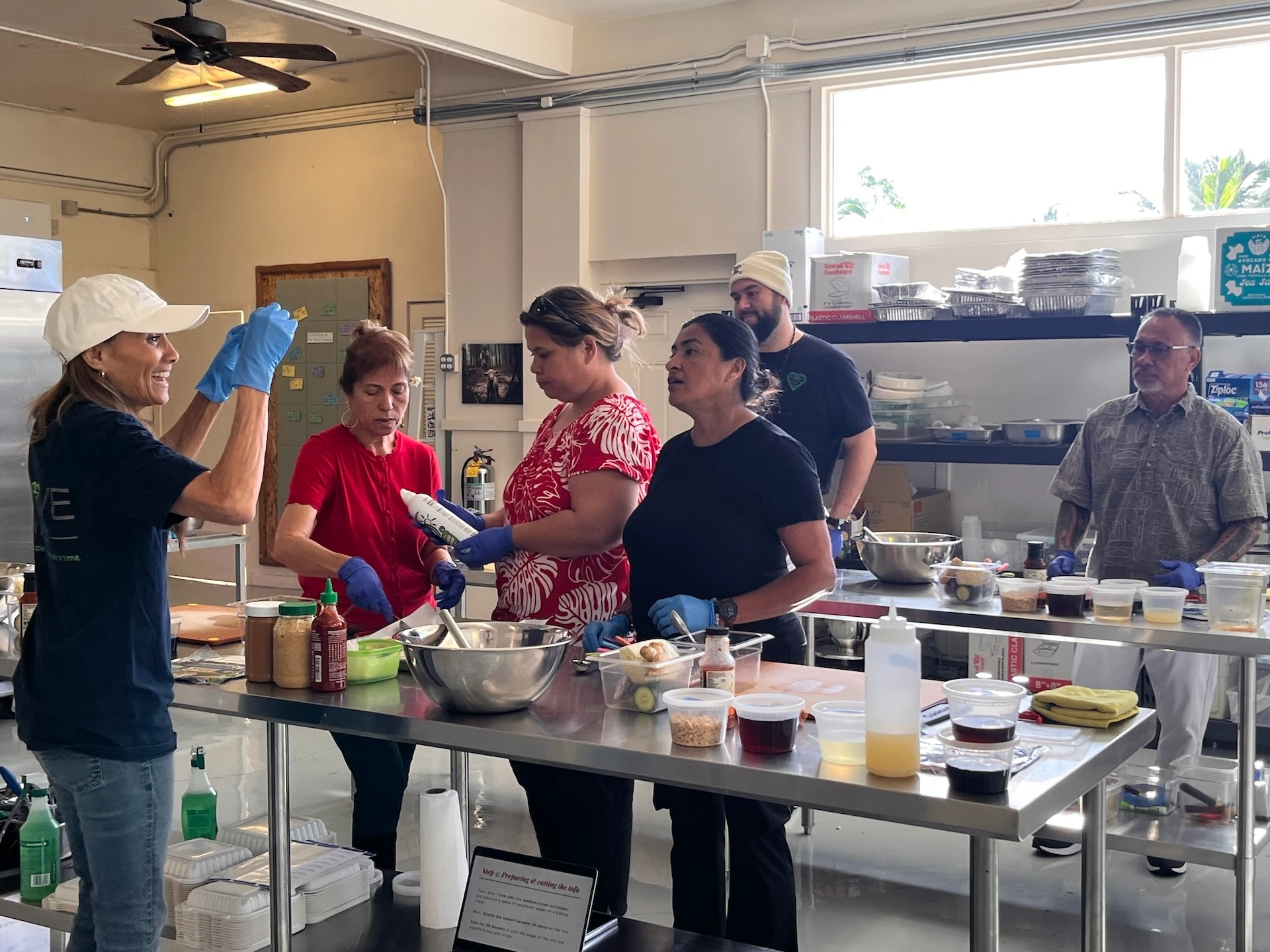 Smith, left, conducts a food demonstration at Waimānalo Health Center. (Courtesy AlohaCare)
Smith thanked both organizations for being “forward thinking.”
“The program is the guidance; it’s the members that actually do it. It sounds like a lot, but it is very fun,” she said. “We look at readiness for change and self-efficacy because we know that when somebody’s self-efficacy improves, that means that they believe in their capability to be able to make change. And we saw drastic changes.
“Whole person health is the only way for someone to truly make changes. Diets don’t work,” she continued. “We need to remind people that wellness is not earned. Wellness is something that is remembered.”
When asked if a program like this can be implemented elsewhere in the Islands or beyond, Smith replied, “I am anchored in this community (Waimānalo) but we are not averse to collaborating with other communities.”
Pros of working with family
Smith, a graduate from Kamehameha Schools who went on to get her Ph.D. in education, is excited to keep sharing outcomes from this program, which aims to address social determinants of health.
And she’s not doing it alone.
She says her daughter could have continued in her educational pursuits but instead chose to lend a hand at home. The pair co-founded nonprofit We the Well Beings.
“We’ve built this together,” Smith told ASD. “I’m super proud of my daughter; she could get a doctorate in psychology, she has a degree in psychological brain sciences and neuroscience, and won an award in her psychology department. She could have went on and did something else but she chose to work beside her mother for this community, She is choosing the lahui, to cook do some mundane things for the love of this community. I feel humbled every day and so blessed to have her walk in lockstep with me. There’s no greater joy.”
Smythe added: “We have a great opportunity to work together as a mother-daughter duo. Participants see us come together; our energy creates a space for them to feel like they’re a part of our family. We come from different generations, so we have a broad span.”
“I think both of our strengths and our skills complement each other. And like she said, the generation split is important,” Smith said. “Also, standing as Native Hawaiian women helps, we’re proud of our culture, and it’s wonderful that we’re able to speak to the patients the way that they are used to be spoken to, you know, local-style, shoot from the hip, honest truth.”
For the latest news of Hawai‘i, sign up here for our free Daily Edition newsletter.
Kelsey Kukaua Medeiros can be reached at kelsey@alohastatedaily.com.