This week, I checked in on the battle between Walmart and Target for beauty consumers. Additionally, Glossier is expanding the You perfume franchise, and Victoria Beckham reports double-digit growth in annual sales.
With Target on the decline, Walmart has seized the opportunity to become a beauty destination
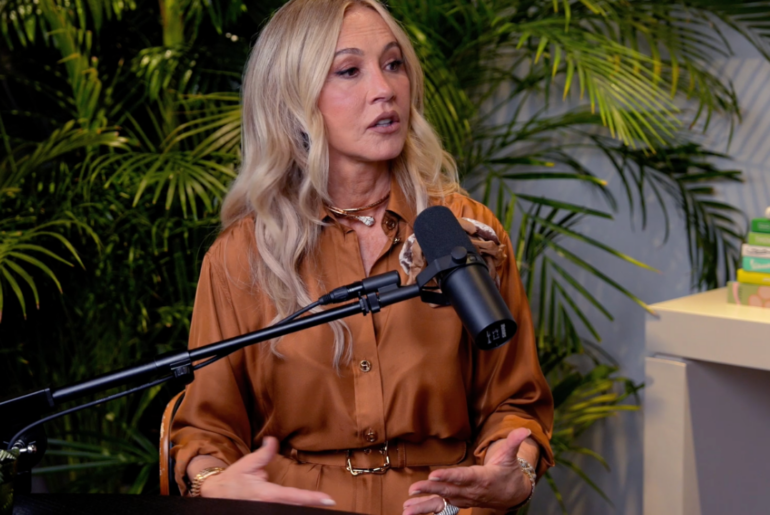
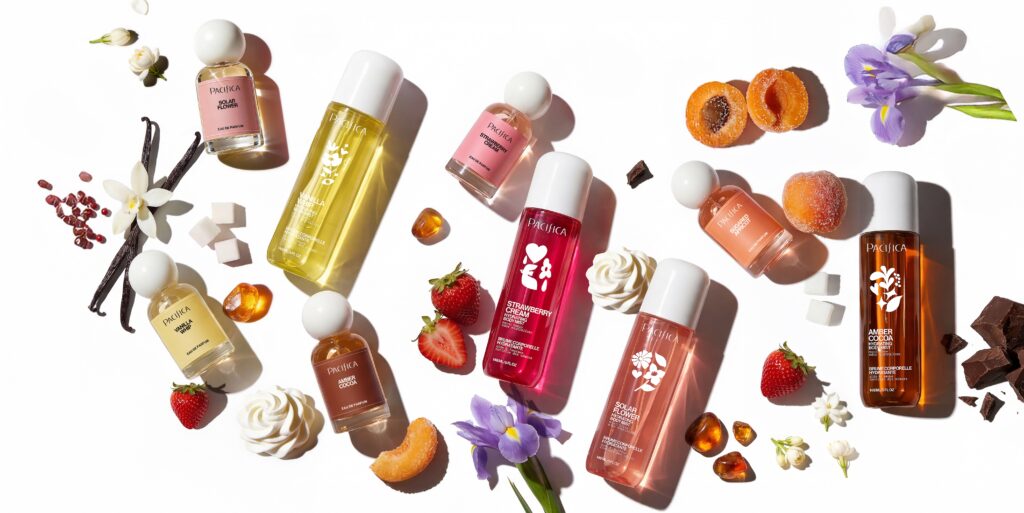
Although Brook Harvey-Taylor’s vegan beauty line, Pacifica Beauty, was already available at major retailers like Target, Amazon and Ulta, its customers were contacting her to say they still could not find her brand at their preferred beauty retailer: Walmart.
“There are customers saying they want to buy beauty at Walmart, and we aren’t at Walmart,” Brook Harvey-Taylor, founder and chief creative officer of Pacifica Beauty. “It’s been a marked shift, over about a year and a half, that our customers has been like, ‘[Walmart] is where we want to find beauty. That’s where we shop for beauty.’”
In March, Pacifica Beauty launched its line of perfume, skin care and hair care at Walmart, with a full rollout to 2,000 doors by the end of the month. And it is far from the only beauty brand to do so. Under Walmart vp of beauty Vinima Shekhar, who assumed the role in 2024, Walmart announced the launch of its Beauty Bars at select stores in April. Walmart declined to comment on its beauty strategy but shared that in the past six months, it has added nearly 60 beauty and grooming brands to its shelves.
“About 90% of the U.S. population lives within 10 miles of a Walmart or Sam’s Club, and you just can’t reach more people than that,” said Zach Rieken, CEO of the hair-care brand Odele, which launched at more than 1,500 Walmart doors in February. “If you think about our mission to become a household name, collaborating with Walmart gets us one step closer to that.”
Walmart is not the only big-box retailer investing in its beauty offerings: In March, Target announced the launch of its Target Beauty Studio shop-in-shops, filling the void left by its Ulta Beauty partnership, which will conclude in August. But while Target is still finding new footing after facing declining sales, Walmart is on a positive upswing to court consumers looking not only for low prices, but also a destination for beauty discovery.
Walmart has frequently faced criticism for offering low prices at the expense of its employees: Senator Bernie Sanders has regularly lambasted the company for earning billions of dollars in profits while many of its workers rely on foodstamps.
But that has not deterred shoppers, even those with the incomes to go elsewhere. On its fourth-quarter earnings call, the company reported that its highest gains have come from households making more than $100,000 a year. Its overall revenue for the quarter grew 5.6% year-over-year to $190.7 billion.
While an uncertain economy may be responsible for pushing even wealthy consumers to value-based retailers, Rieken attributed the increase in higher-income shoppers to Walmart’s elevated merchandising, including its upgraded beauty assortment.
“With some of the new beauty concepts they have going and even the way they’re laying out the category, it feels almost like a shop-in-shop and is definitely more focused on the experience than what we’ve seen from them in the past,” he said. “As you get down to the category [level] for Odele, we know that 34% of shoppers that are in Walmart stores are already in the market for hair-care products that are $10 and above, which is where we play.”
Target, whose nickname “Tarzhay” captured its image as an accessible but aspirational shopping destination, has meanwhile been the target of a boycott since 2025 for its rollback of diversity, equity and inclusion initiatives. And, since the beginning of 2026, the retailer has faced internal and external criticism for failing to keep ICE agents out of its stores, including its Minneapolis headquarters.
Target’s strain has been visible in its bottom line: It reported a 1.5% drop in net sales to $30.5 billion for the fourth quarter of 2025. In addition, the retailer has seen customer traffic in stores and online decline for four consecutive quarters.
It’s not the first time Walmart has attempted to court a more premium beauty consumer. In 2022, the retail chain announced a partnership with the British luxury beauty store Space NK. In 2024, Space NK sold its U.S. division, and it was acquired by Ulta Beauty in 2025.
But Walmart doesn’t necessarily need the stamp of approval from a retailer like Space NK to cater to a prestige customer.
“Ten years ago, what delineated prestige was exclusivity of distribution and price point. And as Amazon has started to play a bigger role in the category, the lines between what is prestige, what is mass and what is masstige have really eroded,” said Rieken. “It has become a lot less about the distribution and more about the interaction with the consumer.”
Brands are seeing Walmart as a way to reach a consumer base that is not already immersed in beauty, particularly in parts of the U.S. where a specialty retailer like Sephora or Ulta may be hard to come by. As of January 2026, Walmart operates more than 5,200 stores across the country; Ulta has over 1,500 U.S. stores, and Sephora more than 700 across North America. Target operates nearly 2,000 U.S. stores.
“Through Walmart, we see an opportunity to reach a very broad and diverse beauty consumer — including younger customers discovering self-tan for the first time, as well as shoppers looking for trusted products at accessible price points,” said Bali Body CEO and founder Laura Oosterloo, who launched her Australian self-tanning brand in nearly 2,900 Walmart stores in February. “Retailers like Ulta or Target tend to attract customers already deeply engaged with beauty categories, whereas Walmart allows us to reach both the beauty enthusiast and the everyday consumer who may be new to the category.”
Walmart has also been adapting to the new customer shopping behavior. In October, Walmart announced a partnership with OpenAI to let consumers shop through Walmart directly on ChatGPT. In April, the company announced plans to remodel more than 650 stores to improve its buy-online, pick-up in-store program.
“Our consumers are very motivated by that omni-channel [experience]; where the digital experience meets the retail experience is really critical, and Walmart does an amazing job of it,” said Harvey-Taylor. “People discover in-store and get to see the product. They may not purchase in-store, but then they may go home, and as they’re putting their groceries in their cart [the next time], they’re like, ‘Oh yeah, there’s also beauty, and I can get that done at the same time.’ So I think that they’re competing directly with Amazon on that front.”
Such digital gains may be crucial as mass retailers like Target and Walmart lose market share to online platforms like Amazon, which has added prestige beauty lines like Charlotte Tilbury and mass brands like Bath & Body Works to its beauty offerings in recent months. According to a report from investment bank TD Cowen, Amazon’s market share in beauty is expected to grow from 10% in 2024 to 15% by 2030, second only to Walmart. That could contribute to Walmart and Target seeing their combined market share fall from 26% in 2024 to 25% by 2030.
Reaching a prestige consumer is about more than brand curation. Convenience, like the same-day delivery Walmart introduced through its Walmart+ membership program in 2020, can be as much of a premium offering as higher-priced products. In September, Walmart’s then-U.S. CEO and president, John Furner, who assumed the role of president and CEO of Walmart Inc. in February, touted a record-breaking delivery time of under five minutes.
“That is what higher-income shoppers will pay for. They will pay for that kind of rapid delivery convenience,” said John Mercer, head of global research at Coresight.
The ease of delivery is especially attractive when many customers are frustrated by the increasing number of products locked up on shelves at big box retailers.
“As friction has gone down in digital, [thanks to] rapid delivery, it’s gone up in stores, with Target in particular locking up product. Self-checkouts add friction, and anti-theft barriers add friction,” Mercer said. “At Target specifically, but also across the board of retail, they need to level that balance and reduce friction in stores, just as they’ve reduced friction online.”
Executive moves:
Melissa Sperau was named Makeup by Mario global president. Sperau joins the makeup brand founded by Mario Dedivanovic from Shiseido, where she served as U.S. president.
Yse Beauty appointed Doreen Arbel as CEO. Arbel was most recently president and gm of North America for Charlotte Tilbury. She is the first to assume the CEO role at Yse Beauty, which was founded in 2023 by model and actress Molly Sims.
Olive Young named Gaeun Kwon as its first U.S. CEO. Kwon was previously director of global business at the K-beauty retailer. Olive Young is slated to expand across the U.S. via a partnership with Sephora and a standalone flagship store in Pasadena in 2026.
News to know:
Glossier is reportedly launching a new flanker to its You perfume line. Leaked images on social media showed You Soie, a jasmine-and-rice-milk variation of the best-selling You perfume, which Glossier first launched in 2017. In 2024, Glossier launched the flankers You Rêve and You Doux, followed by You Fleur in 2025.
Saks Global is closing 12 Saks Fifth Avenue stores and three Neiman Marcus locations amid its restructuring. The closures will affect underperforming stores as the retail giant focuses on higher-performing markets.
The Estée Lauder Companies acquired Ayurvedic skin-care line Forest Essentials. In 2008, the beauty giant first took a minority stake in Forest Essentials, which was launched in 2000 by Mira Kulkarn. The purchase marks Stéphane de La Faverie’s first acquisition since assuming the CEO role at the company in 2025.
Equinox announced Le Labo as its newest amenities partner. The Estée Lauder Companies-owned fragrance and body-care brand will roll out to global Equinox locations on March 19. Many Equinox members expressed their disappointment when the fitness chain replaced Kiehl’s with Grown Alchemist as its amenities partner in 2024.
Stat of the week:
Victoria Beckham’s namesake fashion and beauty brand reported a 19% growth in sales to more than $170 million in 2025. Its beauty business is among the top three brands at global retailers such as Space NK, Mecca, Le Bon Marché and Oh My Cream.
In the headlines:
From endangered plants come whiffs of inspiration. Why fragrance and hair brand collabs are winning combos. The limits of Mecca’s retail magic.
Listen in:
On this week’s episode of the Glossy Beauty Podcast, Pop editor Sara Spruch-Feiner is joined by Kimberly Ho, founder and CEO of Evereden, to discuss why her $100 million Gen Alpha–focused skin-care brand is giving equity — not just transactional deals — to three teenage creators.
Need a Glossy recap?
Retailers are taking a more complex approach to loyalty. Kim Kardashian’s Update is the latest brand to give energy drinks a refresh with women in mind. Glossy Pop Newsletter: Inside the new era of long-wear makeup. Sephora doubles down on K-Beauty hair care. Bath & Body Works is leaning on content creators, reworking packaging and formulations to recoup sales.