The Rising Importance of Organic Nutrition for Infants
The global organic baby food market is experiencing remarkable expansion as parents around the world increasingly prioritize safer and healthier nutrition for their infants. The growing awareness of food safety, nutritional quality, and chemical exposure risks has significantly reshaped consumer preferences in the baby food sector.
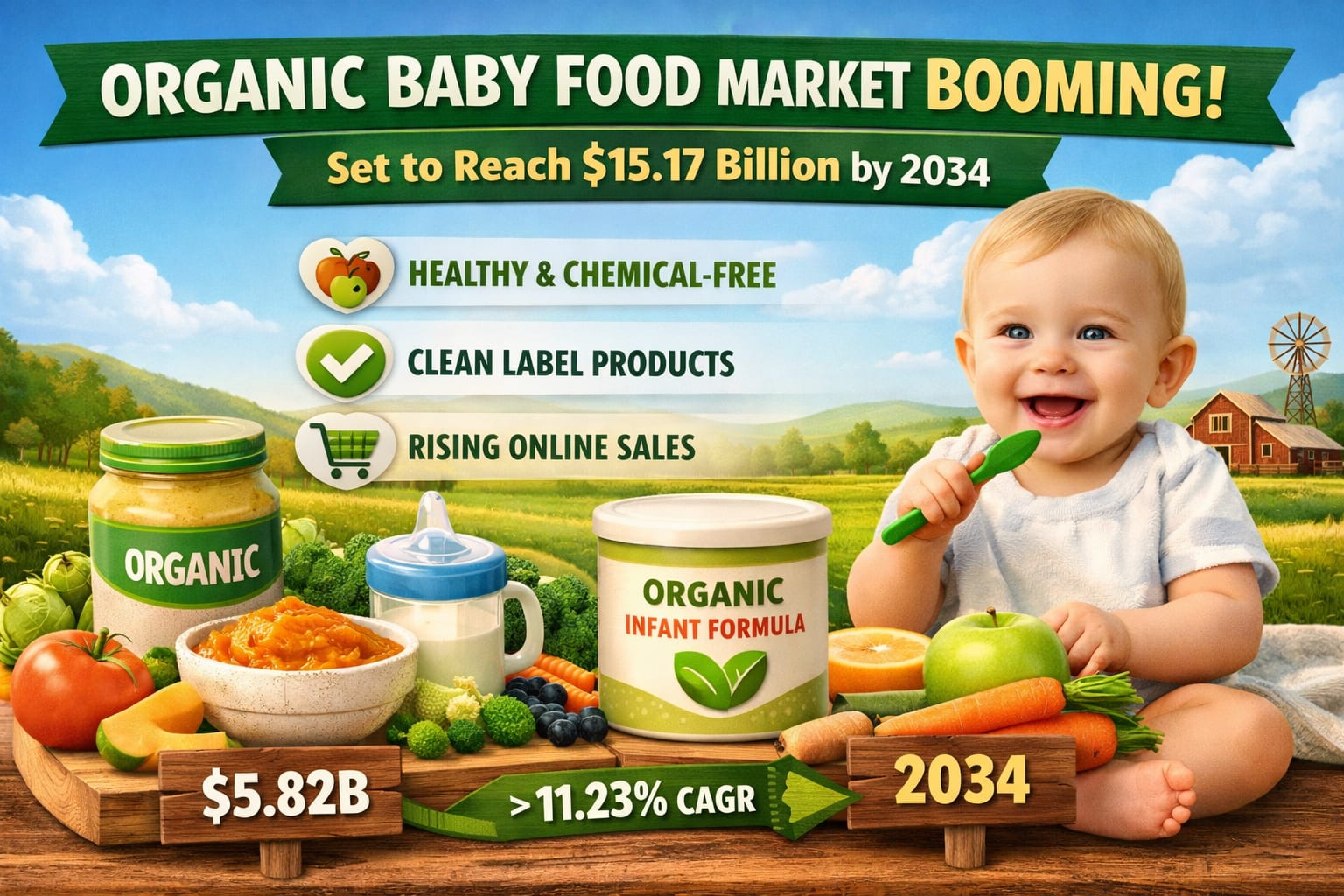
According to Renub Research, the global organic baby food market was valued at US$ 5.82 Billion in 2025 and is projected to reach US$ 15.17 Billion by 2034, expanding at a CAGR of 11.23% during the forecast period from 2026 to 2034. The rapid growth reflects the increasing demand for organic and natural products designed specifically for infants and toddlers.
The market’s expansion is further supported by increasing urbanization, higher disposable income, growing digital retail platforms, and continuous product innovation by leading food manufacturers.
What Makes Organic Baby Food Different?
Organic baby food refers to products prepared using ingredients grown and processed according to strict organic agricultural standards. These foods are designed specifically to meet the nutritional requirements of infants and toddlers during their critical developmental stages.
Common organic baby food products include:
Pureed fruits and vegetables
Organic baby cereals
Infant snacks
Prepared baby meals
Organic infant milk formula
These products are manufactured under regulated conditions that eliminate harmful chemical residues and ensure safety for infants, who are more sensitive to toxins and allergens.
Because babies have developing immune and digestive systems, parents increasingly prefer organic alternatives that reduce exposure to harmful chemicals and additives.
Growing Parental Awareness Driving Market Expansion
One of the most powerful drivers of the organic baby food market is the growing awareness among parents about infant nutrition and long-term health.
Research has consistently emphasized that early childhood nutrition plays a crucial role in shaping a child’s cognitive development, immunity, and physical growth. As a result, parents are becoming more proactive in choosing food products that promote optimal health.
Concerns about pesticide residues, artificial additives, and genetically modified ingredients in conventional baby foods have further accelerated the shift toward organic alternatives.
Parents now actively read ingredient labels, search for certified organic products, and prefer brands that offer transparency in sourcing and production.
In response to this trend, many major companies are expanding their organic product lines. For example, Abbott Laboratories introduced a new line of organic infant formula designed to meet the rising demand for clean-label infant nutrition products. The initiative reflects how major brands are adapting to evolving consumer expectations.
Clean-Label Movement Strengthening Demand
The clean-label movement has become another key factor accelerating growth in the organic baby food market. Modern consumers increasingly seek foods that are simple, natural, and free from artificial ingredients.
Parents today want products with short, recognizable ingredient lists that contain no synthetic preservatives, artificial flavors, or colors.
Organic baby food brands are well positioned to meet this demand because organic standards already prohibit many synthetic additives commonly used in conventional food production.
Transparency, traceability, and ethical sourcing have also become important considerations. Consumers increasingly trust brands that clearly communicate where their ingredients come from and how products are manufactured.
For example, Gerber recently received recognition from the Clean Label Project, achieving certification for dozens of its baby food products. Such certifications help reassure parents about product safety and ingredient quality.
Product Innovation and Expanding Distribution Channels
Innovation plays a critical role in the continued growth of the organic baby food market. Manufacturers are constantly developing new products that appeal to both infants and busy parents.
Recent innovations include:
New flavor combinations and textures
Organic snacks and finger foods for toddlers
Plant-based baby nutrition products
Allergen-free and gluten-free formulations
Regenerative organic certified ingredients
Companies are also investing heavily in sustainable packaging and environmentally responsible production methods to appeal to eco-conscious consumers.
At the same time, the expansion of modern retail infrastructure and e-commerce platforms has made organic baby foods more accessible than ever before.
Supermarkets, specialty organic stores, and online marketplaces now offer a wide range of organic baby products, giving parents convenient access to healthier options.
In October 2024, Babylife Organics launched a new line of regenerative organic certified baby food products aimed at reducing heavy metal contamination risks. Such innovations highlight the industry’s focus on safety and transparency.
High Product Costs Remain a Key Challenge
Despite its rapid growth, the organic baby food market still faces certain challenges, particularly related to pricing.
Organic farming methods require strict adherence to environmentally friendly practices that avoid chemical fertilizers and pesticides. These farming techniques often lead to lower crop yields and higher production costs.
Additionally, organic certification processes and supply chain management further increase overall costs.
As a result, organic baby food products are often significantly more expensive than conventional alternatives. For many consumers in developing countries and price-sensitive markets, the higher price remains a major barrier to adoption.
Although demand is rising globally, manufacturers must find ways to balance affordability with quality to expand their consumer base.
Supply Chain Limitations for Organic Ingredients
Another challenge facing the industry is the limited availability of certified organic raw materials.
Organic farming requires compliance with strict regulations and certification standards, which restrict the number of farms able to supply certified organic ingredients.
Furthermore, organic farming can be vulnerable to climate variability, pests, and natural conditions that affect crop yields.
Maintaining a stable and reliable supply of organic fruits, vegetables, grains, and dairy ingredients is therefore essential for sustaining industry growth.
Companies are increasingly working directly with organic farmers and investing in long-term sourcing partnerships to secure reliable supply chains.
Organic Baby Prepared Food Segment Expanding
Among the various product categories, organic baby prepared food represents one of the fastest-growing segments.
Prepared organic baby foods include ready-to-eat purees, meals, and snacks that provide both convenience and nutrition.
Busy parents often prefer ready-made baby food options that eliminate the need for home preparation while still ensuring quality and safety.
These products also provide balanced nutrition tailored specifically for infants and toddlers at different stages of development.
With modern lifestyles becoming increasingly hectic, demand for convenient and nutritious baby food solutions is expected to continue rising.
Rising Demand for Organic Infant Milk Formula
The organic infant milk formula market is also expanding rapidly as parents seek safer alternatives to conventional formulas.
Organic infant formulas are made using organic dairy or plant-based ingredients and avoid synthetic pesticides, antibiotics, and genetically modified components.
These formulas are particularly important for infants who cannot be breastfed or require additional nutritional supplementation.
Strict regulatory standards and organic certification help build consumer confidence in these products, making them an increasingly popular choice among health-conscious parents.
Online Retail Transforming the Organic Baby Food Market
E-commerce platforms have dramatically improved the accessibility of organic baby food products worldwide.
Online retailers offer a wide selection of brands and products, often at competitive prices. Parents can easily compare nutritional information, read reviews, and receive home delivery.
Digital platforms have also helped organic baby food brands reach consumers in remote or underserved regions where specialty organic stores may not exist.
Subscription models, personalized nutrition recommendations, and digital marketing strategies are further enhancing online sales growth.
As digital shopping habits continue to evolve, online retail is expected to remain one of the most important distribution channels in the organic baby food industry.
Regional Market Insights
United States
The United States represents one of the largest and most mature organic baby food markets globally.
High parental awareness of infant nutrition, strict food safety regulations, and strong retail distribution networks support widespread adoption of organic baby food products.
Supermarkets, organic specialty stores, and online platforms offer extensive product availability.
Continuous product innovation, including allergen-free and plant-based baby foods, further strengthens market growth.
United Kingdom
The United Kingdom has witnessed steady expansion in organic baby food consumption as parents increasingly prioritize sustainable and healthy nutrition.
Consumers are increasingly aware of environmental and health benefits associated with organic farming practices.
Retail giants and specialty organic brands play a significant role in market expansion, while online grocery platforms provide convenient access to organic baby products.
India
The organic baby food market in India is gradually expanding due to increasing urbanization, rising disposable incomes, and growing awareness of health and nutrition.
Young parents in metropolitan cities are becoming more conscious about chemical exposure and food safety, leading to increased interest in organic baby food products.
The rapid expansion of e-commerce platforms has also made organic products more accessible to consumers across the country.
However, price sensitivity remains a major challenge in the Indian market.
Saudi Arabia
Saudi Arabia’s organic baby food market is experiencing growth due to rising healthcare awareness and strong demand for premium infant nutrition.
High purchasing power and a preference for imported organic products have supported market expansion.
In September 2024, Nestlé announced plans to build a $72 million baby food production facility in Jeddah, expected to produce 15,000 tons annually. The investment highlights the increasing importance of the Middle Eastern market for global baby food manufacturers.
Competitive Landscape
The organic baby food market is highly competitive, with several multinational companies investing heavily in product innovation and expansion.
Key companies operating in the market include:
Abbott Laboratories
Kraft Heinz
Nestlé S.A.
Danone SA
Kewpie Corporation
Hero Group
Arla Foods
AAK AB
These companies compete through product innovation, organic certifications, partnerships with organic farmers, and expansion into emerging markets.
Final Thoughts
The global organic baby food market is entering a dynamic phase of growth as parents increasingly prioritize healthier and safer nutrition for their children.
The combination of rising health awareness, clean-label trends, expanding online retail channels, and continuous product innovation is expected to sustain strong market momentum in the coming years.
While challenges such as high product costs and supply chain limitations remain, ongoing technological advancements and increased organic farming adoption may help address these issues.
As consumer demand for transparency, sustainability, and nutrition continues to grow, the organic baby food industry is poised to play a vital role in shaping the future of infant nutrition worldwide.