Fitness and wellness trends are nothing new to social media. Influencers promote and sell items to their audiences and their messages often convince consumers the products are safe.
The latest social media buzz is around peptides being peddled online to buyers looking to build and heal muscles — and experts are warning about risks.
Michael Osborn, a university student in Ottawa who works out regularly at the gym, said he recently found peptides being promoted on TikTok and Instagram as miracle drugs. The influencers say these injectable compounds — which remain unapproved by health regulators — will give users smoother or more tanned skin, help them recover faster from injuries, help them with muscle growth and more.
Osborn says he recently slipped two discs in his back. After nothing seemed to help the injury, he said he turned to BPC-157 — a peptide promoted on social media by many influencers, including the world’s top podcaster, Joe Rogan.
“I started injecting it a couple weeks ago,” said Osborn. “I find it helps with inflammation, but didn’t really help with my (injury).”
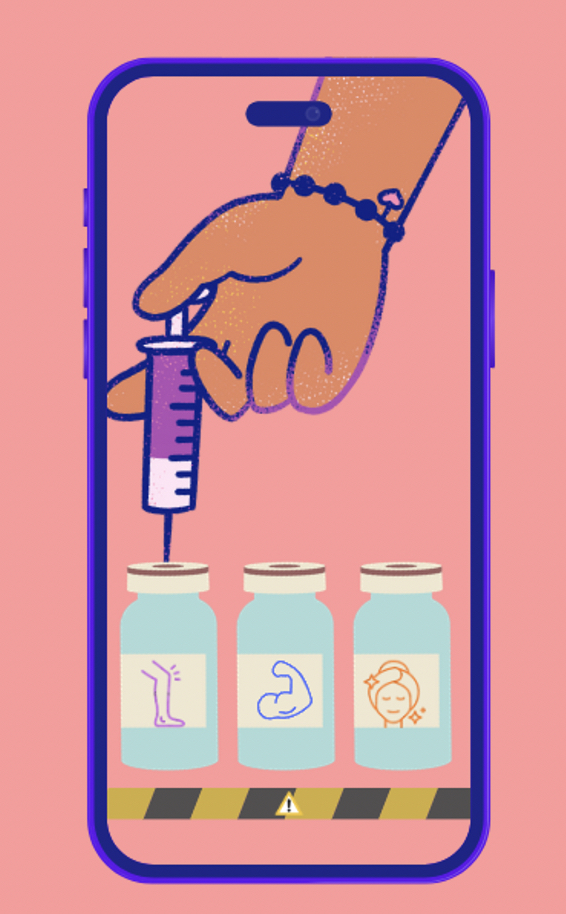 Peptides are naturally occurring short chains of amino acids that help the body send signals and regulate various functions. [Infographic © Brendan Melnic]
BPC-157 has shown some injury-related benefits in testing, but, according to a recent paper in the Journal of Stem Cell Research, the positive results are mostly from rat studies, not human studies. The peptide, the researchers warned, could also theoretically promote tumour growth, and “no controlled human trials have established the safety, tolerability or effective dosing of BPC‑157.”
Behind the wave of peptide promotion is a potentially dangerous, unregulated marketplace selling unauthorized substances. Teenagers and adults are injecting unapproved, experimental drugs from markets operating illegally all over the world, even in Canada. Now, the fad is sparking concern among experts.
The unease leads to the question: What happens when a health trend goes viral before the science or the regulators can catch up?
“We’ve gone from taking a pill by mouth to now taking a black market experimental drug,” said Jonathan Jarry, a science communicator with McGill University’s Office for Science and Society, which is “dedicated to separating sense from nonsense on the scientific stage.”
In 2019, a Sport Integrity Australia report warned peptides are being purchased despite “little evidence available as to their action within humans.”
The report found:
only 25 per cent contained the peptide as described on the label;
25 per cent were unlabelled, and just 75 per cent of the unlabelled supplements contained a peptide;
25 per cent were incorrectly labelled;
and the remaining 25 per cent did not contain any peptide at all.
“This is all happening outside of the law,” said Jarry. “These enterprises are trying to make money, and there is no oversight, so they can sell you just about anything.”
They sell it as research grade and not for human consumption, but everyone damn well knows you’re using it for humans.
— Michael Osborn, student and peptide purchaser
“The people that purchase these black market peptides haven’t gone through the diligence process to make sure that this is something that can go into a human body,” said Carleton University professor Dr. Kyle Biggar, a biochemist and molecular biologist. “There’s a lot of work that goes into manufacturing something safe. There are different contaminants, endotoxins, and other things that can come along with (peptides) that you really need to be aware of.” With the black market products, that safety testing is “not there.”
Health Canada has taken action against three online peptide retailers since April 2025. Despite this, many Canada-based retailers still sell peptides online illegally.
“Health Canada is warning the public of seized unauthorized injectable peptide drugs from Canada Peptide. The products were being sold via the company’s website,” Health Canada said in an August 2025 press release. “Peptide drugs affect the body’s functions and are often used for bodybuilding, anti-aging or enhancing athletic performance. Injectable peptides are regulated as prescription drugs in Canada. Health Canada has not authorized any of the products that were seized or sold on the company’s website, which means that they have not been assessed for safety, efficacy, and quality. Selling unauthorized drugs is illegal in Canada.”
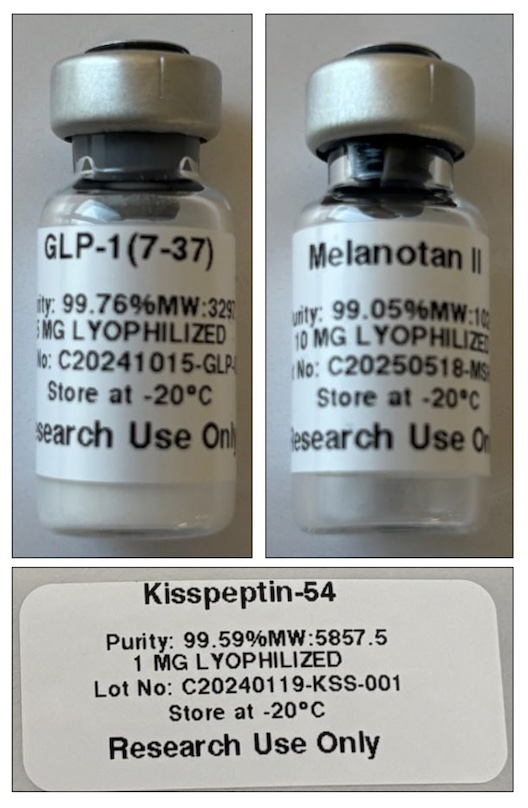 Health Canada issued a warning in August about substances sold online by a company called Canada Peptide, and included photos of products that “may pose serious health risks.” [Photos courtesy Health Canada]
‘For research only’
Online retailers advertise their peptide products as “for research purposes only and not for human use.” However, the majority of these retailers also include information on their websites or advertisements that make clear the products are being sold for human use.
“They sell it as research grade and not for human consumption, but everyone damn well knows you’re using it for humans,” said Michael Osborn. “Everyone is (getting) it for human use, and it’s very easy to get.”
One retailer who advertises products as “for research purposes only,” includes positive reviews on its website and runs video ads encouraging use. One video ad specifically pushed use of BPC-157.
Another site includes a blog post which details how to store and use peptides.
On the site there are five star reviews from a buyer boasting about success with peptides.
“Selling unauthorized health products or making false or misleading claims to prevent, treat or cure illnesses is illegal in Canada,” Health Canada said in an emailed statement. “The disclaimer ‘for research use only’ does not exempt the product from Canada’s regulatory requirements.”
Peptide popularity on social media
Social media platforms, especially TikTok and Instagram, have been flooded with peptide content over the past year. Many influencers are promoting the products, while also telling their audience where they can allegedly buy them “safely.” Many of these influencers are affiliated with the online retailers selling unauthorized peptides, often with affiliate codes that put money in the influencers’ pockets.
Carleton University student Jonathan Neil said he found out about peptides on social media.
“I’ve come across it mainly on TikTok and Instagram,” Neil said. “The more videos that I see and the more people that I see doing it, who seem to be healthy and report no problems, are convincing me to give it a try.”
While Neil said he might try peptides, he is still hesitant.
“I’m never going to put something into my body based entirely on what I see on social media or by people who aren’t licensed and certified,” he said. “I’m waiting to see how it develops.”
Simon Fabisiak, an Ottawa arm-wrestler and gym member, said he frequently sees videos of influencers who insist that if you aren’t taking peptides, you are behind. Fabisiak these influencers don’t talk about negative side effects.
These enterprises are trying to make money, and there is no oversight, so they can sell you just about anything.
— Jonathan Jarry, science communicator, McGill University
“I’d be scared (of) the side effects, that’s the only reason I don’t do steroids — because there’s side effects that are known,” Fabisiak said. “I would totally hop on if there’s nothing (risky).”
A teenager who asked to remain anonymous because he fears social backlash, said he was recommended to take a “stack” of three peptides. He said he ended up taking one of the three substances that were suggested to him.
“I got introduced to peptides more from people in the gym rather than social media,” the teenager said. “I found a coach, and he was the one who pushed me toward (MK-677).”
MK-677 is not technically a peptide. But it behaves similarly and is a growth hormone secretagogue. Despite this, it is often grouped together and referred to as a peptide by influencers and online retailers.
“MK-677 was studied in the 1990s by a company called Merck,” Jonathan Jarry says. “If Merck had seen real promise in MK-677, they would have turned that into a drug and it would be legal to prescribe it and use it, but they didn’t because it wasn’t working.”
The teen is concerned about what long-term research could say.
“If it comes back and it’s a mistake, I don’t want that public,” the teenager said. “It would suck being (judged) for a mistake I made when I was a teenager.”
MK-677 was specifically highlighted by Health Canada in 2019 as “not authorized in Canada for any use and may pose serious health risks.”
Replica medications
Many of these online retailers are also selling replica prescription drugs and peptides.
There are companies and individuals who are “trying to make replicas, and claim that they are the same when they’re really not,” said David Sabatino, a researcher of nucleic acid, peptide and protein chemical biology at Carleton University. “Therapeutic medications usually come with a laundry list of possible side effects and consequences that pharmaceutical companies and healthcare agencies are legally required to disclose. Alternate sources may not respect that same threshold.”
Several retailers are selling weight loss peptides, claiming that they work similarly, or exactly like popular prescription GLP-1 peptides such as Ozempic, Mounjaro, and Wegovy.
“You don’t know how successful that attempt (at replication) was,” Sabatino said. “There are some significant risks associated with alternatives. I don’t know if (consumers) are entirely aware (of the risks), especially in the era of social media.”
“Somebody off the internet who’s claiming to know about (peptides), but you’re not sure who they are, where they come from, and exactly what their expertise is, I wouldn’t put too much trust into those entities,” said Sabatino.
What are peptides?
Peptides are naturally occurring short chains of amino acids that help the body send signals and regulate various functions.
“Proteins are the little machines inside your cells that do all the jobs,” said Biggar, the Carleton biochemist. “They tell your cells to grow, they fire up your metabolism, (and) they do all of the chemical reactions that exist in your cells. A tiny fraction of (proteins) are peptides.”
When social media and online retailers are promoting peptides, they are referring to substances that are typically injected into your body with an insulin syringe and needle, but are sometimes also sold as pills or nasal sprays. The term is used loosely, and some substances that aren’t technically peptides are being promoted under the term. Peptide products function by mimicking signals the body produces in its biological processes.
“Since these products are typically injected, they are bypassing the filtration system that the body has,” Jarry said. “(People) are deluding themselves into thinking that this is safer than injecting (themselves) with steroids, because (they) don’t know what’s inside of that syringe.”
Biggar said that making a peptide is similar to stacking LEGOs.
“Conceptually, it’s not difficult to make a peptide,” he explained.
Since peptides aren’t particularly difficult to make, the production and sale of peptide products can be carried out by unqualified individuals.
“You could order a peptide from a lot of different suppliers, ‘for research purposes,’ and these peptides could have different co-salts in them,” said Biggar. “(This means) that they have different small molecules and salts bound to them (compared) to what you would find in a therapeutic version of that peptide. It’s very dangerous.”
Health Canada said that it “continues to monitor the marketplace and encourages anyone with information about potential non-compliant or unauthorized health products to report it using the online complaint form.”
Health Canada also “advises consumers to only purchase prescription drugs from licensed pharmacies and to verify that any health product has been authorized for sale in Canada.”