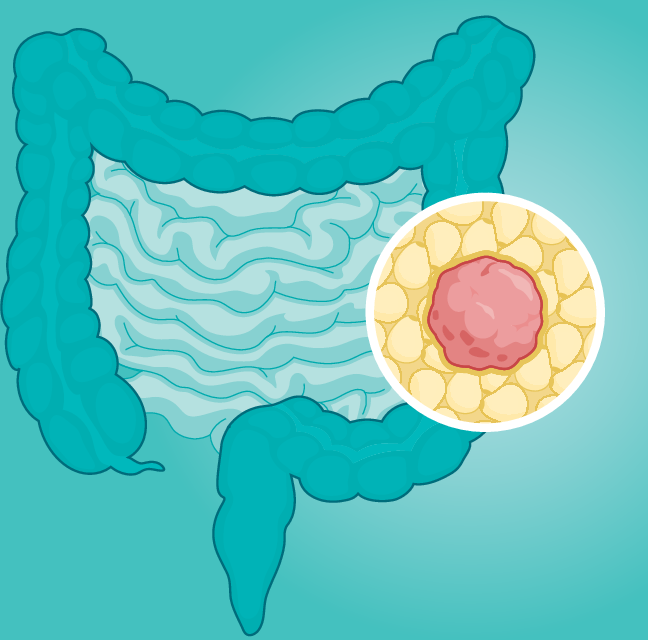
There is growing evidence that tissues in the peritumoural microenvironment can affect the immune system response to the tumour, including the level of immune invasion of the tumour microenvironment, influencing tumour survival and growth. Microsatellite-stable colorectal cancer (CRC), which makes up the majority of CRC cases, is unresponsive to anti-PD-1 immunotherapies, even in conjunction with chemotherapy. CRC tumours are often in direct anatomical contact with visceral adipose tissue. A new study in Nature Cell Biology explores the role of peritumoural visceral adipose tissue (tVAT) in shaping the immune landscape of CRC and its response to immunotherapies.
The researchers initially hypothesized that tVAT could have an anti-tumour role by acting as an immunological barrier against tumour expansion. To test this hypothesis, they transplanted CRC tumour cells into the inguinal adipose tissue of mice and surgically ablated this peritumoural adipose tissue 1 week after tumour implantation. This ablation resulted in reduced tumour size and growth, and increased infiltration of CD4+ and CD8+ T cells into the tumour. “This observation suggests that peritumoural tissue might act as a competitive ‘immune reservoir’, sequestering effector cells away from the tumour core,” explains Ju.