Once upon a time in Hollywood, if you were an actor preparing to walk the red carpet at the Academy Awards, you might have been fasting to fit into your outfit. You definitely had access to the best hair and makeup artists, and designers and jewellers lent you thousands of dollars worth of incredible products. Maybe you even had a subtle bit of plastic surgery. You looked great!
For a long time Hollywood operated a fairly coherent beauty ideal that, however unattainable, was at least legible.
Beautiful meant healthy, glowing, symmetrical, and slim but not gaunt.
The stars on the red carpet mostly looked like the most optimised version of themselves, which is to say they looked like very beautiful and polished versions of the rest of us.
But the look coming out of Hollywood now is not universally aspired to, in fact there is significant public ambivalence and even rejection of it.
Before, people may have looked at celebrities and felt inadequate because they didn’t look as good, but now it seems a significant portion of the public looks at celebrities and feels something closer to concern, or alienation. The comment sections on images of dramatically altered celebrities are not full of aspiration; they are full of “she looks sick”, “he looked so much better before” and “this is sad.”
This awards season there’s been a cluster of stars whose red carpet or fashion week appearances have led to concern, not admiration. These are actors who suddenly look either severely underweight and unwell, or those who have been overly cosmetically enhanced – or both.
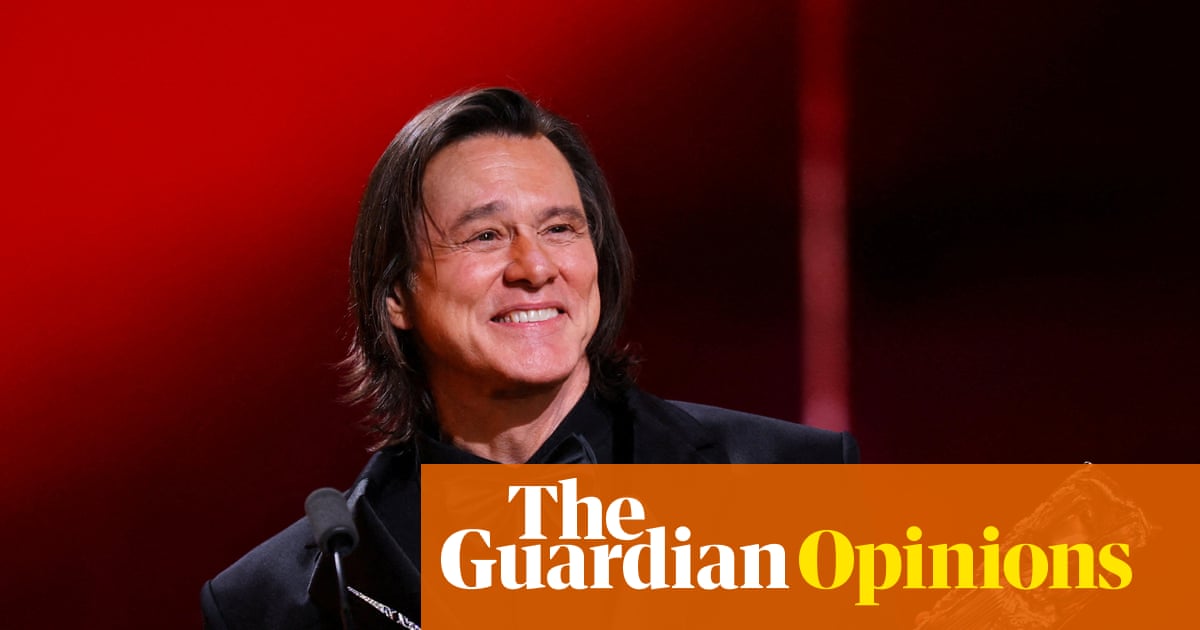
The most dramatic recent example is Jim Carrey, who looked so altered that people thought the person on the podium at the 2026 César awards was a body double. The 64-year-old’s eyes were wide, his cheeks plumped and defined, his skin strangely smooth. Even his eye colour appeared to have been altered.
So intense was the speculation that his representatives had to verify in the media that it was him and that he had worked on his speech in French for months. The speculation arose, at least in part, because people thought someone like Carrey, whose animated face is part of his appeal, would not choose to freeze his features with surgery.
There are two converging phenomena that are producing a new aesthetic in Hollywood.
The first is GLP-1 drugs such as Ozempic, Wegovy and Mounjaro, which have produced rapid and significant weight loss across Hollywood in a very short period. You can see it in the Ozempic face phenomenon, when rapid fat loss produces volume loss in the face that then can appear gaunt and aged.
The second is the acceleration of cosmetic procedures that are gaining in popularity – filler, brow lifts, buccal fat removal (the surgical removal of the fat pads in the cheeks, which produces a very sharp, hollow-cheeked look), lip enhancements and rhinoplasty.
Buccal fat removal in particular, combined with Ozempic-related fat loss, is producing faces that look almost skeletal on screen. On the red carpet you see it in dramatically hollowed cheekbones, visible collarbones and very thin arms.
The result of both surgery and GLP-1s together is a specific aesthetic that looks slightly uncanny and unnatural; faces that are clearly worked on and bodies that are dramatically thin. The overall effect is unsettling and strange – as if the humans have been replaced by smooth replicas.
For the movies themselves, the new aesthetic presents a problem.
Actors are meant to reflect life back at us. And that means to a certain extent they need to look like us – just better looking versions.
Ethan Hawke, who is nominated for an Oscar for best actor, has allowed himself to age naturally, and like many men his age (55) his face is crossed with lines. In Blue Moon he plays a man who is washed up and consumed with jealousy at others’ success. Could he have done that successfully if his face couldn’t move or he was stuffed with filler? I suspect it would have been way too distracting for the audience, and taken them out of the story.
Ageing naturally: Jamie Lee Curtis in New York this month. Photograph: Evan Agostini/Invision/AP
Another actor ageing naturally, Jamie Lee Curtis, told the Guardian: “I’ve been very vocal about the genocide of a generation of women by the cosmeceutical industrial complex … There’s a disfigurement of generations of predominantly women who are altering their appearances.”
As we grapple with an onslaught of AI replacing humans, a deluge of misinformation and AI slop, our bodies are often the things in the world that remain stubbornly human. Human faces carry their years, their laughter, their sorrow, their experiences and their genetic lineage. To erase these things from public life, from the faces of those who are in the public domain, feels like yet another assault on humanness.
People’s faces and bodies are theirs to do what they want with. And if an actor wants to alter their appearance, power to them. But the more strange or unnatural the results are, the less likely the public will follow that set of beauty standards.
Already Hollywood is grappling with diminishing financial and cultural power. When movie stars are no longer people we admire or aspire to look like (and copy their haircuts, fashion or fitness routine), the cultural power of Hollywood further diminishes.
Angelica Jade Bastien in Vulture observed this week” “Yes, Hollywood is in a financial crisis motivated by a host of knotted issues … But Hollywood is also in an artistic crisis. So many films fail to engage meaningfully with the concerns, pleasures and contradictions of modern humanity. Meanwhile, movie stars have tweaked their faces and bodies into a startling sameness that hews toward the most fascistic markers of beauty (extreme thinness, whiteness, no signs of the passage of time.)”
How can we still believe in the dream of Hollywood when, for those in it, it’s starting to look like a nightmare?