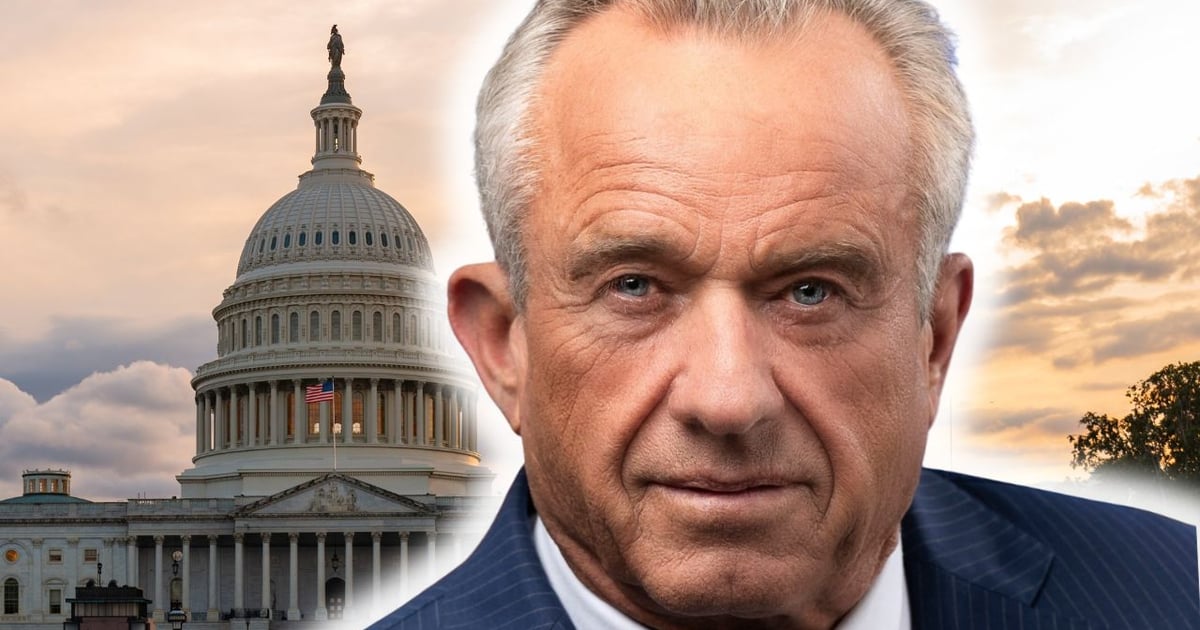
MAHA, the Make America Healthy Again movement with U.S. Department of Health and Human Services (HHS) Secretary Robert F. Kennedy Jr. as its spiritual leader, is growing up. As Kennedy moves into his second year in command of public health policy in this country, MAHA is gaining confidence and finding its wherewithal, like a helpless infant becoming a tottering toddler.
A recent article in Scientific American on MAHA’s rise to power proclaims that the movement has already “upended science and medicine,” largely through its baldly stated distrust of the former and skepticism over the latter.
“If we define MAHA as an overall movement or concept focusing on food’s impact on health, it has had a huge impact on nutrition and supplement regulations,” says Ivan Wasserman, managing partner at Amin Wasserman Gurnani LLP. “In addition to actual changes — including at the state level with regulations on ultra-processed food, school lunch programs, artificial dyes and other chemicals added to foods — the political force that is MAHA voters has spurred politicians to show they are doing something to address their concerns.”
And this is the crux of the matter moving into 2026, as politics plays into midterm elections and Republicans look to those proverbial MAHA Moms for crucial votes. Some polling shows roughly 40% of parents in support of the MAHA agenda, and the political base will rely heavily on MAHA wins to drive turnout in a cycle that tends to treat incumbents quite poorly.
This is all the more relevant given the Trump Administration’s recent support for glyphosate, public enemy No. 1 for the MAHA Mom, and a former version of RFK Jr., too. Industry pundits are quick to highlight the lines being drawn around MAHA by the larger Make America Great Again (MAGA) agenda, especially through protective measures that support the large multinationals, often referred to as Big Ag, Big Chem and Big Food. The prominence of meat in the revised food pyramid and defense of glyphosate as a matter of national security show the current limits of MAHA when it butts up against Trump’s larger agenda.
As MAHA comes into better focus and ties itself even more closely to Trump and this larger agenda, we asked leading attorneys in the industry to put the movement into better context and tell us what they’re watching as the toddler matures.
“The FDA used to require submissions of GRAS notifications until such a backlog developed that it became voluntary at the end of 1997, beginning of 1998. Now, all of a sudden, FDA will have more ability to review mandatory notifications? That seems unlikely.”
— Justin Prochnow
Setting the MAHA stage in 2025
“In its first year, MAHA primarily focused on setting the stage for the future rather than completely overhauling nutrition and supplement regulation immediately,” said Claudia Lewis of Venable LLP.
She highlights FDA announcements to phase out certain petroleum‑derived synthetic color additives in foods and a renewed focus on infant formula and toddler milk safety as examples.
“In the first year, there certainly has been a flurry of pronouncements and promises, but other than the new food pyramid, which isn’t really a regulation, there haven’t been many significant regulatory changes, which isn’t surprising as such changes take time,” Wasserman said, echoing this point about 2025 as a year for signposting what’s to come.
A year into MAHA, it’s clearer now that the federal level is reserved for posturing and floating trial balloons, while the real action happens in the states. It’s a strategy less likely to trigger those big lobbies mentioned above by letting the states (such as Texas) pass laws and keeping rapprochement at the federal level.
“It’s notable that roughly three dozen states have introduced legislation aimed at restricting certain synthetic additives and high‑sugar products in schools and other child‑focused settings, and at strengthening on‑pack or menu labeling requirements for foods and supplements,” Lewis said. “At the state level, legislatures are expected to keep advancing bills that limit food additives in school meals, require new disclosures or mandate on-pack warnings.”
She highlights New Jersey as a more recent example of this strategy, with proposed annual reporting of new GRAS (generally recognized as safe) determinations, including intended use, safety data and the basis for the GRAS conclusion.
The two big moments for MAHA in 2025 would have to be progress on synthetic dyes and self-affirmed GRAS. According to Justin Prochnow of Greenberg Traurig LLP, the removal of synthetic dyes has long legs.
“It really is the least controversial of all of the MAHA items,” he said, “as most people don’t likely believe that synthetic color dyes are a good thing.”
With respect to GRAS, this will clearly remain a focus for 2026, but Prochnow is quick to point out the elephant in the room.
“The FDA used to require submissions of GRAS notifications until such a backlog developed that it became voluntary at the end of 1997, beginning of 1998,” he said. “Now, all of a sudden, FDA will have more ability to review mandatory notifications? That seems unlikely.”
Industry will be watching to assess the ultimate impact on innovation and delays in getting new products to market.
“FDA stated that it will ‘continue to support dietary supplement priorities with targeted enforcement strategies on violative products,’” Wasserman said. “While their plans are obviously and intentionally vague at this point, the hope is FDA will embark on a path to regulatory changes that will end in a smart, balanced approach … “
— Ivan Wasserman
The MAHA watchlist for 2026
“The next two years could be very busy on the regulatory front — perhaps the busiest in my 30-plus years of practice,” Wasserman said. He’s expecting that proposed rule to eliminate the self-affirmed GRAS pathway, a long-awaited final guidance on new dietary ingredient notifications and new restrictions on caffeine labeling.
Ultra-processed foods (UPFs) are shaping up as quite the battleground. In 2025, FDA and USDA issued a joint request for information to help define UPFs, and the issue continues to attract ancillary support from unlikely quarters.
A recent segment on 60 Minutes brought RFK Jr. and David Kessler, the former FDA commissioner who was a strong and vocal critic of the supplement industry, together in the war against UPFs. There’s also the class-action crowd champing at the bit.
“UPFs are turning into a combined effort and focus of the administration and class-action plaintiff lawyers,” Prochnow said. “The more that RFK Jr. and the administration talk about UPFs and how bad they are, the more the plaintiff lawyers latch onto it.”
The priority list issued for 2026 by FDA’s Human Foods Program put a brighter spotlight on modernizing oversight of dietary supplements, and this has the legal experts bracing for some MAHA impact.
“FDA stated that it will ‘continue to support dietary supplement priorities with targeted enforcement strategies on violative products,’” Wasserman said. “While their plans are obviously and intentionally vague at this point, the hope is FDA will embark on a path to regulatory changes that will end in a smart, balanced approach to level the playing field against bad actors and keep safe, effective and compliant supplements available to consumers.”
MAHA loves to talk longevity and mitochondria, which brings peptides to the top of Prochnow’s list.
“I think FDA will need to weigh in on the regulation and sale of peptides in a non-drug context,” he says. “There are many companies out there marketing peptides like BPC-157 and others as non-drug products labeled as ‘For Research Purposes Only’ when that is not the case. With the popularity of GLP-1 drugs and other peptides, the FDA is likely going to need to opine on this growing category.”
“I haven’t seen evidence yet of RFK or the MAHA movement in general being big champions of the supplement industry, with the main focus seemingly on encouraging more consumption of whole foods.”
— Ivan Wasserman
Will MAHA end up a net positive for supplements?
At the end of the day, a toddler’s behavior is no easier to predict than an infant’s, so parsing the tea leaves on MAHA is still a fool’s errand. After the field battles surrounding synthetic dyes or UPFs, GRAS or supplement oversight, there are plenty of reasons to cautiously view MAHA as a net positive for the supplement industry.
“As a general rule, supplements would seem to be a category that is looked upon favorably by MAHA and RFK Jr. as alternatives to prescription drugs,” Prochnow said, “but the regulatory and enforcement focus continues to be on synthetic colors, added sugars and UPFs.”
This is a common refrain, as MAHA focuses first on villains in food with supplements still waiting in the wings for more positive posturing at the federal level.
“I haven’t seen evidence yet of RFK or the MAHA movement in general being big champions of the supplement industry, with the main focus seemingly on encouraging more consumption of whole foods,” Wasserman said.
With an even broader perspective, MAHA can be viewed as the catalyst necessary to make real improvements to the regulatory framework that has governed the industry under DSHEA for more than 30 years.
“DSHEA was passed long ago, so it’s time for it to be re-evaluated and updated so that it aligns more directly with how consumers understand and use supplements,” Lewis said. “This administration has several initiatives, which is a good start. Whether it proves to be a net positive or negative will largely depend on how the framework and the specific proposals are implemented in practice. It certainly has the potential to be positive.”