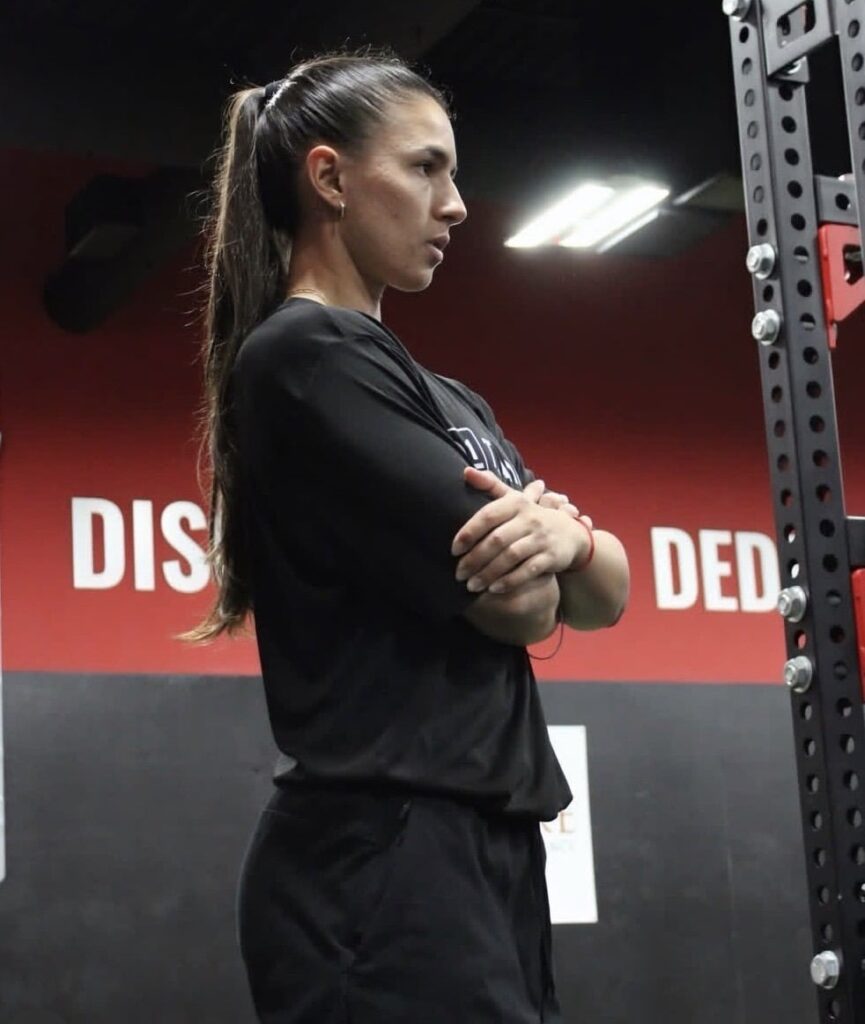
 Anna Verdu Cobo coaches people at D1 Training Macon. The local personal trainer focuses on strength training. Photo provided by D1 Training Macon.
March is Women’s History Month, a time to celebrate the leadership and influence of women across many fields, including health and fitness. In Macon, women are helping people build strength not only physically, but mentally and emotionally as well. As a nurse practitioner, I often remind patients that movement is one of the most powerful tools we have to support long-term health. This month, I reached out to several women in the fitness community to share advice that anyone can apply to live healthier lives.
This week’s spotlight features Anna Verdu Cobo, a personal trainer at D1 Training Macon, a gym known for its structured coaching and strong sense of community. At D1 Training Macon, she works with individuals of all fitness levels, helping members build strength through structured training and a supportive coaching environment. Verdu Cobo believes one of the most important habits people can incorporate into their routine for long-term health is consistent strength training. “Strength training two to three days per week supports long-term health,” she said. “The Centers for Disease Control and Prevention recommends adults perform muscle-strengthening activities at least two days per week.”
Beyond building muscle, resistance training also supports bone density, metabolic health and physical function. Research also suggests it may improve mental health and sleep quality. This makes it an important component of overall wellness. Verdu Cobo said one of the most common misconceptions she hears, especially from women, is a fear that lifting weights will cause excessive muscle growth.
“Many women avoid lifting weights because they worry about becoming bulky,” she said. “Scientific evidence does not support this concern for most women. Strength training increases strength and lean muscle while helping reduce body fat.”
Instead of avoiding weights, she encourages people to view strength training as a tool that supports posture, injury prevention and long-term health.
Starting Small
For those who feel intimidated about starting a fitness journey, Verdu Cobo emphasized that the first step doesn’t have to be complicated.
“Start with ten minutes of movement,” she said. “Take a walk outside, try a few bodyweight exercises or consider joining a structured training environment where coaching and support are available.”
Even small increases in activity can make a meaningful difference. Health organizations around the world continue to emphasize that any movement is better than none, and small steps often lead to lasting habits. For Anna, however, strength goes far beyond physical fitness.
“Strength means discipline and self-respect,” she said. “Many women enter the gym unsure of their ability, but over time they develop confidence through repeated effort.”
Regular exercise has also been linked to improved self-esteem and reduced symptoms of anxiety and depression, reinforcing the powerful connection between physical and mental health.
Reflecting on her own journey, Verdu Cobo said one lesson stands out above the rest.
“Progress depends on consistency. Motivation changes day to day, but discipline builds results,” she said.
Her message to anyone thinking about starting a fitness routine is simple but powerful: “The hardest step in fitness is the decision to start.” Sometimes the path to better health begins with something small. It might be a short walk, a new habit or simply the decision to invest in yourself. As Anna puts it, “from the couch to the gym begins with one decision, one new habit.” During Women’s History Month, it is inspiring to see women like Anna helping others discover their strength. And as she reminds us, the most important step is simply the decision to start.
Joy King, DNP, MBA, APRN, NP-C, FAIHM, serves as president of the Georgia Nurses Association.