When Jim Carrey stepped onstage to accept his lifetime achievement statuette at the César Awards in Paris last week, there was more chatter about his seemingly transformed face than his emotional speech. It appeared to many that he had his upper eyelids done, causing a hollowed-out look, and there seemed to be scars near his ears — a telltale sign of a lift. This in turn led to rampant online rumors that Carrey had been replaced by a clone.
The biggest rookie mistake is to have a little work done too soon before an event. We’ve all seen the effects of what we can only assume to be poor planning, with difficult-to-unsee appearances by Madonna at the 2023 Grammys and Tom Cruise at a Lakers game in 2020 (both with inflated cheeks) and Renée Zellweger at the Elle Women in Hollywood Awards in 2014, with upper eyelids dramatically altered. Their faces certainly wouldn’t have looked so startling if given the chance to settle in.
Demi Moore is a classic example of someone who did it wrong — showing up on a Fendi runway in ’21 frighteningly fresh from facial surgery, and then did it right — waiting for a revision, followed by proper recovery, before making a triumphant return to last year’s Oscars, glowing and fully healed.
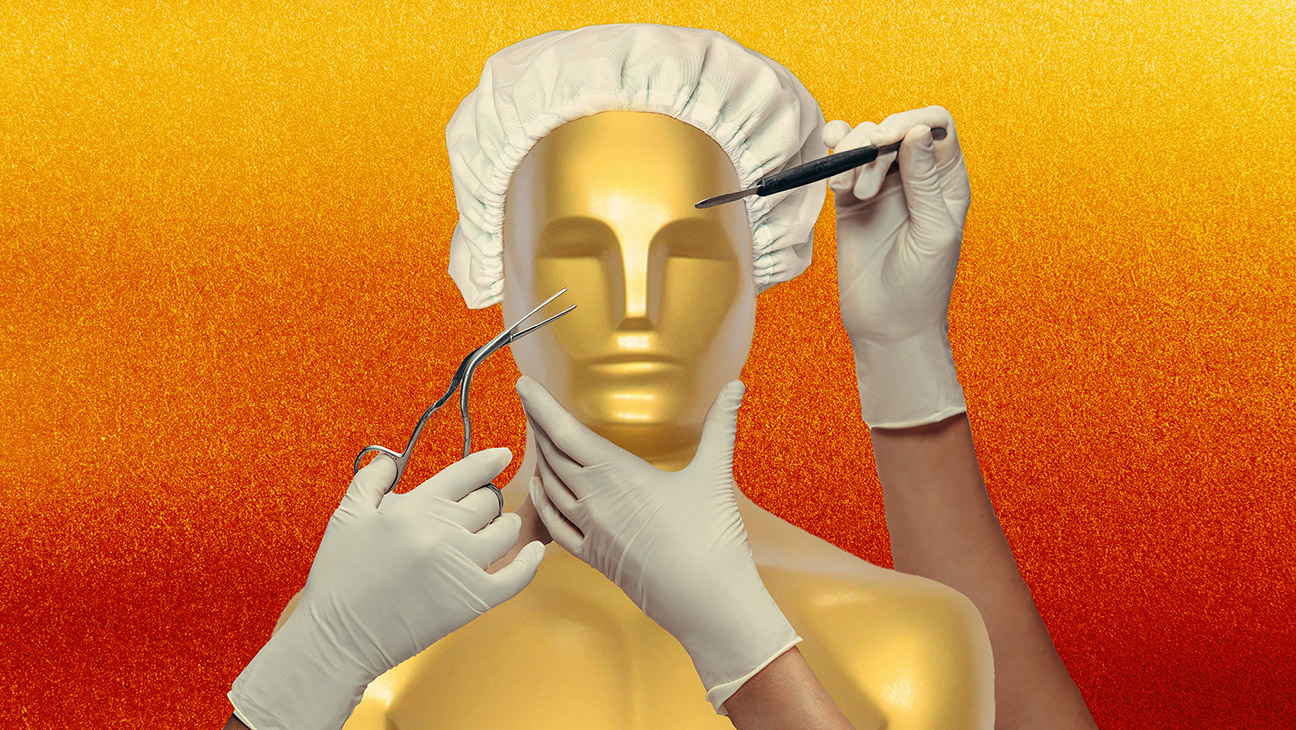
Red carpet radiance, like comedy, is all about timing. Here is a list of what people can do to optimize their appearance at an awards ceremony, and how far ahead they should consider doing it.
FACELIFT
Two to six months before ceremony
There’s nothing like a lift, performed by the right surgeon, to reduce sagging and give a more youthful appearance. Speculation is that Anne Hathaway, Emma Stone and Brad Pitt all owe their revitalized appearance to the procedure that repositions skin and the muscles beneath. If so, they clearly planned ahead. While the full effect isn’t seen for six months, there is something referred to as the “honeymoon effect,” which occurs after two months, as the result of optimal swelling. “They look really refreshed at two months — they still have edema underneath the skin,” explains Marina del Rey plastic surgeon Luis Macias.

Brad Pitt and Demi Moore are suspected of having had good work done, and better yet, timing it correctly.
Dimitrios Kambouris/Getty Images; Savion Washington/Getty Images
UPPER BLEPHAROPLASTY
Six to eight weeks before
While there is less of a wait time than with a facelift, there is more potential for a drastic appearance change than with any other youth-enhancing operation, especially with men, such as Jim Carrey and Bradley Cooper, or, historically, Burt Reynolds and Kenny Rogers. Removing too much skin or fat can feminize a man and produce a sunken effect.
Jim Carrey’s transformed face at the César Awards prompted speculation he’d had work done too recently.
Francois Durand/Getty Images
SUBTLE FILLER
Four weeks before
A touch of hyaluronic acid injected into the upper face to lift the midface, or around the jawline to increase definition, is an easy way to improve appearance, but the doctor needs to inject a minimal amount, because swollen chipmunk cheeks or inflated areas of the face are dead giveaways. If you don’t leave a few weeks of buffer, you risk showing up with swelling or black and blue areas.
FAT TRANSFER
Three weeks before
“Facial fat grafting can be a high-impact, low downtime procedure that can instantly add volume into your midface and even your skin, taking a few years off your look and adding some glow,” advises Beverly Hills facial plastic surgeon Babak Azizzadeh. Performed under local anesthesia, the process involves removing a small amount of cells from the inner thigh, belly or knees and injecting them into the temples, cheeks and nasolabial folds.
LASERS
Three weeks before
Light fractional CO2 laser resurfaces the skin and can be done less than a month ahead of time, improving texture, while the less drastic Aerolase or Laser Genesis are meant to build collagen. “These both smooth the skin and reduce redness or uneven tone without significant recovery, and can also be repeated closer to the event to further enhance clarity and calm any residual inflammation,” says New York dermatologist Anetta Reszko. Though it takes months for their full effect, there is an immediate glow due to plumpness caused by the procedure itself.
ALLOCLAE
Two weeks before
Adding volume to your body to fill out the décolleté on a low-cut gown is a lot less risky before an event than injecting it into your face. The latest filler is derived from processed cadaver tissue, so you don’t have to donate your own fat, which can be challenging these days. “If a patient has a large event, but a small amount of fat on the body due to GLP-1 use or just naturally, alloClae can be a game-changer,” explains New York plastic surgeon Darren Smith.
SMILE BRIGHTENING
The week of the ceremony
Kendall Jenner, Tom Cruise and Scarlett Johansson are among those who go to great lengths for million-dollar smiles, but even laminates can look faded or a bit dingy. In order to bring your mouth up to the level of your illuminated face, cosmetic dentists have devised multi-stepped brightening treatments like the Glow Up at One Manhattan Dental in New York. It starts with oral exfoliation and gum rejuvenation — like a facial for your mouth — followed by two different types of polishes: an air system that eliminates stains and bacteria, and a precision polish that also strengthens the enamel. The final step is a whitening process, to ensure you are camera-ready.
FACIALS
One to three days before ceremony
Almost everyone gets a facial within days of a red carpet event, employing a combo of technologies to exfoliate tired skin and then hydrate, illuminate and snug the newly revealed layers. Keren Bartov is nearly booked out for the week leading up to the Oscars and is a favorite of Julia Roberts, Kim Kardashian, Gal Gadot, Moore, Kate Moss, Lily Collins, Sienna Miller, Eva Mendes, Victoria Beckham, Uma Thurman and Serena Williams. She uses lymphatic drainage massage to get rid of puffiness; targeted microwave technology to tighten skin and contour the jawline, chin and neck; and her own device called The Wand — a combo of RF energy, LED light and infrared — to increase circulation and oxygenate tissues.
This story appeared in the March 11 issue of The Hollywood Reporter magazine. Click here to subscribe.