With a new grant from Prince William County, George Mason University kinesiology professor Joel Martin is leading a comprehensive yearlong study to uncover whether the Fire and Rescue Department’s Work Performance Exam (WPE) truly mirrors the grueling realities of firefighting. By tracking everything from metabolic strain to air consumption, the project aims to refine the test and strengthen the scientific foundation behind firefighter readiness standards.
The WPE is an occupational test to evaluate the fitness of an individual to the level required in firefighting. These functions include donning and securing a complete set of personal protective equipment; carrying, lifting, and extending a ladder; forcibly entering a structure with a sledgehammer; moving and lifting heavy loads from one location to another; and performing other essential occupational tasks in firefighting.
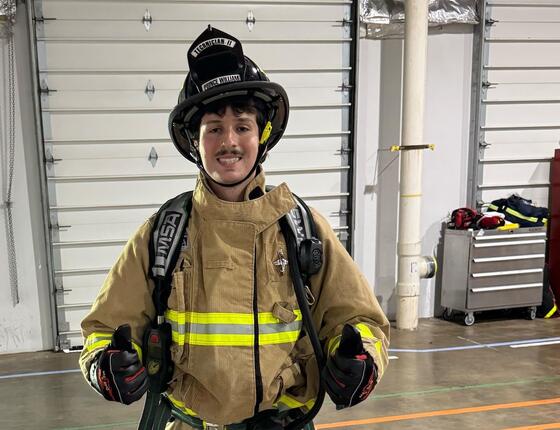
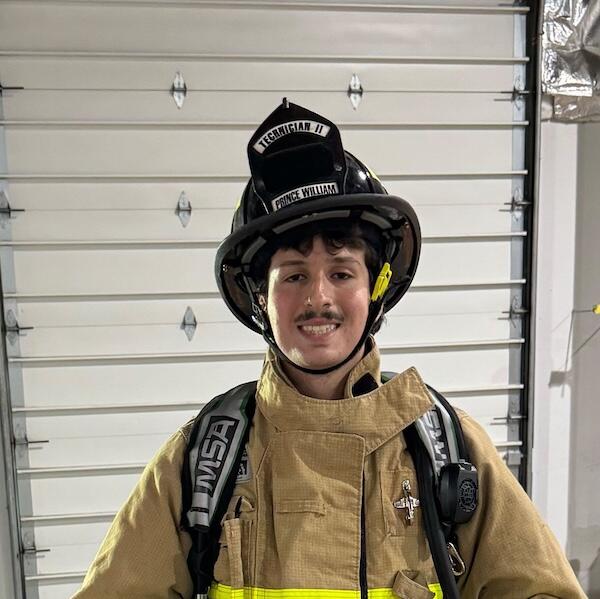
Firefighting tasks will be re-evaluated with the WPE study. Photo provided
The goal of the study is to determine whether the WPE accurately reflects the demands of real-world firefighting. Martin’s team also wants to see if they can predict the aerobic capacity of firefighters performing each task. They will generate evidence-based recommendations to refine the WPE while preserving its operational authenticity.
“We hope to support firefighter health and ensure that fitness standards are scientifically defensible and aligned with job demands,” said Martin, an associate professor in the Kinesiology Program of George Mason’s College of Education and Human Development.
The WPE’s tasks are administered in a certain order and must be completed within specific time limits. These requirements were adopted as part of a previous validation based on interviews, conducted by a third-party research group, and an assessment of their test performance to determine acceptable time limits.
Martin’s project will expand on this work and evaluate the intensity of the physiological and metabolic requirements involved in performing each task to determine if the test accurately reflects demands.

Joel Martin leads the study. Photo provided
“While physical fitness does play a major factor in the time it takes to complete the test, it is not a physical fitness test per se,” Martin said. “There is a skill component to performing many of the tasks on the WPE.”
Also, while performing the WPE, firefighters are in full firefighting gear and breathing through a self-contained breathing apparatus (SCBA), a specialized respirator worn in hazardous environments. “This adds additional challenges,” he said.
Approximately 100 medically cleared career firefighters will participate in the project, during which they will complete the tasks of the WPE and undergo laboratory-based fitness testing. These include calculating VO2max (amount of oxygen consumed), and strength and power assessments. During the administration of the test, wearable technology will be used to quantify the physiological responses of the firefighters, such as heart rate and estimated metabolic demand. In addition, VO2max levels will be assessed based on the amount of air firefighters consume wearing their SCBA.
The project team is also exploring a metric called “work efficiency,” which is computed based on the time needed to complete the WPE and how much air is consumed from the SCBA. Martin says this will provide further insight as to how capable firefighters are at their occupational duties.
“Understanding the overall levels of physical fitness that support safe and effective performance of firefighter tasks is essential,” Martin said. “Often the role of physical fitness components is studied from the perspective of individual fitness components. We are taking a more holistic approach in terms of considering all components of fitness in our analyses.”
Funding for this project is supporting the participation of Ramsey Zaytoun, a graduate student working with Martin who is pursuing a master of science in kinesiology through George Mason’s accelerated bachelor’s/master’s program. Zaytoun will be using the data collected in this project as part of his MS thesis.
“This experience really helped me grow because it gave me hands-on exposure to the entire research process,” said Zaytoun.
This project will build upon the university’s prior collaborations with PWC Fire and Rescue and facilitate the implementation of an embedded research model in the future to support firefighter health and safety.