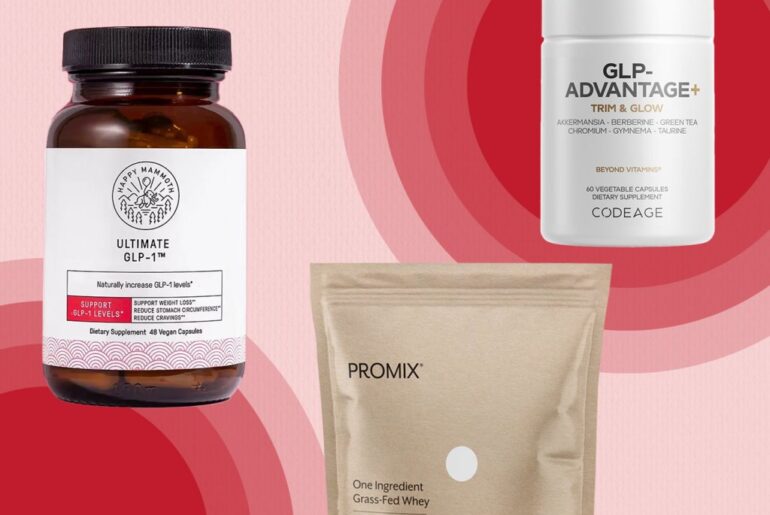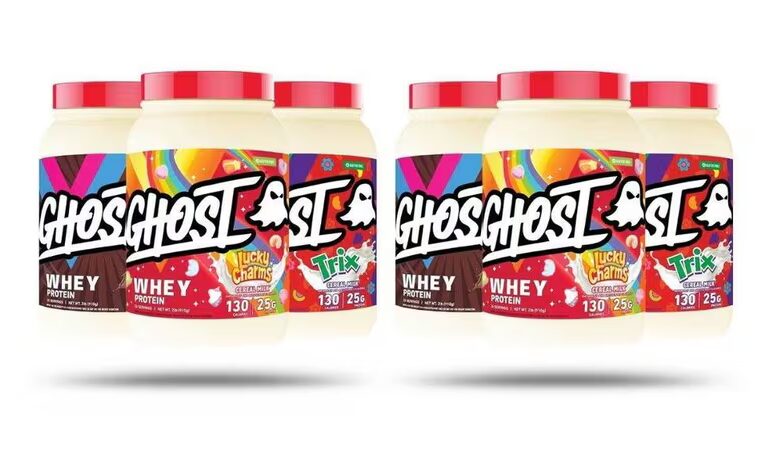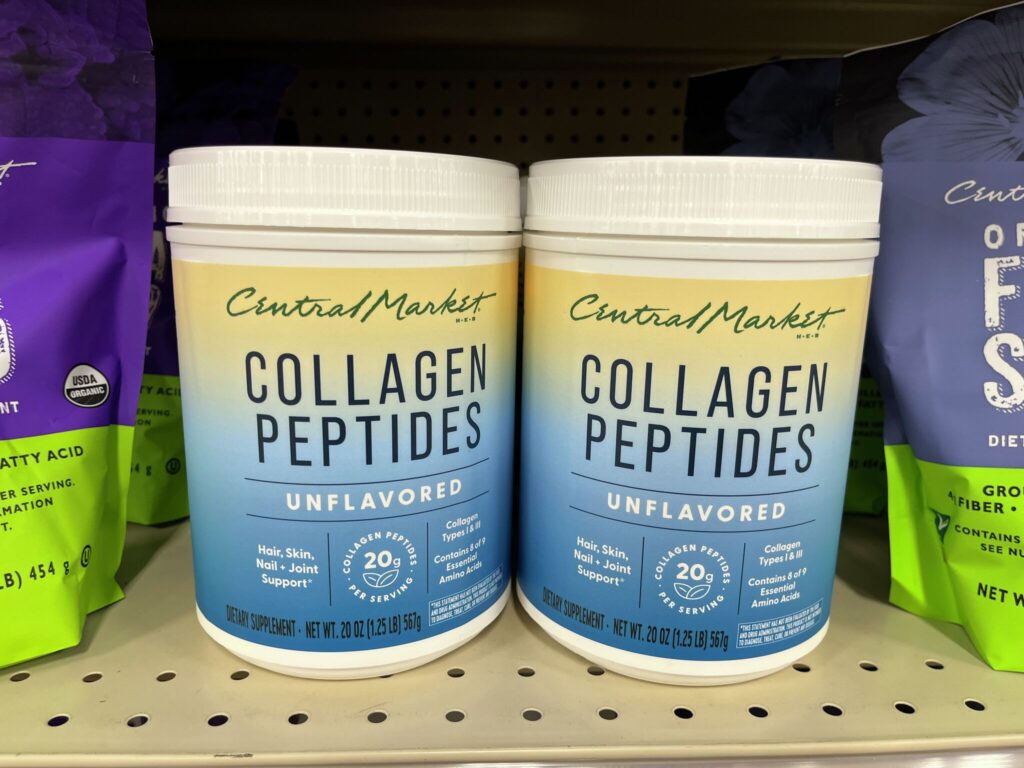
H-E-B has entire shelves filled with collagens many advertising that they are with peptides.
American-Statesman
Peptides are having a social media moment. Ads and posts promise the fountain of youth, weight loss, longer hair, stronger nails and other benefits.

What are peptides?
Peptides are in everything including protein and collagen. They help the body rebuild itself, activate a process, or deactivate a process.
American-Statesman
“‘Peptides’ is used very loosely,” said Lee Nunn, a registered dietitian with Baylor Scott & White in Pflugerville and Cedar Park.
Article continues below this ad
Ready for a chemistry lesson? Peptides are found in the proteins we eat.
They are signaling molecules that tell the body what to do when they arrive.
Peptides are strings of amino acids. Amino acids provide the building blocks of the body. Depending on the sequence of amino acids, peptides contain instructions for which structures to create — such as skin, bones, joints and organs — and what signals to send to the body.
Insulin is a peptide. When someone gets insulin or produces it naturally, it signals the body to release glucose into the bloodstream to provide energy.
Article continues below this ad
Peptides marketed for growth, virility and other effects are hormone mimickers, trying to do the job the body’s natural hormones already perform.
Dietary supplements with collagen are not regulated by the FDA, which means you don’t know what you are getting or what they will do.
American-Statesman
Do we already have peptides in our body?
Yes. Our bodies are filled with peptides that signal specific functions.
Article continues below this ad
Sometimes they tell the body to increase or decrease a response. They play a major role not only in building structures in the body but also in mounting an immune response.
Most people do not need to add specific peptides to their daily routine, Nunn said.
Should you add peptides to your diet or inject them?
Peptides are the rage right now in medical research but also in the supplement industry. Peptides have been isolated to create a specific response and manufactured as medications.
Article continues below this ad
Some of the most talked about examples are GLP-1 medications used to manage diabetes and aid weight loss. GLP-1 stands for glucagon-like peptide-1. You already have this peptide in your small intestine. It is what tells the pancreas to release insulin after you have eaten to control blood sugar. It also tells your body that you have eaten and are full. The GLP-1 medications mimic this effect, which is why they control blood sugar in people with diabetes and lessen hunger signals for people with obesity.
The GLP-1 medications have gone through clinical studies from animals to humans. Their side effects and benefits are documented, and they have been approved by the U.S. Food and Drug Administration.
You might have seen social media ads for other peptides that are not FDA approved. That usually means they have not been rigorously tested. Many of the ones promising longevity, Nunn said, do not have clinical studies to prove that they work or to study the long-term effects of supplementing with those peptides.
Peptides, though, may represent where medical research is headed, Nunn said. Because they are signaling molecules to get the body to do something, researchers are investigating different peptides to see if they can create a desired response such as helping the body heal faster.
Article continues below this ad
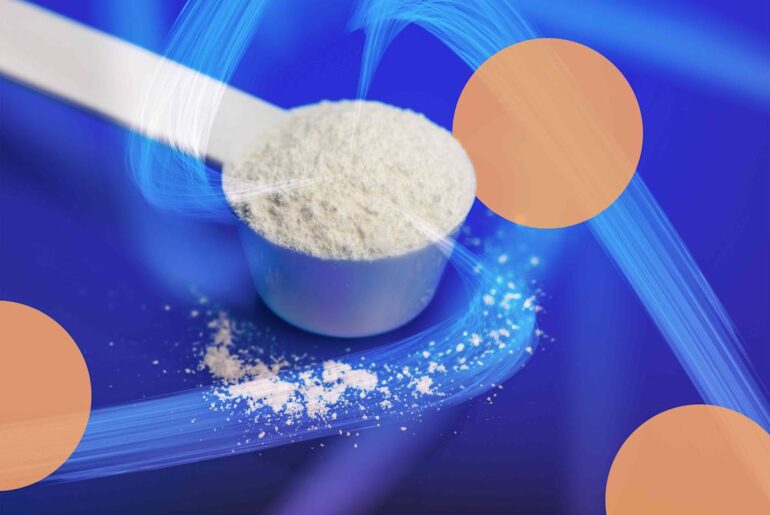
More people are scooping collagen into their morning coffee. It can be useful in rebuilding muscles, but only if you need more collagen.
American-Statesman
What about collagen?
Collagen is a peptide. Specifically, powdered collagen is made from animal parts such as joints, bones and skin that have been ground up and processed into a powder. We get collagen in our diet when we make things like bone broth.
There is some evidence that supplementing with collagen can be helpful, Nunn said, but your body has to have vitamin C to make the collagen useful. If you are low in vitamin C, adding collagen will not help and your body will simply flush out what it cannot use. Nunn likens collagen to bricks and vitamin C as the mortar that goes between the bricks. The bricks aren’t useful without the mortar.
Article continues below this ad
When you add collagen to your coffee, you are signaling the body to begin repair processes. Once the collagen hits the stomach, it gets broken down, and you hope the body will distribute it to where you need the collagen to help repair muscles, skin tissue or an injured joint. There’s no guarantee it will go where you want it. If your body already has enough collagen, it will just filter out through urine.
Bone broth contains collagen because it uses bones to build the broth.
Austin American-Statesman
What about protein?
Proteins are similar to peptides but contain 50 or more chains of amino acids. Protein is also in the spotlight right now, especially with the new food pyramid, which puts protein at the top along with fruits and vegetables.
Article continues below this ad
The old rule of thumb was people should get 0.8 grams of protein per kilogram of body weight per day. More current thinking — and one Nunn subscribes to — is 1.2 to 1.6 grams per kilogram of weight. That means someone who weighs 150 pounds needs 80 to110 grams a day. Someone who weighs 200 pounds needs 110 to 145 grams a day.
Older adults also need more protein because their bodies process it less efficiently.
Protein drinks and powders can be a quick way to get protein into your diet, but make sure they are not loaded with added sugar that you don’t need.
Nicole Villalpando/American-Statesman
Should you drink or eat your protein?
Eating protein naturally through beans, meats, tofu, eggs and dairy products is beneficial, but sometimes you might not be able to get enough through diet.
Article continues below this ad
Your body can only take in 40-50 grams of protein at one sitting. That’s why it has to be spread throughout the day.
People who work out more need more protein to build muscles. Although they might not be able to physically eat all the protein they need, adding a protein shake can help athletes get enough.
Liquid protein absorbs faster because it’s easier to break down and deliver where the body needs it, Nunn said, but if you are drinking the protein in a smoothie that has a lot of sugar from fruit juice or other added sugars, that might defeat the healthy purpose of the protein.
Drinking protein also doesn’t provide the same feeling of fullness that meat or beans can.
Article continues below this ad
Protein bars loaded with sugar or carbohydrates also may not benefit you. “It might be better to just have two eggs instead,” Nunn said.
Most people take in protein through meats as well as plant-based proteins.
Austin American-Statesman
Is there such a thing as too much protein?
Protein works better if it has a job to do. Protein is looking for muscles that need to be repaired, such as muscles that have just done a workout.
Article continues below this ad
Anyone with chronic kidney disease who is not on dialysis should limit protein intake because it is filtered through the kidneys, which can strain already damaged organs. Check with your doctor for guidance.