When it comes to beauty, there is a knowledge that only time and self-testing can give, and we’re usually quite comfortable following the example set by our mothers and grandmothers, especially after watching them master their beauty routines over decades at their bathroom vanity. However, even the greats can stumble, and not all old-school beauty rules should be followed.
What was trendy and taught once isn’t necessarily in your best interest now. Avoid these outdated beauty rules, and we won’t tell your mama.
Credit:
Getty Images/Authenticated News/Staff
Skin Care
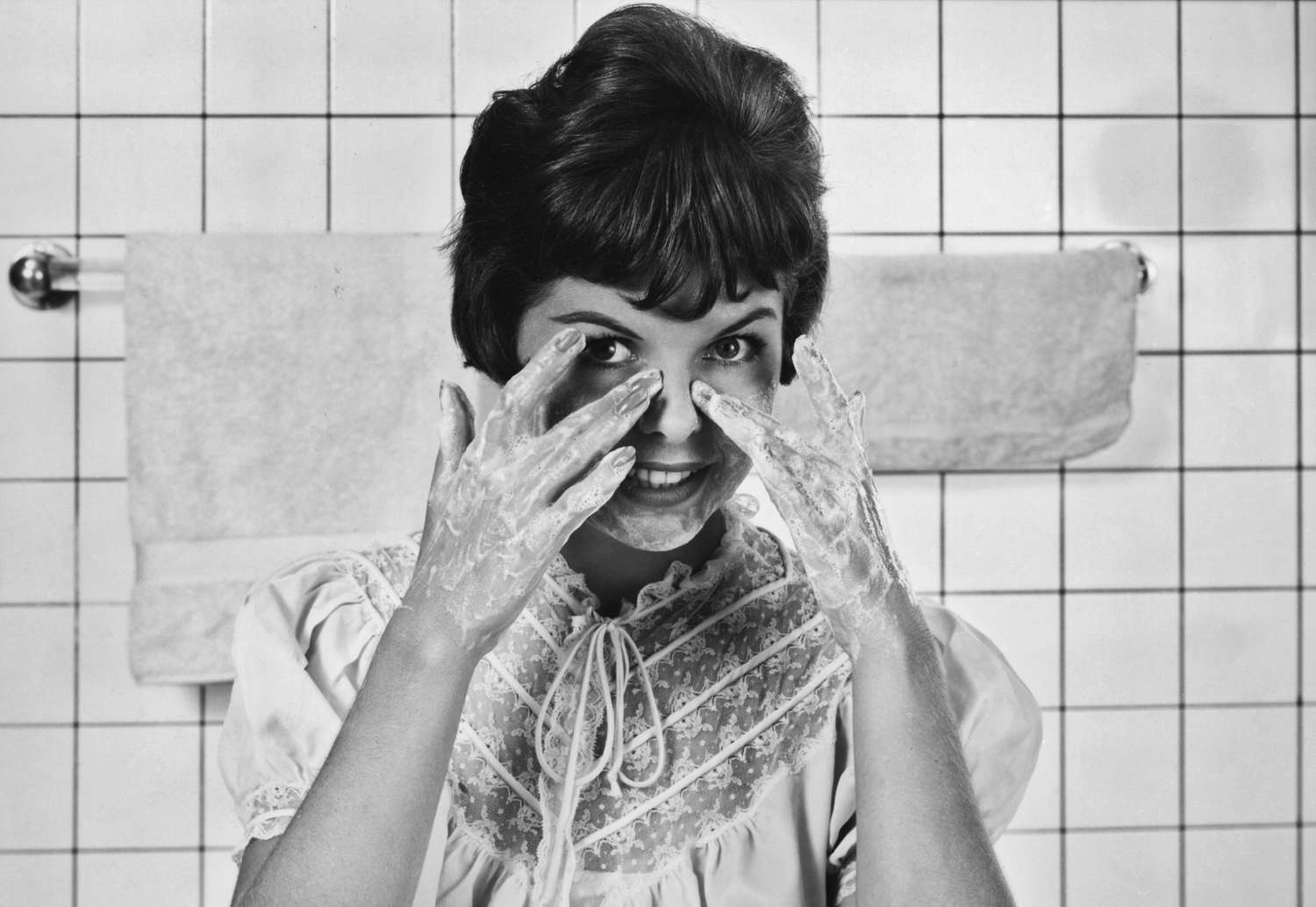
Sleeping with a Slathered Face
I’ll never forget my grandmother telling me that it was normal to sleep with a thick-enough layer of moisturizer—such as trusty Pond’s Cold Cream or Nivea Creme—on your face that you practically looked coated in whipped cream. The idea, I suppose, was for it to slowly soak in over the course of eight hours? Not only does that potentially create quite the mess for your bedding and pillows, but also not every face needs that much oil and other ingredients over such a long period. For many people, that could lead to clogged pores or a moisture barrier that over-reacts.
Instead, opt for a rich face cream, and you need only use about a dime- or quarter-sized amount. Don’t waste product—or money!
Skipping the SPF
Gone are the days of applying tanning oil and using a foil reflector to ensure all the damaging rays were hitting your face. Applying SPF every day, sadly, has only become a widely hailed beauty tenet in recent years. Using sunscreen at the beach wasn’t necessarily unheard of during our mothers’ and grandmas’ young adulthood, but it certainly wasn’t stressed as an essential on a daily basis, which we’ve learned is probably the ultimate golden rule of beauty. My Southern grandmothers both have had issues with sun damage spots at the doctor’s office to prove it, and now always remind me not to make their mistake.
Credit:
Getty Images/Erich Auerbach/Stringer
Makeup
Going Too Heavy on Powder Products
There was a time when powder was the prime choice for both face and eye makeup, and I still remember all the various compacts and brushes on my grandma’s vanity. However, it can result in a flat, dry look. Once liquid blushes, bronzers sticks, and cream eye shadows took over the beauty aisles, people saw the benefit of a boost of radiance and hydration on an overall makeup look.
Instead, opt for pore-minimizing setting powder on just your T-zone or oily areas at the end of your routine. You can even set your liquid blush with a dab of powder blush if desired.
Using Eyeliner on Your Waterline
While earlier generations were not unfamiliar with various eyeliner styles—Elizabeth Taylor and Audrey Hepburn perfected the cat-eye flicked liner look, after all—it was definitely not as common to stray from the most basic (and most unflattering, in my opinion) way of applying eyeliner: only lining your waterline. However, it actually makes your eyes appear smaller and more harsh.
Instead, to make your eyes appear bigger and more awake, line the outer half or two-thirds of the lash line, but avoid the waterline and inner corners unless you are doing a purposefully heavier makeup look for a special occasion.
Credit:
Getty Images/Alain Schroeder
Hair
Never Leaving the House with Wet Hair
If you’re from the South, you likely had this adage spouted at you from an early age. An old-fashioned Southern mother’s favorite taunt: “You’ll catch a cold if you leave the house like that.” Of course, this is despite the South being an overall hot, humid place where catching a sickness from weather is highly unlikely. Frizz, on the other hand…
Letting hair air-dry has been proven to help promote hair health and growth, which seems to be a valiant goal. Sometimes, that means embracing your natural texture, avoiding heat damage, and braving the outside world!
Fighting Against Your Natural Hair
Fortunately and unfortunately, Southern women do love a hair moment. We likely all remember feeling pressured to follow the crowd with bleaching and highlights, and box hair dye—gasp!—was once quite the frequent bathroom staple for too many. Moreover, perhaps you can blame it on the heat or humidity, but making our natural hair texture an enemy of sorts was once the norm. I straightened my hair with a heat tool almost every day of middle school, and I know I’m not alone.
Now, it seems avoiding hair damage has become more popular than fighting against your natural hair color and texture. Having good hair actually starts at keeping it healthy, not altering it constantly. What’s cooler than being yourself?