Introduction
The United States cosmetics market continues to evolve as consumer preferences shift toward premium products, clean beauty, and personalized skincare. Beauty products are no longer limited to simple grooming routines; they now represent lifestyle choices, self-expression, and wellness. As consumers become more informed about ingredients, sustainability, and brand values, cosmetic companies are adapting rapidly to meet these expectations.
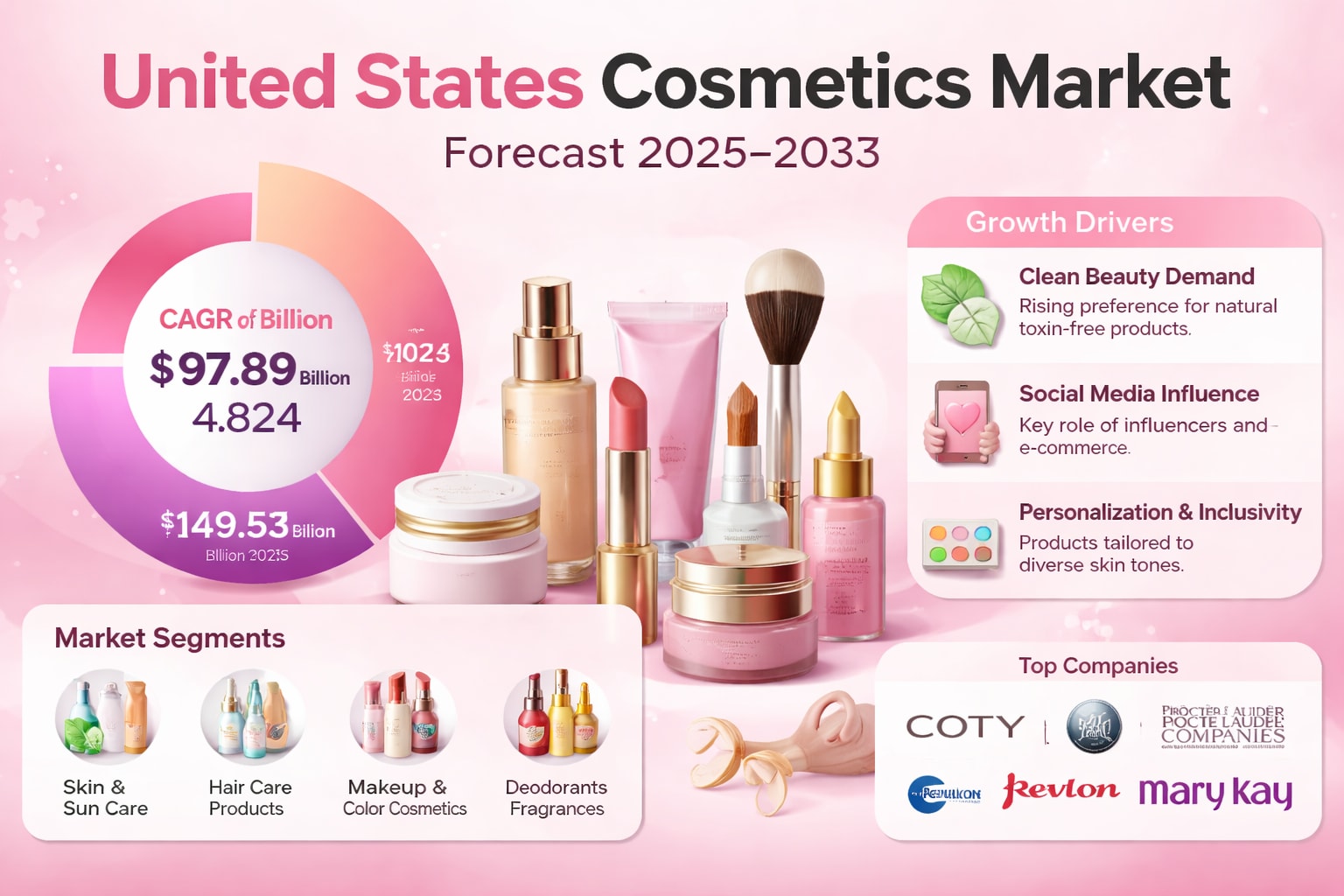
According to Renub Research, the United States cosmetics market is projected to reach approximately US$ 149.53 Billion by 2033, growing from US$ 97.89 Billion in 2024, registering a compound annual growth rate (CAGR) of 4.82% between 2025 and 2033. The growth is driven by increasing consumer awareness about skincare, rising demand for premium and natural beauty products, and the rapid expansion of digital marketing and e-commerce platforms.
United States Cosmetics Market Overview
Cosmetics are products designed to enhance or alter the appearance of the skin, hair, nails, and overall physical features. These products include skincare items, makeup, fragrances, and haircare solutions used daily by millions of people across the United States.
The cosmetics industry plays an important role in modern lifestyles, helping individuals maintain personal grooming routines while also boosting confidence and self-expression. With increasing attention toward health, beauty, and wellness, cosmetics have become essential components of everyday life.
Skincare products such as moisturizers, sunscreens, and anti-aging treatments are among the most widely used cosmetic items. These products help maintain healthy skin while addressing issues like dryness, pigmentation, and aging. Meanwhile, makeup products such as foundations, lipsticks, eyeliners, and eyeshadows remain highly popular among consumers looking to enhance their appearance.
Haircare products also represent a significant segment of the cosmetics market. Shampoos, conditioners, hair oils, and styling products are widely used for maintaining hair health and achieving desired styles.
Beyond personal care, cosmetics are widely used in professional fields such as fashion, entertainment, and media industries. Makeup artists, stylists, and beauty professionals rely on high-quality cosmetic products to achieve professional results.
The market continues to evolve through innovation, sustainability initiatives, and the increasing use of natural ingredients. According to research published by the National Center for Biotechnology Information (NCBI), 92.5% of consumers read safety warnings on cosmetic products before using them, while only 39.5% are aware of the regulatory organizations responsible for overseeing the cosmetic industry. This reflects growing consumer awareness regarding product safety and ingredients.
Growth Drivers in the United States Cosmetics Market
Rising Demand for Clean Beauty Products
One of the most important trends driving the cosmetics industry in the United States is the growing demand for clean beauty products. Consumers are becoming increasingly aware of the potential risks associated with harmful chemicals and synthetic ingredients in cosmetics.
As a result, many people are seeking products labeled as natural, organic, vegan, cruelty-free, and toxin-free. Clean beauty products emphasize transparency in ingredient sourcing and manufacturing processes, allowing consumers to make more informed choices.
Millennials and Generation Z are leading this shift toward safer and environmentally friendly cosmetics. Research indicates that 43% of younger consumers prefer natural skincare products, compared with 31% of the general U.S. consumer population. This trend has encouraged brands to develop eco-friendly formulations and sustainable packaging solutions.
Many cosmetic companies are now investing in botanical ingredients, biodegradable packaging, and ethical sourcing practices to meet consumer expectations and strengthen brand loyalty.
Influence of Social Media and E-Commerce
Digital platforms have significantly transformed how consumers discover and purchase cosmetic products. Social media platforms such as Instagram, TikTok, and YouTube have become powerful marketing channels for beauty brands.
Beauty influencers, makeup artists, and content creators play a major role in shaping consumer preferences by sharing product reviews, tutorials, and skincare routines. Their recommendations often influence purchasing decisions and introduce consumers to new beauty trends.
E-commerce has also revolutionized the way cosmetics are sold. Online shopping provides convenience, broader product selections, and competitive pricing. Virtual try-on tools and AI-powered skin analysis have further enhanced the online shopping experience.
According to data released by Tinuiti in June 2023, 37% of U.S. beauty shoppers begin their product search on Amazon, compared to 23% who start on Walmart, 9% on retailer websites, and 8% through search engines. These figures highlight the growing importance of digital marketplaces in the beauty industry.
The integration of social commerce and influencer marketing has enabled brands to reach wider audiences while improving engagement with consumers.
Personalization and Inclusivity in Beauty Products
Another key driver of the U.S. cosmetics market is the increasing demand for personalized and inclusive beauty products.
Consumers today expect products that address their unique skin types, tones, and individual concerns. This demand has encouraged cosmetic companies to expand their product offerings and develop inclusive beauty ranges.
Foundations and makeup products are now available in a broader range of shades to accommodate diverse skin tones. Many brands have launched inclusive campaigns that celebrate diversity and promote representation across various communities.
Personalized skincare is also gaining popularity. Some beauty companies now offer customized skincare solutions based on individual skin analysis, lifestyle factors, and environmental conditions. These products may include tailored serums, creams, and treatment plans designed to address specific skin concerns.
By focusing on inclusivity and personalization, beauty brands can strengthen consumer trust while creating deeper emotional connections with their customers.
Challenges in the United States Cosmetics Market
Regulatory and Compliance Challenges
The cosmetics industry in the United States operates under strict regulatory guidelines. Companies must comply with regulations established by the Food and Drug Administration (FDA) and other government agencies to ensure product safety and quality.
While these regulations help protect consumers, they can also create challenges for cosmetic manufacturers. Compliance with safety standards, ingredient regulations, and labeling requirements often involves significant time and financial investment.
Companies must also ensure that marketing claims such as “organic,” “natural,” or “cruelty-free” meet regulatory standards. Failure to comply with these requirements can result in legal penalties, product recalls, or reputational damage.
As consumer demand for sustainable and clean beauty products grows, cosmetic brands must carefully balance innovation with regulatory compliance.
High Competition and Market Saturation
The U.S. cosmetics industry is highly competitive, with numerous domestic and international brands competing for consumer attention. Both established companies and emerging startups are continuously launching new products to capture market share.
This intense competition has led to market saturation in several cosmetic categories, making it difficult for smaller brands to differentiate themselves.
Large multinational companies often have significant marketing budgets and strong retail partnerships, allowing them to dominate shelf space and digital advertising channels. Meanwhile, smaller companies must rely on niche marketing strategies, influencer collaborations, and innovative product formulations to attract consumers.
To remain competitive, cosmetic brands must invest in research and development, innovative packaging, and effective marketing strategies.
United States Hair Care Products Market
The hair care segment represents a significant portion of the U.S. cosmetics market. Consumers are increasingly seeking specialized products designed to address various hair concerns such as dryness, hair loss, scalp health, and styling needs.
Haircare products include shampoos, conditioners, hair masks, serums, oils, and styling gels. Many consumers prefer products formulated with natural ingredients such as plant extracts, vitamins, and organic oils.
Personalized haircare solutions are also gaining popularity. Brands now offer products tailored to specific hair types, including curly, straight, textured, or chemically treated hair.
Social media trends and influencer marketing continue to shape haircare preferences, encouraging consumers to experiment with new products and styles.
In July 2024, Aeterna introduced its all-natural haircare brand in the United States. The company was founded by Italian entrepreneurs Stefano and Guido Spacagna, who also operate the Spacagna Italian Hair Design salon in Miami, Florida.
United States Makeup and Color Cosmetics Market
The makeup and color cosmetics segment remains one of the most dynamic areas of the beauty industry. Products such as foundations, lipsticks, eyeliners, mascaras, and blushes are widely used by consumers seeking to enhance their appearance.
The demand for long-lasting makeup, skincare-infused cosmetics, and high-performance formulations continues to grow. Many brands are now incorporating skincare ingredients such as hyaluronic acid, vitamins, and antioxidants into makeup products.
Inclusivity is also transforming the color cosmetics segment. Companies have expanded shade ranges to ensure that makeup products are suitable for diverse skin tones.
Beauty influencers on social media platforms play a major role in introducing new makeup trends and influencing purchasing decisions.
United States Women Cosmetics Market
Women remain the primary consumers in the cosmetics industry, contributing significantly to market growth. Skincare, makeup, and personal care products are widely used as part of daily self-care routines.
Many women are increasingly prioritizing high-quality beauty products that offer both aesthetic and health benefits. Interest in natural, cruelty-free, and environmentally friendly cosmetics continues to grow among female consumers.
The rise of personalized beauty solutions has further strengthened the women’s cosmetics segment. Brands now offer customized skincare treatments and personalized beauty consultations to meet individual needs.
Social media platforms also play an important role in shaping beauty trends among women, with influencers and beauty experts promoting new products and techniques.
United States Pharmacies Cosmetics Market
Pharmacies have become an important distribution channel for cosmetic products in the United States. Many consumers prefer purchasing beauty products while visiting pharmacies for healthcare needs.
Pharmacy retailers often offer dermatologist-recommended skincare products, making them trusted sources for health-focused cosmetics. These stores frequently carry premium skincare brands that emphasize safety and effectiveness.
The increasing popularity of self-care routines has encouraged pharmacies to expand their beauty product offerings, including organic and natural cosmetics.
United States Cosmetics Market Segmentation
Product Types
• Skin and Sun Care Products
• Hair Care Products
• Deodorants and Fragrances
• Makeup and Color Cosmetics
• Others
Gender
• Men
• Women
• Unisex
Distribution Channels
• Supermarkets/Hypermarkets
• Specialty Stores
• Pharmacies
• Online Sales
• Others
Key Companies in the United States Cosmetics Market
Several major companies dominate the U.S. cosmetics market through product innovation, marketing strategies, and strong distribution networks.
Leading companies include:
Coty Inc.
Procter & Gamble
The Estée Lauder Companies Inc.
Colgate-Palmolive Company
Johnson & Johnson Services Inc.
Revlon Inc.
Mary Kay Inc.
These companies focus on product innovation, sustainability initiatives, and digital marketing strategies to maintain their competitive advantage.
Final Thoughts
The United States cosmetics market is poised for steady growth over the next decade, fueled by changing consumer lifestyles, increasing awareness about skincare, and rapid digital transformation in the retail sector.
The shift toward clean beauty, sustainable ingredients, and personalized skincare solutions is reshaping the industry. Meanwhile, the growing influence of social media and e-commerce platforms continues to redefine how beauty products are marketed and sold.
As brands continue to innovate and respond to evolving consumer preferences, the U.S. cosmetics industry will remain one of the most dynamic and influential beauty markets globally.
With strong growth projections and ongoing technological advancements, the future of the cosmetics market in the United States looks promising through 2033.