Your support helps us to tell the story
From reproductive rights to climate change to Big Tech, The Independent is on the ground when the story is developing. Whether it’s investigating the financials of Elon Musk’s pro-Trump PAC or producing our latest documentary, ‘The A Word’, which shines a light on the American women fighting for reproductive rights, we know how important it is to parse out the facts from the messaging.
At such a critical moment in US history, we need reporters on the ground. Your donation allows us to keep sending journalists to speak to both sides of the story.
The Independent is trusted by Americans across the entire political spectrum. And unlike many other quality news outlets, we choose not to lock Americans out of our reporting and analysis with paywalls. We believe quality journalism should be available to everyone, paid for by those who can afford it.
Your support makes all the difference.Read more
To retreat is to pull back, to withdraw, perhaps to a place of safety. We all feel the need for that sometimes, particularly when life feels too intense or it seems as though things are moving too fast. We might feel as though, despite working harder than ever, it’s impossible to catch up. Or that while wanting to focus and do one thing well, we’re pulled in a hundred different directions and left unable to finish tasks or feel proud of our achievements.
Neuropsychologists call this “attention residue” – it’s a common phenomenon where we become distracted and part of our attention lingers with the previous activity, which slows us down and causes us to make more mistakes. This happens several times a day in our modern lives; in fact it happens every time we look at our phones mid-task. It’s then compounded by jobs with many moving parts and people to answer to, kids, responsibilities to other family members, and worrying about what is going on in the wider world.
To counter this confusion, dip in ability and the burnout and frustration we often feel like we need to hit pause or to pull back, recover and start again in a more clear-headed way, I strongly believe that retreating regularly is something we should do.
I also believe that we should plan a wellness retreat in advance. Book it in, hand over our responsibilities and let everyone know they won’t be able to reach us for a week before we start to feel like things are too much. Our modern lives are often simply too intense for our brains and nervous systems to handle and a planned retreat gives us the rest and recovery we sorely crave.

open image in gallery
A retreat done right removes all distractions and allows the mind to reset and focus to return (Erika Ivanova / Held)
How is a retreat different from a holiday?
Around the world retreats have become a huge business model. And while some offer packed itineraries that require you to focus on just one wholesome healthy activity each hour, some simply offer time spent doing nothing. There are sleep retreats, yoga retreats and retreats where some people are paying to simply do nothing for a week.
As an expert on wellness trends, I’m suspicious of any brand trying to sell our basic human needs back to us, particularly as aspirational luxury goods. This is problematic for many reasons and rest is not something we should have to buy. However, it’s clear that we need the concept of retreating, because we’ve forgotten how to take a break and both our focus levels and mental health are being affected as a result.
Cognitive psychologist and author of Focus Mark Tigchelaar explains: “Since the 1980s, the number of stimuli we’re bombarded with every day has quintupled, equal to about 174 newspapers’ worth of information daily. We can’t really blame ourselves for struggling to focus.”
He adds: “On the one hand, all these stimuli make life thrilling. We’re challenged to push ourselves to the limit; it gives us a rush of sorts. But on the other hand, when was the last time you could really dive deep? Read a book without being disturbed? Actually manage to ignore your inbox? Lots of people have seen their concentration levels drop in recent years, matched by an increase in stress. Working through distractions costs a lot of energy and, worst-case scenario, can leave you burned out.”
“It shouldn’t be like this. You likely chose your job because you wanted to have an impact and make a difference, not to barely survive while playing a constant game of catch-up. Constant work stress isn’t right. It’s not normal that one in seven people suffers from burnout symptoms.”
Read more: How to spot the symptoms of burnout and treat them, according to wellbeing experts
Switching off for a week might sound like any regular holiday, but a retreat isn’t a holiday. On our holidays we still find ourselves answering emails. We’re on our phones doomscrolling and worrying about what’s happening back home. We can’t quite let go of what’s happening in our lives or the thought processes that govern our anxiety levels.
On a retreat, the rules are different. You don’t have to go abroad and you don’t have to spend a lot of money, all you have to do is pull back. This requires planning and intention. To successfully retreat we have to arrange conditions like cover for work, childcare and other people’s expectations of being able to contact us, but after that we can reap the rewards.
A week-long retreat can be one of the most transformative experiences of your life, if you commit to it fully. It’s something I believe everyone should do at least once a year. It doesn’t have to be a luxury experience, but to do it effectively you should be somewhere that isn’t home.
open image in gallery
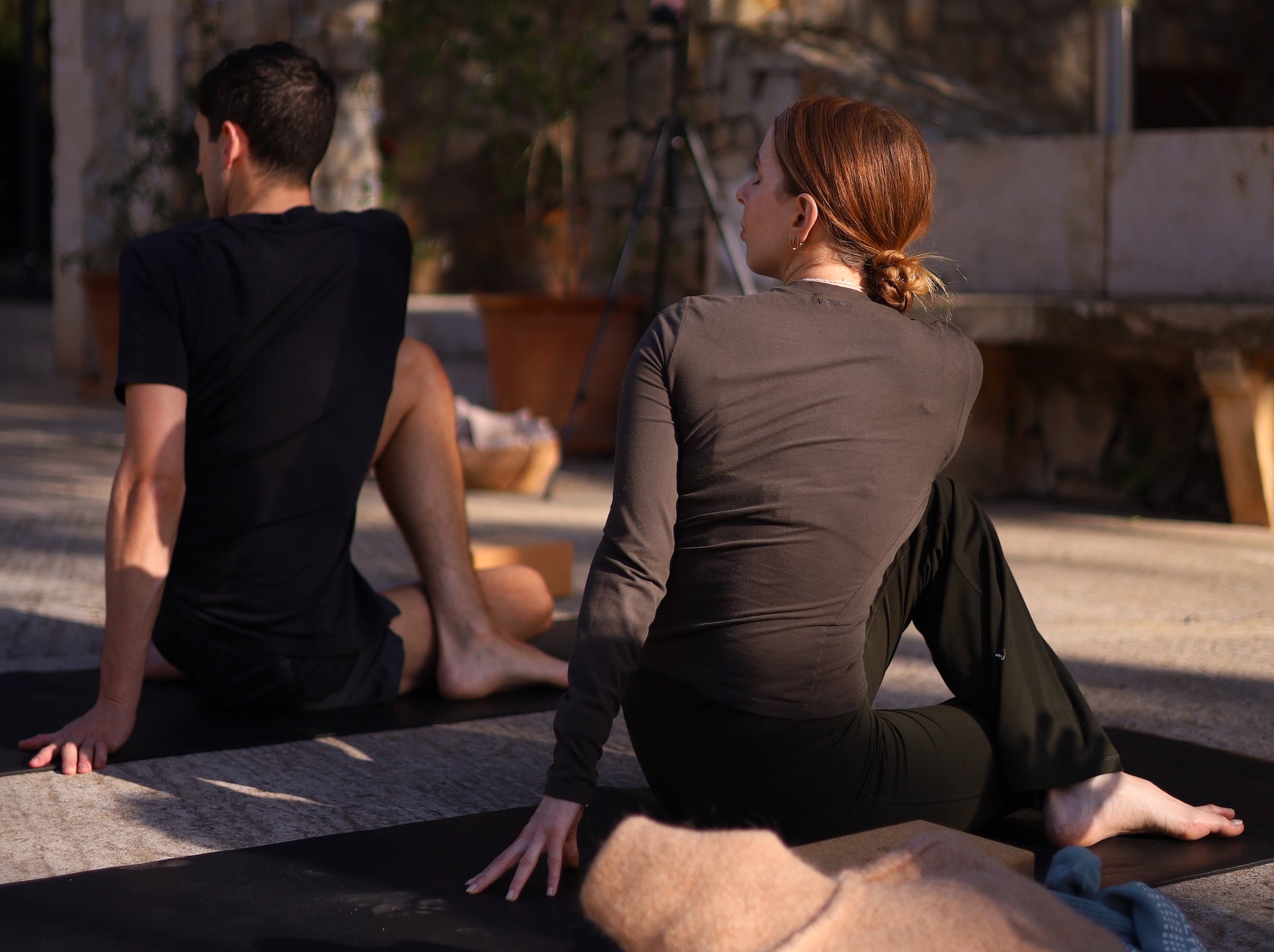
Seven days without screens, whether as part of a packed fitness itinerary or days of quiet reflection, can boost mood and reduce anxiety, according to experts (Erika Ivanova / Held)
A break for the brain
I planned my annual intentional retreat just after a time that I knew would be busy for me. I booked a week off work and planned a trip to Mallorca with a retreat company called Held retreats. Its mission is to help people reconnect with the “joy of being alive”. For me, Held offered the perfect conditions: a comfortable home a short plane journey away, pleasant weather, healthy food, daily yoga and sessions focused on self esteem, purpose, healing and goal setting.
This might not be the perfect cocktail for you but the beauty of retreats is that there are so many to choose from. You might opt for seven days of pilates and swimming in the sea, you may prefer silence and sharing circles or your vibe might be just enjoying a week away on your own in a phone-free cabin.
Seven days is long enough for your brain to undergo what experts refer to as a “dopamine detox”; a soft reset or mental cleanse that allows focus to improve and anxiety and overwhelm to lessen.
“Just like muscles, the brain has limits. It does not get stronger from endless strain. Real growth comes from the right balance of challenge and recovery,” says neurologist Joanna Isariyawongse.
“Neural fatigue is more than feeling tired. Brain imaging studies show that during prolonged mental work, the networks responsible for attention and decision-making begin to slow down, while regions that promote rest and reward-seeking take over. This shift helps explain why mental exhaustion often comes with stronger cravings for quick rewards, like sugary snacks, comfort foods or mindless scrolling. The result is familiar: slower thinking, more mistakes, irritability and mental fog.”
“But rest allows those strained circuits to reset and function more smoothly over time. And taking breaks from a taxing activity does not interrupt learning. In fact, breaks are critical for efficient learning.”
This is why on a retreat, unlike a holiday, minimal tech or no social media at all should be your aim. A retreat doesn’t really work if you aren’t fully extracting yourself from the life you love and that goes from your online life too.
On my annual retreat I meditated, did journaling exercises, danced, hiked and spent time getting to know other people who told me all about their fears, dreams and goals for the year ahead. I spent very little time on my phone, using it to take photos and largely leaving it in my room.
The outcome of my planned rest time was significant. I had more energy, my mood improved and I came away with an optimistic attitude toward the year ahead. I felt very clear about what makes me happy, what I want to achieve and what I’d rather not concern myself with. This is the profound effect of deep, intentional rest and retreating from your everyday life.
This is not to say my life is in any way awful, but it does feel intense sometimes and I often feel overwhelmed by the responsibilities of my job and my personal life and sometimes find all the information I see online every day distracting and at times upsetting.
“Every second, eleven million bits of information enter our minds. We’re like big walking antennas. Fortunately, all these stimuli first enter our subconscious minds,” explains Tigchelaar. “If we were aware of every single stimulus our senses perceived, we’d go mad in a split second.”
What feels good about retreating intentionally is that all of that noise is switched off. Your brain feels like it’s been washed, dried and pressed and you feel far more resilient, positive and capable than you might have felt before. In my view, we should all be aiming to do this for ourselves at least once every year to avoid burnout, anxiety and depression and it doesn’t have to mean travelling a long way or spending a lot of money.
If you’re planning to book a holiday this year, do your brain a favour and perhaps consider a retreat instead.
Read more: Joe Wicks on the moment he decided to become a ‘phone-free dad’