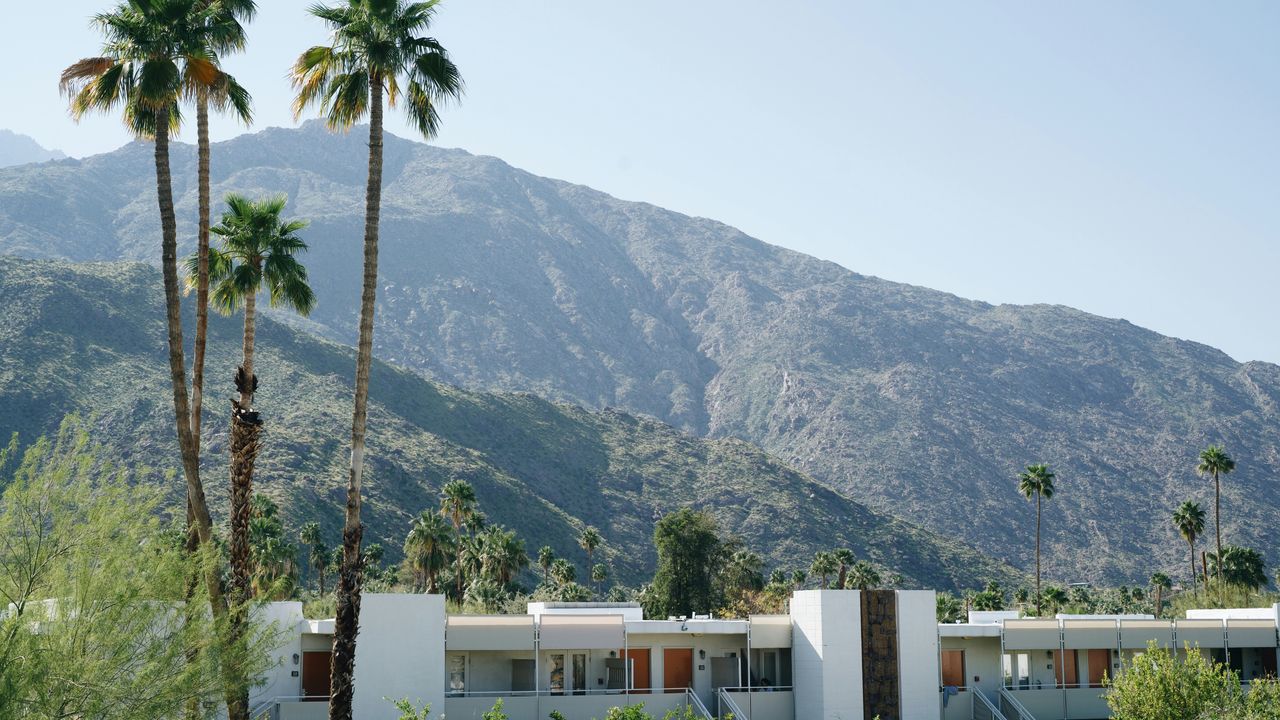
As the pool hoist lowered me into the water, I noticed how it bubbled up from thousands of feet underground. These thermal baths in Palm Springs, stewarded by the Agua Caliente Band of Cahuilla Indians for more than five millennia and long considered a portal to the spiritual underworld and a place of healing, welcomed my paralyzed body. I began to float weightlessly as the surrounding San Jacinto Mountains turned pink in the evening desert light. I felt the strangest sensation of being received by something both ancient and entirely new.
I was in the California desert landscape of Palm Springs in search of wellness—an experience that, more often than not, evades people like me. Around the world, spas are often physically inaccessible, retreats off-limits by design, and practitioners limited in their ability and training to see disabled bodies as deserving of the restoration everyone so desperately needs.
The city lies roughly 130 miles east of Los Angeles, a distance that by any American metric is barely a blip on the map. It is easily reached by a highway that cuts cleanly through the Sonoran Desert, past wind turbines spinning in their hundreds. Arriving in the Coachella Valley, with its impossibly blue skies and neighboring Joshua Tree wilderness, one’s sense of scale and perspective soon recalibrates; a prerequisite, perhaps, for experiencing a city that has long served as refuge.
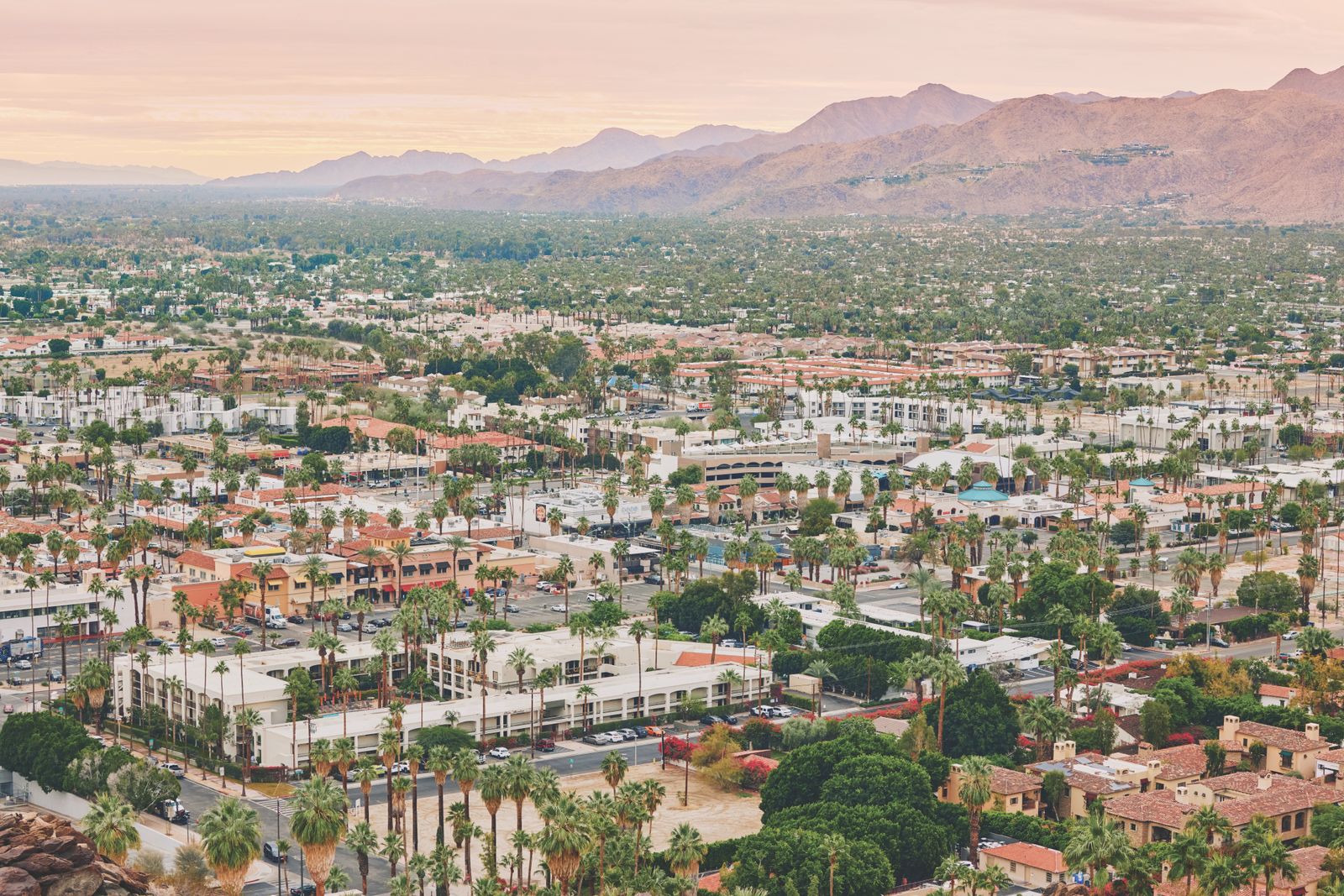
A view from the Museum Trail above Palm Springs
Daniel Seung Lee
From the 1930s, when Hollywood stars fled here to escape studio contracts that controlled their public images, finding sanctuary in midcentury modern villas hidden behind bougainvillea; to today, where the LGBTQ+ community has built a haven when few other places offered acceptance: Palm Springs has always known how to welcome the marginalized. Over a third of its residents now identify as queer. The question I had was whether that welcome extended to disabled travelers too.
“For families like mine, travel has always meant planning around what might go wrong,” Josh Heinz, a local father of a son with autism, tells me over coffee one morning. “I wanted to flip that—to make sure people traveling to Palm Springs can plan around what might go right for once.”
As well as being an invested parent, Heinz is also the community engagement manager for Visit Greater Palm Springs. Last spring, he spearheaded an initiative that led to Greater Palm Springs becoming the first destination in Southern California, and only the fifth worldwide, to achieve Certified Autism Destination status. Hotels, restaurants, and attractions across the valley have now completed specialized training to accommodate guests with sensory sensitivities: learning, for example, that a meltdown is not a tantrum, that fluorescent lighting can overwhelm, or that sometimes a quiet corner matters more than a view.