For decades, science has made progress in understanding the complexities of the immune system by inferring its activity from histological slides and biomarkers—snapshots frozen in time. Imagine trying to follow a story from a stack of photographs. You might guess the general plot, but exactly who went where, when, and with whom would remain a mystery.
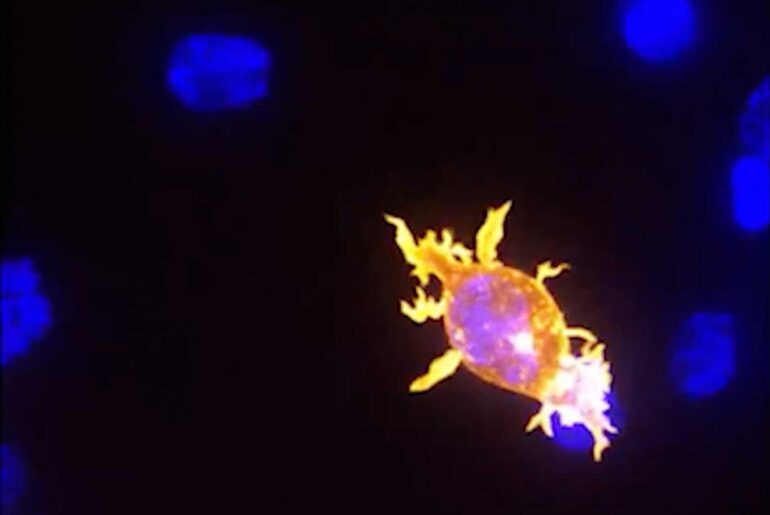
Today, immune cell imaging can deliver dynamic 3D movies of immune interactions in real-time. These advances have deepened our understanding of a patient’s inflammatory profile, including their antigen and vaccine responses, as well as how their immune system either combats or succumbs to cancer.
Immune cell imaging combines targeted probes, often antibody-bound, with genetically expressed fluorescent proteins, all visualized using several detection systems. These range from whole‑body positron emission tomography/computed tomography (PET/CT) to subcellular two‑photon intravital microscopy (2P‑IVM). These technologies enable researchers to track immune cell interactions over time and across space.
These imaging modalities bring clear benefits to personalized medicine, potentially allowing clinicians to monitor individual patients and understand why the immune system can protect one patient, while failing in another.
Seeing is believing: the immune system in action
Understanding the mechanics of a “normal” immune response is fundamental to developing therapies for immune dysfunction. Two complementary “workhorse” techniques, immune PET/CT and 2P-IVM, can be used alongside several auxiliary techniques to study health issues such as autoimmunity and adverse therapeutic events.
Dr. Ronald Germain, a National Institute of Health (NIH) distinguished investigator, was one of the early pioneers of 2P-IVM. The Germain group, and others, have used this imaging modality to characterize the details of neutrophil swarming, a key mechanism by which the immune system responds to cell damage or infection.
By labeling neutrophils with fluorescent probes, Germain and colleagues observed that this mechanism was not “a random walk of cells that interacted, like balls in a pinball machine but rather a much more organized system that let us understand how rare cells find each other efficiently to make a good response.”
2P-IVM also revealed how populations of naïve T cells, dispersed throughout the body, can mount a coordinated attack at any given moment. Germain elaborated, “Our two-photon imaging showed that T cells move on the stromal network that exists in the lymph node, and the reason that’s interesting is that the dendritic cells are presenting the antigen live on that same fiber network.”
In other words, antigen presentation is not a chance meeting, but an inevitable encounter between key immune components travelling along the same cellular scaffold.
Autoimmunity: beyond the biomarkers
Once we understand the normal immune response, the next challenge is understanding what happens when things go wrong. Autoimmune conditions occur when the body recognizes its own components as foreign, triggering an immune response. The target tissue can vary, leading to presentations ranging from rheumatoid arthritis to inflammatory bowel disease.
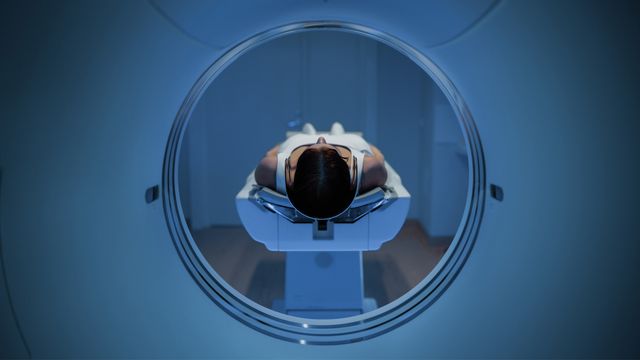
In clinical settings, immune PET imaging provides non-invasive visualization of these pathophysiological immune responses. Dr. Erik Aarntzen, a nuclear imaging specialist at the University Medical Center Groningen Netherlands, has emphasized PET’s key strength in viewing the immune system as an interconnected network rather than isolated tissue.
As he explains, “It allows you to assess the immune system at the systems level—how different organs interact, how they’re interconnected—from local lymph nodes to the spleen and bone marrow. It really captures the ‘systemness’ of our immune system.”
By adding CT to the analysis, Aarntzen and colleagues can get even more information. “It’s mostly anatomical. It’s size and anatomical variation,” Aarntzen explains, “then you add on top of that the functional information [of PET imaging] that I think is very valuable to have.” No longer are physicians interpreting an abstract immune activation event, but now have a spatially resolved, quantifiable whole-body view of the affected sites that can guide diagnosis, improve patient risk‑stratification, and ultimately therapy selection.
At the clinical level, PET/CT is highly sensitive. “In the case of patients admitted to hospital with symptoms that indicate inflammation,” Aarntzen confirms,” I have hardly seen any scan that you do not see an abnormal signal.”
Furthermore, advances in PET technology have facilitated faster acquisition times, reduced the need for lengthy scans, and have also enabled more granular tracking of the immune response over a given period.
However, there are still key processes to consider. Aarntzen explained, “Time in the scanner is no longer limiting. What matters is matching tracer half-life to the biological process you want to study.” For instance, radio-labelled glucose-based tracers are useful for short-term snapshots of inflammation, while other, more specific, tracers are used to track immune cell populations over several days.
Minimizing the risks and maximizing the benefits of immunotherapy
Modern cancer treatment options range from monoclonal antibodies to chimeric antigen receptors (CAR), engineered from patient T cells to tackle several blood cancers. However, similarly to autoimmune disease, immune exuberance can occur, resulting in toxicity and adverse events. All told, 5–10% of patients will die from treatment complications.
One approach to rapidly identify inflammatory responses to immunotherapy is immune PET/CT imaging. In a clinical setting, this guides dosage adjustments, determines therapeutic response, and facilitates earlier recognition of adverse events, potentially mitigating the risk of unfavorable outcomes.
With regard to CAR T specifically, optogenetic control may offer a strategy to minimize adverse events. Optogenetics uses a naturally occurring light switch from a family of proteins found in plants and some bacteria. The proteins are dormant in the dark but, when exposed to specific wavelengths of light, undergo a conformational change to become active.
Researchers have fused this technology into the CAR T gene cassette. They hypothesize patients could be infused with an inactive therapy that is selectively activated at the target site by light exposure. Dr. John James, a biochemist at the University of Warwick, is investigating CAR T optogenetic control systems.
“Light can provide exceptional temporal control over dynamic systems like biology, and that’s why it’s so powerful.”
If successful, a switchable CAR T delivery system could allow clinicians to control drug doses with light, keeping adverse events in check while preserving therapeutic efficacy.
However, depending on the wavelength used, visible light only penetrates approximately 1–3 mm into tissue. Therefore, optogenetic systems are only applicable to surface or near-surface conditions, such as melanoma and arthritis. Although if successful, clinicians could consider using optical windows or laparoscopic surgery to access deeper tumors.
Revealing more in every frame with multiplexing
Experts agree that limited multiplexing capabilities are a significant barrier to a greater understanding of immune interactions. Multiplexing enables the real-time tracking of multiple signals from distinct immune components. The more spotlights you have on the ice rink, the more skaters you will see. Similarly with imaging, increasing the number of detectors to highlight all the participants in an immune response would be like placing floodlights on the arena.
However, nuclear imaging groups have faced challenges in simultaneous signal identification because all positrons emit at the same energy level, making this impossible. Research is underway on two-isotope hybrid PET studies, which have reported success in simultaneous imaging of radiotracers.
On the other hand, optical techniques benefit from a broader range of visible light, and 2P-IVM can distinguish several fluorescent probes within images. Though there are still limitations on the number of signals that can be identified compared to the number present.
Germain’s group has sidestepped this multiplexing constraint by using a single fluorophore during in vivo imaging. Using a two-stage in vivo/in vitro approach called correlative microscopy, his group tracks immune system interactions in vivo before preserving the tissue for staining.
“What you can do is watch the cells move, stop the system, and then ask in the preserved sample what proteins they expressed and what their transcriptome looked like in that exact spatial context.”
The preserved section can be re-probed with different reagents to detect distinct target molecules, and signal positions can be mapped onto the 3D tissue structure. This approach has improved the multiplexing capabilities to track up to eight components, with further improvements in development.
A completely in vivo approach is the goal of high-plex 3D imaging, though it may take some time to come to fruition.
Germain confirms that “Real‑time transcriptomics in a living tissue is not yet here.”
Spatial biology is the future
Aarntzen looks forward to the integration of PET imaging with genomic and proteomic data, but says he “would not see it happening in the near future.” Prior to this integration, several hurdles must be addressed, including heterogeneity amongst human immune responses and the scarcity of complete datasets for various clinical conditions. Furthermore, reconciling genomic and proteomic profiles with downstream immune phenotypes will be challenging, as well as defining a “healthy” response. Nevertheless, it is a worthwhile goal.
“True progress can only come from a better understanding of health and disease,” Aarntzen said.
On the optical side, the spotlight is on the fusion of dynamic immune cell imaging with high‑plex spatial transcriptomics. Germain anticipates a future in which imaging modalities, assisted by high‑plex 3D technology, are merged with spatial transcriptomic data to train AI models on immune response prediction. He says that this would provide “a truly multiomic, spatiotemporal map of immune tissue”.
“Multiomics”, he concluded, “is where this is all going”. When asked if computer bandwidth might be a problem, he shares a photograph of the expansive computing facility at NIH “You don’t do this on a desktop anymore,” he laughed.