I’ve been meaning to start strength training for, oh, several years now. I have a bag of dumbbells at home, resistance bands, even an alarming-looking kettlebell bought in an enthusiastic moment. I’m quite fit (I like to think!) – I clock up at least 10,000 steps every day, take the dog for endless walks and run up the escalators on the Tube. But I’ve never been properly strong.
A new study has given me the push-up I need – because it turns out that stronger muscles are closely linked to a longer life, and the strength levels involved are far more achievable than you might think.
The study, published this February in the JAMA Network Open medical journal, followed more than 5,000 women between the ages of 63 and 99 for about eight years. The women wore activity trackers, completed health exams and did two simple strength tests. The findings were clear: stronger women had a significantly lower mortality risk than the weaker ones – by a third or more.
The results ‘were a bit of a surprise’, Professor Michael LaMonte of the University at Buffalo told The Washington Post. Strength turned out to be a significant contributor to longer lives even after the researchers accounted for aerobic fitness, daily movement and sitting time – meaning that strength appeared to matter independently of how active or fit the women already were.
Morsa Images
It’s a finding that chimes with a broader cultural shift. Will Orr, CEO of The Gym Group, which runs 260 gyms across the UK and has around a million members, said this week he’s watched a ‘kind of evolution in the direction of strength at the expense of cardio’ across its sites. Members want to ‘feel and also look strong’, he says.
The good news for those of us who’ve been putting this off is that the strength levels the science requires are hardly demanding. In the JAMA Network Open study, the strongest women averaged grip strength of about 24kg, and the fastest performers on the chair stand test – where you sit and stand five times as fast as you can – completed it in around 11 seconds.
Professor LaMonte’s advice is simple: ‘Strength should be considered’ alongside everyday aerobic activity like walking or jogging. The two work differently in the body, and together they give you the best chance of a longer, healthier life.
If you want to find out more, pick up a copy of the brilliant book Unbreakable: A Woman’s Guide To Ageing With Power by orthopaedic surgeon Dr Vonda Wright. Dr Wright has been a longtime advocate for women getting strong and believes that, with the right daily investment in strength, women can live ‘healthy, vital, active, joyful, unbreakable lives’.
And, if that wasn’t enough, we’ve also asked the GHI’s very own fitness expert Kim Hawley for the three key moves to get you started.
Best over-60s exercises 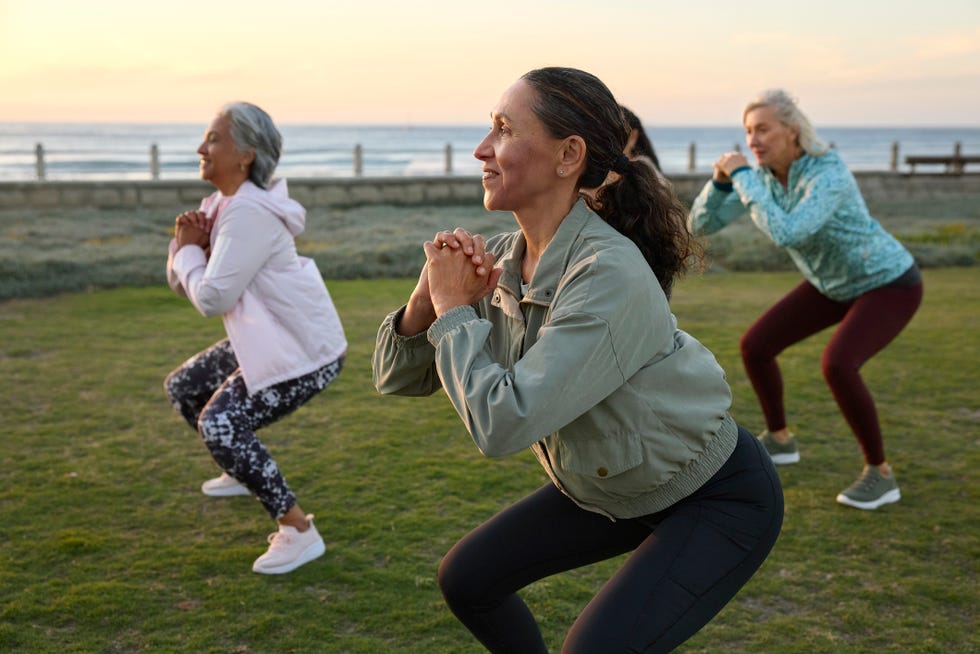
Morsa Images
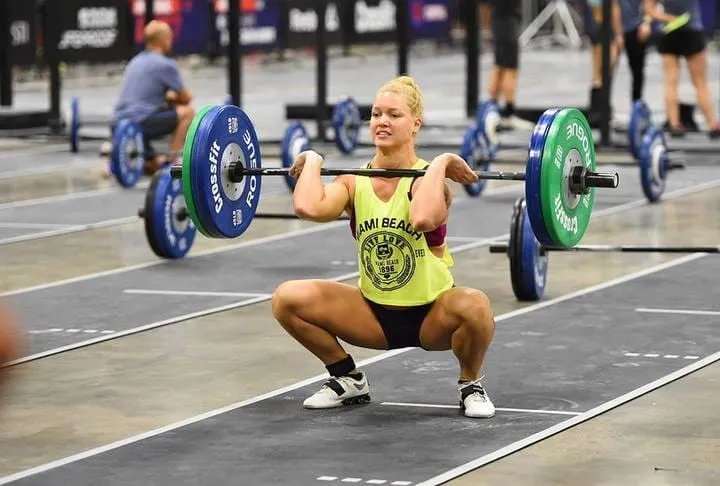
Squats
Squats are widely considered one of the most effective functional strength exercises you can do. They target the large muscles in your thighs and glutes, which means they build strength and can quickly get your heart rate up, too.
From a longevity perspective, squats are particularly valuable because they train one of the most important everyday movements: sitting down and standing up again. Research consistently links strong lower body muscles with better mobility, fewer falls and greater independence as we age.
To perform a squat, stand with your feet about shoulder width apart. Push your hips back as if you’re about to sit on a chair behind you, bend your knees and lower yourself down while keeping your chest lifted and heels on the floor. Then return to standing.
Lower only as far as you can while maintaining good form. Aim for 20 repetitions and repeat for three sets. If your legs start to complain halfway through, that usually means they’re doing exactly what they’re supposed to do. If you want to make these harder, go lower, add jumps or grab a weight… or two.
Push-ups
Push-ups are one of the most well-researched bodyweight exercises and build strength in the chest, shoulders, arms and core. They also have the advantage of requiring absolutely no equipment other than gravity and a small amount of determination.
Begin in a plank position with your hands under your shoulders. If a full push-up feels ambitious, place your knees on the floor so your body forms a straight line from your head to your knees.
Bend your elbows and lower your chest towards the floor while keeping your body straight. Try to keep your elbows angled slightly back rather than flaring out to the sides (think 4 o’clock and 6 o’clock position). Then press yourself back up.
Beginners can also start with push-ups against a wall, or the edge of a table or chair, which makes the movement easier while still building strength.
Aim for around eight to 15 repetitions and repeat for three or four sets. At some point your arms may begin negotiating with you to stop. This is normal.
Glute bridges
Having strong glutes isn’t just about how your jeans fit. These muscles are a key part of the posterior chain, which helps stabilise your pelvis and spine, supports good posture and plays a big role in walking, climbing stairs and even just getting up from a chair.
Strengthening them can help support the lower back and improve everyday movement. In other words, your glutes are doing far more important work than simply existing for sitting on.
To perform a glute bridge, lie on your back with your knees bent, heels roughly under your knees and feet flat on the floor. Squeeze your glutes, press through your heels and lift your hips until your body forms a straight line from your shoulders to your knees.
Hold the position for a count of five seconds, then lower slowly back down. Repeat 10 times.
You may not feel like you’re doing very much at first. Your glutes, however, will know exactly what is going on. If you want to make it harder, lift one leg and give a unilateral bridge a try.
Related Stories