
Sustainable packaging in personal care today often reflects a holistic approach that extends far beyond material selection. It encompasses recyclable or circular materials such as mono-materials, post-consumer recycled content, bio-based options, and metals like aluminum, while also aligning with tightening regulatory pressures such as Extended Producer Responsibility (EPR) and mandatory recycled content rules.
In this special report, Personal Care Insights speaks to packaging players SP Group and Trivium, who talk to us about what sustainability in packaging entails.
For Azahara Gutiérrez, head of R&D+i at SP Group, sustainability in personal care packaging is no longer a vague ambition or marketing claim — it is defined by measurable progress, regulatory compliance, and the ability to scale in real-world systems.
“In practice, this means designing packaging that aligns with existing recycling infrastructures, reducing material use through lightweighting and smarter design, and selecting materials that balance recycled content with safety and performance.”
“Transparency has also become non-negotiable, with brands expected to substantiate claims through life cycle assessment (LCA), traceability, and clear, consumer-facing communication. At the same time, solutions must be operationally viable — capable of being produced, filled, transported, and sold efficiently at scale,” she explains.
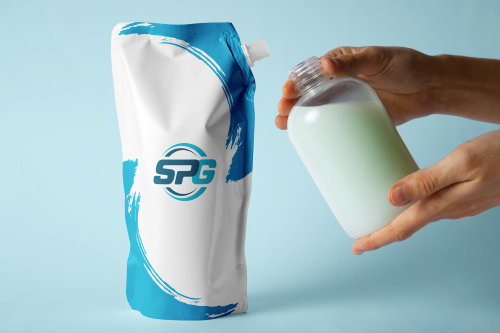 SP Group’s flexible pouch formats enable lightweight, lower-plastic refills while maintaining product protection and ease of use.“Crucially, in personal care, sustainability cannot come at the expense of product integrity,” Gutiérrez continues. “Packaging must continue to protect formulations from contamination and degradation, as compromised product quality ultimately represents a failure in sustainability.”
According to Alice Bazzano, sustainability director and R&D lead, Trivium Packaging, true sustainability requires balancing environmental goals with essential product protection, especially for sensitive formulations, while addressing low adoption of refill and reuse systems due to consumer, retail, and infrastructure barriers.
“Increasingly, brands must demonstrate transparency through evidence-based claims, lifecycle data, and clear on-pack guidance to build trust and combat greenwashing. Progress also depends on collaboration across the value chain, and over the next decade, success will be shaped by a combination of material breakthroughs, system-level improvements in recycling and policy, and shifts in consumer behavior.”
Materials matter
For Trivium, the most impactful material innovations are those that combine circularity, consumer adoption, and compatibility with existing infrastructure.
“Mono-materials deliver strong real-world results by simplifying recycling and reducing contamination, enabling higher recovery at scale. Recycled content — especially post-consumer materials — continues to make measurable environmental gains by lowering virgin material use and supporting regulatory compliance,” explains Bazzano.
“Refill and reuse systems, particularly those that leverage circular materials, extend the lifecycle of the packaging. Together, these material pathways are reshaping how brands achieve scalability, circularity, and real sustainability impact.”
However, she says that “each organization needs to evaluate how it can best contribute to decarbonization for maximum impact.”
Most of Trivium’s GHG emissions come from the materials it uses; therefore, the company’s decarbonization levers are focused on sustainable sourcing — addressing decarbonization of its suppliers, eco-design, renewable electricity, and operational efficiency. “These levers, when combined, have the greatest impact on our business and goals, which are evaluated by organizations such as SBTi, Ecovadis, and CDP to provide us with insight into our performance,” Bazzano states.
Meanwhile, Gutiérrez at SP Group flags that material innovation is delivering the greatest real-world impact when it successfully balances three critical factors: recyclability, performance, and supply consistency.
“Rather than focusing on niche or experimental solutions, the industry is seeing the most progress from materials that can be implemented at scale without disrupting existing systems,” she notes.
According to Gutiérrez, recyclable flexible packaging — particularly polyethylene (PE)-based structures — is emerging as a key area of advancement.
“These solutions simplify sorting and recycling processes while offering a viable alternative to complex multi-material laminates, which have historically been difficult to process within current waste streams,” she says.
At the same time, barrier innovation is also playing a pivotal role. Advances in coatings, ultra-thin functional layers, and more efficient layer design are enabling recyclable packaging formats to maintain the protection required for sensitive formulations.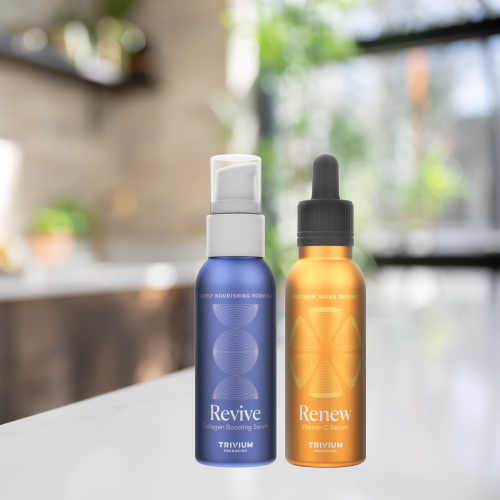 Trivium Packaging focuses on streamlined formats that reduce material use while maintaining performance and recyclability.
“This balance between functionality and recyclability is essential to ensuring that sustainability gains do not come at the expense of product performance,” says Gutiérrez.
Refillable & reusability
Refillable formats continue to generate strong interest as a lower-waste solution, but adoption remains uneven due to persistent practical challenges. While the concept is compelling, real-world execution often introduces friction across the value chain, according to SP Group.
Gutiérrez believes that consumer behavior is a primary barrier. “For refill systems to gain traction, they must match — or ideally exceed — the convenience of purchasing a new product. Any added complexity, whether in handling, storage, or usability, can quickly deter repeat use.”
Hygiene and product safety also remain critical concerns, particularly for formulations such as creams, liquids, and products containing active ingredients, she states. “Ensuring that refill systems protect against contamination without compromising user experience is essential for broader acceptance.”
Finally, retail and logistics infrastructure present significant hurdles. “Implementing refill models often requires reverse logistics, dedicated in-store systems, or refill stations — all of which add operational complexity. For refills to scale effectively, these systems must become more streamlined, cost-efficient, and seamlessly integrated into existing retail environments,” Gutiérrez says.
Bazzano at Trivium agrees that refillable and reusable packaging formats are gaining momentum, “but their adoption remains inconsistent due to a combination of consumer, retail, and infrastructure barriers.”
She says that limited convenience, insufficient access to refill stations, and inconsistent retail support slow mainstream uptake, while brands must also ensure that reuse systems meet expectations for hygiene, ease of use, and product integrity.
“For wider adoption, the industry would need more robust retail and collection systems, greater consumer education and engagement, and packaging designs that seamlessly integrate durability, functionality, and sustainability, ultimately reducing friction and making refill behaviors more intuitive and accessible.”
Regulatory impacts
Regulatory pressure, expanding EPR schemes, and uneven recycling infrastructure are increasingly shaping how brands design their packaging solutions.
Bazzano says that: “EPR policies make manufacturers, brand owners, and importers financially and/or physically responsible for the entire lifecycle of their products, particularly post-consumer disposal. It shifts waste management costs from municipalities to producers, promoting recycling and circular product design.”
“In Europe,” she says “the most significant overhaul has been the EU’s Packaging and Packaging Waste Directive, with a regulation that applies uniformly across all EU member states and serves as a legal framework for governing what packaging can be placed on the EU market.”
“Globally, these pressures push companies toward packaging that is easier to collect, sort, and reprocess, while also limiting the use of complex or hard-to-recycle formats. At the same time, inconsistencies in recycling infrastructure across regions require brands to balance ambition with practicality, leading to solutions that meet regulatory requirements without compromising product protection, shelf life, or user experience,” explains Bazzano.
Gutiérrez at SP Group believes that regulation and EPR are “shifting decisions from ‘nice to have’ to risk management and future-proofing, which is pushing companies toward simpler material choices, recycle-ready formats, and data-backed decision making.”
 As governments enforce stricter accountability for post-consumer waste, brands must choose materials and formats that can reliably flow through real-world recycling systems. She adds: “Recycling infrastructure still varies widely by country, so packaging decisions increasingly require a market-by-market strategy (sometimes with modular designs that can adapt by region).”
Future of packaging
Looking ahead over the next five to ten years, Bazzano believes that success in sustainable personal care packaging will “depend on a combination of material breakthroughs, system-level change, successful policy implementation, and shifts in consumer behavior, rather than any single factor.”
Long-term progress will be shaped by advances in next-generation materials — including existing materials produced with lower impact — improvements in recycling and regulatory systems, and increased consumer engagement with sustainable choices, together forming the foundation for durable, scalable sustainability across the sector, she summarizes.