Held annually in New York City, this symposium brings together integrative medical doctors, forward-thinking speakers such as Dr. Tieraona Low Dog, Paul Stamets and Dr. David Perlmutter, and a wide range of attendees and exhibitors all interested in measurably improving health through nutrition and other leading-edge therapies. The IHS has a very serious practitioner audience and reveals different trends compared to other events like SupplySide Expo (see the ingredient trends I spotted in 2025) or Natural Products Expo West (check out the natural products market moves I saw).
Ever since the early days when I was leading GNC, when information was much more difficult to come by, I have looked to the health care providers who treat patients every day to identify what’s next in nutrition. This year’s IHS did not disappoint, with a phenomenal lineup of speakers, thinkers and products on display that helped define effective nutrition therapies.
Here are some trends and observations from the 2026 Integrative Healthcare Symposium:
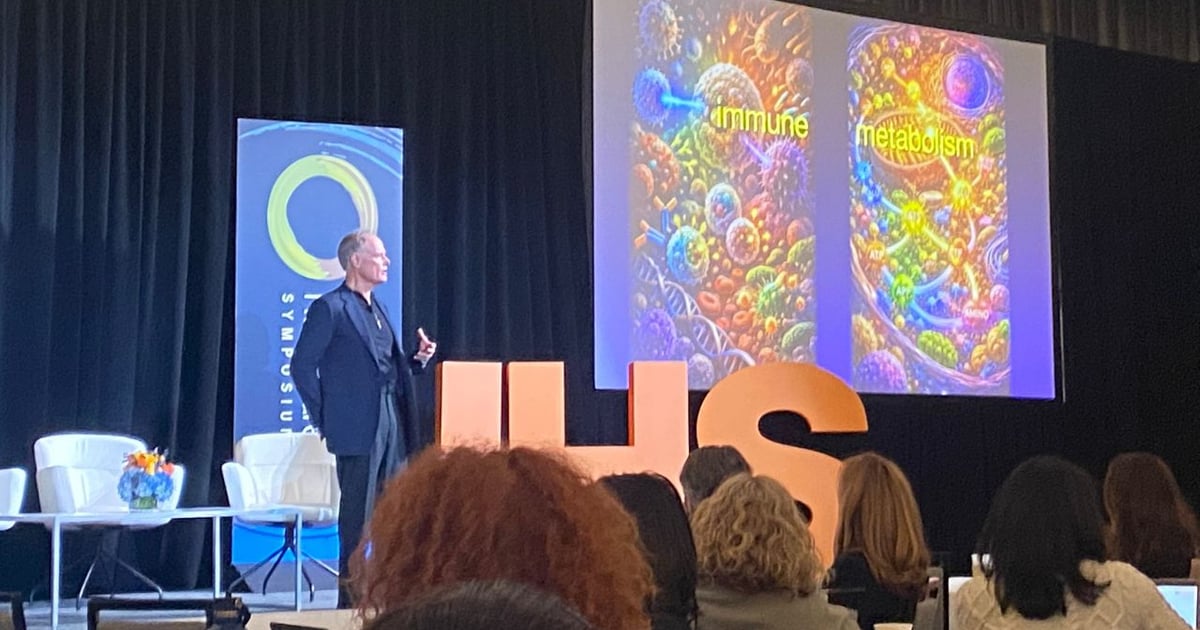
Brain boom. Brain health, in all its forms, defined the most distinctive trend of this event. Dr. David Perlmutter delivered a keynote on immunometabolism, outlining a continuum from metabolic to immune health and emphasizing chemical assaults on the brain’s immune system. Other Doctors spoke on topics like cognitive longevity. Nutrition and device innovations for enhancing memory, cognition and overall mental function for everyone, from dementia patients to concerned people over 50 and menopausal women, filled the exhibit hall floor.
Peptide panacea. Peptides are strings of amino acids that can act as signaling molecules if they survive digestion intact and get into the bloodstream. There’s a peptide for every body system: Gut health, brain health, muscle recovery, metabolism, hormonal balance, sleep, immune function and even telomere lengthening to try to beat the clock. The body naturally makes 700-plus peptides every day. Many peptides (insulin, GLP-1 and testosterone are examples) are drugs, and because stomach acid can tear them into individual amino acids, peptides are often injected rather than ingested. That means they are advisably administered and monitored by medical professionals, although the biohacker community often skips that safeguard. Watch for the peptide toolbox to get better, delivery systems to get more user-friendly (goodbye needles!), orally available forms to be developed and, as this happens, a migration to more mainstream approvals as dietary supplements.
Mushroomunity. Fungi remain an important kingdom of discovery and innovation for the integrative health care market. Paul Stamets’ keynote was a highlight of the show, as he shared strong data from a recently completed clinical trial on immunity with agaricon and turkey tail showing five-day reduction in illness (by comparison, the drug Tamiflu reduces illness by one-and-a-half days) and significant reduction in post vaccine symptoms like headache, muscle aches, sore throat and cough (which further spread disease). Publication of this study is imminent, and I expect it to drive even further expansion in this mushrooming category.
Precision probiotics. Gut health is a regular top trend at this show, and this year, there was a noticeable proliferation of precision probiotics. Alliteration aside, there are now probiotics for almost anything you can think of, from regular immunity and gut health all the way to mental and cardiovascular health and even sports performance. As probiotics have become more specific and precise, they have also ironically proliferated, so there is now a wider range of choices for the supplement formulator. Combined with the rise of prebiotics and postbiotics, the biotics boom still feels poised to proliferate.
Pain points. Because products in this channel are sold largely through doctors and other medical professionals, claims tend to be stronger. This is certainly the case in the pain management category, as a rash of products offering pain relief was a prominent feature of the event. Relieving pain is a tangible “don’t-feel-it“ benefit that I’m sure is popular with patients to the extent that the products work. Product offerings ranged from specialized pro-resolving mediators concentrated from fish oil that actually resolve inflammation that causes pain to amino acid compositions to topical light therapies. Because pain is a drug category, nutrition product label claims in this category were often artfully worded as, for example, “nerve relief,” “discomfort” and “occasional soreness,” but the overall messaging was clear. Companies are developing products to relieve consumers’ pain points.
CardiOmega. Heart disease remains the No. 1 cause of death in the United States, putting cardiovascular health front and center with health care practitioners. New material advances in omega-3‘s go well beyond yesterday’s generic fish oil and give the integrative physician better choices for patient care. Innovations in lipids include omega-3 oils with concentrated levels of the specialized pro-resolving mediators that resolve inflammation in the body, ultrapure CO2-extracted fish oils that leave behind 100% of any ocean pollutants, microencapsulations that enable new forms without off tastes or smells, phospholipid forms for superior absorption and now lyso-phospholipid DHA, which is the only form the brain can absorb. Newly discovered lipids like Fatty15 “The Longevity Nutrient” that strengthen blood cells and nitric oxide boosters that improve blood flow to the heart and brain offer practitioners new and better tools for improving patient cardiovascular health.
Winning women. The rush into women’s health solutions has noticeably expanded from its original offerings of better bone health and menopause symptom relief to include other aspects of women’s health, including fertility and perimenopause. As you would expect, the research is far better for the original women’s health categories than the newer, emerging ones, but there’s always the potential that the clinical evidence catches up for things like improving fertility.
Beating the clock. Especially in the leading-edge biohacker community served by the IHS event, the provider and patient obsession with living longer through interventions and nutritional therapies is undiminished. While not at all surprising, the breadth and creativity of the offerings were noteworthy at this year’s event. Everything from red light therapies for skin and muscle rejuvenation to vibration boards, to NAD+ boosters for cellular energy, specialized forms of glutathione for cellular protection, autophagy-inducing compounds for cellular renewal, peptides for almost everything and odd-chain fatty acids for cellular strength was enthusiastically and prominently on display. Sleep is increasingly recognized as a key to health and longevity, and there were even light products and supplements for maintaining a healthy circadian rhythm. Given the insatiable thirst to beat the clock, I would expect this trend to continue as long as people keep aging.
Absorption obsession. Practitioners and their patients seem to be obsessed with absorption, since bioavailability is the first crucial step towards efficacy. There is also much more measurement and monitoring of patients in this category, so that practitioners can see what’s actually working. Higher absorption connects with better results. Liposomes are microscopic encapsulations of fat that can enhance absorption for certain nutrients. Widely used in drug delivery systems since the 1970s, they have also caught on in the nutrition space to enhance the absorption of key nutrients. There are now next-generation delivery systems, including new forms of liposomes, micelles, and solid-state microencapsulations called Nusomes, with tunable release profiles that go beyond the original liposome technology and represent an exciting evolution in delivery systems.
Good vibrations. It’s not all nutrition at IHS. There were also some pretty interesting, and even attractively weird, therapies on display, from light therapies galore to physical vibration plates designed to get your lymph and other body systems moving. I stood on a vibration plate that is supposed to help with back pain and neuropathy, and I have to admit that I felt better after getting the good vibrations. These devices are part of a larger trend that has the potential to cut into nutrition’s business primacy in favor of non-invasive (and one-time purchase) devices.