Original story from the University of East Anglia (UK).
Immune genes have been found to help shape the gut microbiome in wild animals, potentially benefitting health and survival.
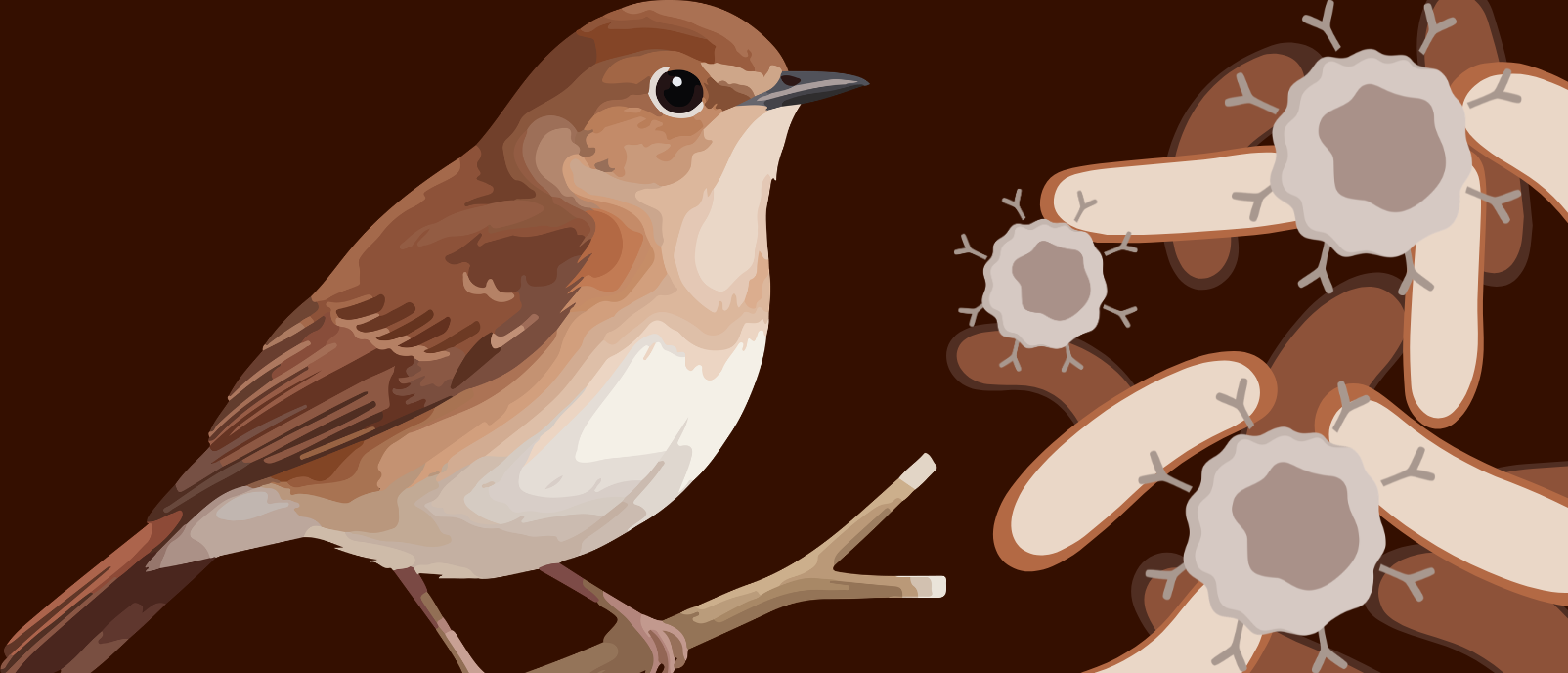
Scientists at the University of East Anglia (UK) have uncovered a hidden link between gut health and the immune system – all thanks to a tiny island bird. Researchers studied the Seychelles warbler, a small songbird found on Cousin Island in the Seychelles. They collected the birds’ poo to analyze their gut bacteria – and found that their immune genes influence which gut microbes thrive.
They say their work sheds light on how animal immune systems and communities of beneficial gut bacteria evolve together, including in humans.
Senior researcher David Richardson explained: “In simple terms, an animal’s immune system may help determine which microbes can live in its gut, while those microbes in turn help support and train the individuals immune system.”
A natural laboratory in the Indian Ocean
“Cousin Island is small, isolated, and the warblers never leave it,” shared Richardson. That means every bird on the island can be individually marked and followed throughout its life. “This offers scientists an exceptional opportunity to study life-long biological processes in the wild.”
All of the island’s warblers are fitted with colored leg rings, allowing researchers to track their behavior, health and genetics over many years. This creates conditions similar to a laboratory population but in a completely natural setting.
“It gives us the best of both worlds,” commented Richardson. “We can study animals living natural lives, with natural diets and gut bacteria, while still being able to collect detailed data from known individuals.”
 Frozen in time: bacterial strain trapped in ice for 5000 years emerges with multidrug resistance
The genome of a bacterial strain trapped in cave ice for 5000 years has been sequenced for the first time, providing an insight into antimicrobial resistance.
Linking immune genes and gut bacteria
The new study focuses on the major histocompatibility complex (MHC), a group of genes that plays a central role in immune defense in most vertebrates, including humans.
By studying wild birds in the natural environment, the researchers were able to show that variation in these immune genes is closely associated with both the makeup and the function of gut bacteria.
Chuen Zhang Lee carried out the work as part of his PhD project. During fieldwork on Cousin Island, he collected fecal samples from the warblers, which were then used to analyze the birds’ gut microbiomes, the diverse communities of ‘good’ bacteria living in their digestive systems.
He shared: “What we found is that immune genes help shape the gut microbiome in wild animals, with potential beneficial impacts on health and survival. This work helps us better understand how immune systems and gut microbes evolve together, and we would expect to see a similar process in humans.”
Using advanced statistical and modeling approaches, the team examined how specific regions of the MHC were associated with differences in the gut microbiome.
Importantly, the researchers did not limit their analysis to identifying which bacteria were present.
“We also looked at what those bacteria are actually doing,” explained Lee. “For example, whether they are involved in metabolism, nutrient processing or defense against viruses and other infections.”
This allowed the team to go beyond a simple catalog of microbes and begin to understand how immune genes may shape the gut microbiome in ways that affect host health and survival.
Why it matters
The findings show that immune genes shared by all vertebrates, including humans, interact closely with gut bacteria.
Lee concluded: “Our work suggests a two-way relationship. Immune genes influence the gut microbiome, and the microbiome feeds back to influence immune function.”
The research also points to evolutionary trade-offs. By shaping the gut microbiome in different ways, immune genes may help balance the benefits and costs of hosting certain microbes, helping explain how hosts and their microbial partners evolve together over time.
Although the study was carried out in birds, the researchers stress that the underlying biological mechanisms may be shared widely across animals, including humans. As a result, the findings may help inform future research into immunity, gut health and disease.
This article has been republished from the following materials. Material may have been edited for length and house style. For further information, please contact the cited source. Our press release publishing policy can be accessed here.