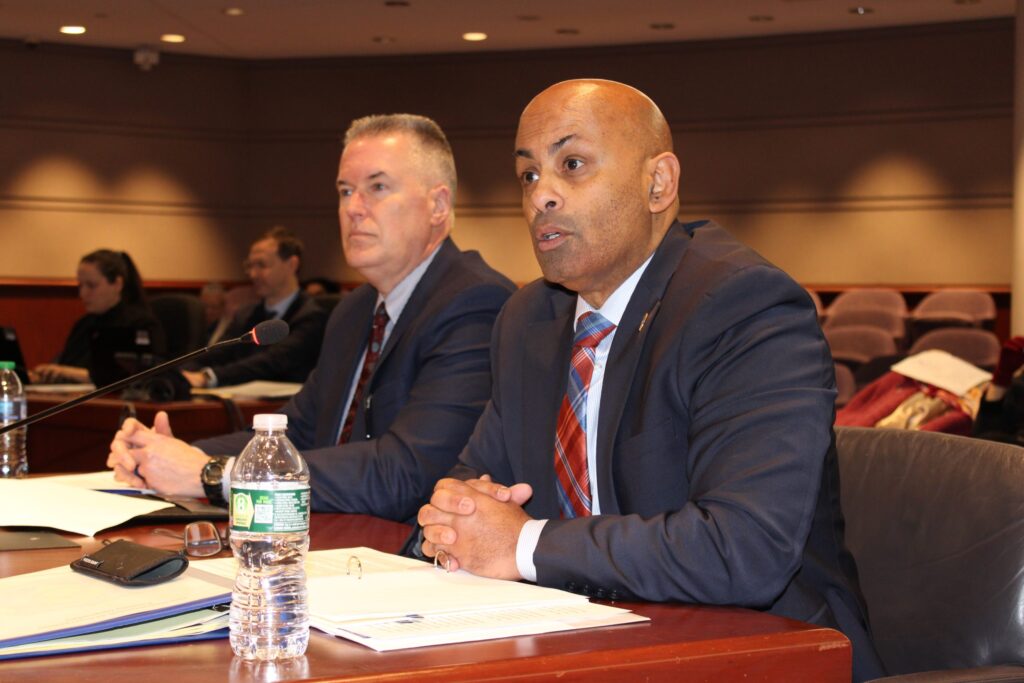
Lawmakers are considering a wide-ranging bill designed to address health care and nutrition in Connecticut prisons after multiple government reports exposed problems with medication distribution, staffing levels, food quality and medical care within Department of Correction facilities.
Rep. Steve Stafstrom, D-Bridgeport, said House Bill 5567 was developed after concerns were raised by lawmakers in January regarding a Department of Correction audit that found widespread issues within the prison system. He said lawmakers were attempting to address “what really is a crisis in our inmate medical care in the state.”
The bill also follows a recent report from the state Correction Ombuds that detailed unsanitary living conditions, a lack of nutritional food, delays in necessary medical care and staffing shortages that regularly confined incarcerated people to their cells.
It’s slated to be heard before the legislature’s Judiciary Committee Wednesday in Hartford.
H.B. 5567 would provide the Correction Ombuds with two additional positions in his office — a patient advocate, required to have at least five years experience in senior health care leadership, and a mental health care clinician.
Correction Ombuds DeVaughn Ward said Tuesday that the mental health clinician was particularly needed in his office. He said DOC had encountered problems with incarcerated individuals receiving medications they were prescribed either outside of prison or at another correctional facility.
“Somebody’s in one facility, they’re prescribed a certain medication, and then they arrive in this other facility, and then they’re cut off … and there’s nobody in my office that can necessarily challenge that opinion because they don’t have the credentials,” Ward said.
The legislation would “allow my office to really have somebody who can objectively look at these charts and be able to speak with a certain level of authority when they’re looking at these charts and making these recommendations,” he said.
Under the legislation, the Department of Correction would also be required to create an online system that allows incarcerated people to make requests for medical care and access their health records electronically. If an incarcerated person were to need a specific medical procedure, they couldn’t be denied due to any “non-clinical reasons” under the legislation.
Several modifications to medication distribution are also contained in the bill. It would require the department to create a list of “time-critical” medications and adopt protocols for how these medications would be distributed within certain time windows during a lockdown. The department would also be tasked with developing a pilot program so people with chronic conditions could administer their own medications.
The department would be given a quarterly “medical scorecard” based on its staffing levels, vacancies, use of temporary staff and the number of people who have been dismissed or suspended. It would also have to create a “staffing contingency plan” for operating when staff fall below certain levels.
A state audit report released in July, which reviewed the years 2022 and 2023, found DOC had administered medications to incarcerated individuals late — or, in some cases, not administered them at all. A review of medications given out to 10 people showed delays roughly 10% of the time.
In an effort to retain medical staff, the bill would authorize a student loan reimbursement program for nurses who work in the Department of Correction. The nurses could receive up to $5,000 a year in student loan forgiveness for a total of $20,000.
Sen. John Kissel, R-Enfield, one of the top Republicans on the Judiciary Committee, said he tries to keep an open mind in advance of a public hearing but that he wanted to see incarcerated people receiving good health care services.
“Generally speaking, I absolutely support efforts to better the health care incarcerated persons are receiving in our facilities,” Kissel wrote in a statement. “We’ve all seen the stories and lawsuits about subpar care, or no care, being provided to these individuals that the state is responsible for overseeing.”
Nutrition
In addition to medical care, the bill zeroes in on the food incarcerated men and women are being served.
It would require the Correction Ombuds’ office to hire someone to audit the department’s food and nutrition program. The auditor would be tasked with investigating the nutritional value of meals and whether people with restricted diets have access to specialized meals.
Sen. Gary Winfield, D-New Haven, said nutrition is a central part of health care.
“What we really are saying is … we want healthy folks in our care that are going to come back out [into the community],” Winfield said.
The Correction Ombuds reported multiple complaints of mold and rodent feces in food, rotten milk, and meals that were hard or damaged with freezer burn, making them “barely edible.” Incarcerated people also said the meals were heavy in carbohydrates and highly processed, with few options for people with dietary restrictions.
Ward said a nutritional analysis of the department’s menu in 2024 found that the daily amount of salt in meals is around 3,400 mg — nearly 1,000 mg more than is recommended. He noted that medical conditions like hypertension and diabetes are related to high sodium diets.
Ward said he wanted to look at both the cost of providing food in the state’s prisons and the possibility of improving the diets incarcerated men and women receive, with more fresh vegetables, more protein and less salt.
“ We’re paying all this money, and then if you go to any correctional facility on any given day, you’re just seeing a lot of the food being thrown away, because most folks just don’t think it’s edible,” he said.
He proposed exploring partnerships with local chefs who could help develop better meal options. He said he wants to see healthier options available for purchase through the commissary, including bottled water.
 A lunch tray at Osborn Correctional Institution. Credit: Courtesy of DeVaughn Ward
Beyond oversight
The bill includes other proposals around staff training, a concern that was also brought up in the state auditor’s report.
The bill would require DOC staff to go through four to eight hours of annual training on mental health issues, including trauma-informed practices. Staff also would have to be trained in implicit bias, deescalation and crisis prevention.
It would also task the department with reporting use-of-force incidents, injuries to staff and incarcerated people and any grievances filed about staff members’ conduct.
Ward said that while he supported more data collection and more oversight of the department in general, he felt there needed to be actions taken to directly fix the problems that have long been reported — and have sometimes resulted in lawsuits with payouts of over $1 million to family members of formerly incarcerated people.
The department has been providing health care to incarcerated individuals since mid-2018. Before that, University of Connecticut Managed Health Care was responsible for the provision of health care services, until lawmakers and advocacy groups — as well as a number of lawsuits — demonstrated concerns about the quality of the care provided.
But concerns over health care quality continue to resurface.
“We largely know that the medical care in DOC is broken,” Ward said. “How are we going to fix this, to stop these bad outcomes, to stop the millions of dollars that we’re spending in terms of litigation costs and settlements?” he said. Ward has proposed forming a working group including leaders from health care systems and state government officials to explore solutions.
The Department of Correction declined to comment on the legislation, instead referring inquiries to the Office of Policy and Management. OPM spokesperson Chris Collibee said in a statement that Gov. Ned Lamont’s administration was in favor of “a new approach to health care” for incarcerated people in the state.
“Each year, about 5,000 individuals enter and leave state correctional facilities, many with significant medical needs. Because most people spend only a short time in custody, it is critical to ensure their care is consistent before, during, and after incarceration,” Collibee said.
According to Collibee, the state faced financial challenges because of federal Medicaid laws that prohibit Medicaid from being used to cover the care of incarcerated people. But he added that the state was “taking steps to improve care, increase accountability, and strengthen connections to community providers.”




![[Sneak Peek] New Israeli Fast Casual “Elisha” by Paprika is Coming to Long Island • YeahThatsKosher](https://www.vitaminrush.com/wp-content/uploads/2026/03/Elisha-kosher-great-neck-israeli-cuisine-logo-1024x948-770x515.jpeg "[Sneak Peek] New Israeli Fast Casual “Elisha” by Paprika is Coming to Long Island • YeahThatsKosher")