When you treat meals as part of your sleep hygiene, you’re not just eating to get through the day. You’re giving your body what it needs to rest, repair, and show up with more clarity and energy the next day.
—Samanta Dall’Agnese, MD, to CNBC
Struggling to get a good night’s sleep? What you eat—and when you eat it—can have a surprising impact on how easily you fall and how well you stay asleep.
Certain foods can support your body’s natural sleep processes, while others may quietly interfere with your ability to rest. Over time, these choices can shape not just your nights, but your overall health and energy levels.
Here’s how your food choices and eating habits can either support or sabotage your sleep.
Healthy food, healthy sleep
The connection between diet and sleep goes both ways, with what and when you eat, influencing not only how well you rest, but also your food choices the next day.
“If we eat nutritious foods, this seems to promote better quality sleep,” Nancy Foldvary Schaefer, DO, said in an episode of Cleveland Clinic’s “Nutrition Essentials” podcast. “And when we eat in regular meal times, without evening snacking and certainly without biological nighttime eating, some of us get up in the middle of the night and eat, if timing is right and what we eat is right, then we’ll promote better sleep. And in turn, if we’re sleeping poorly, we’re more likely to crave things that aren’t good for us… and we’re more likely to eat more.”[]
Your body naturally produces melatonin in response to darkness, and this hormone plays a key role in regulating your sleep-wake cycle. However, factors like aging, excessive exposure to artificial light, and certain health conditions can disrupt melatonin production, making it important to support healthy levels through your diet.[]
Foods that naturally contain melatonin include fruits and vegetables such as bananas and tart cherries, as well as nuts, seeds, fish, eggs, and milk.[]
Some foods also provide tryptophan, an essential amino acid the body uses to produce melatonin. Because your body cannot make tryptophan on its own, you need to get it from what you eat. Good sources include turkey, chicken, fish, cheese, egg whites, nuts, seeds, and yogurt.[]
Top clinical takeaways:
There’s a clear bidirectional relationship between sleep and diet that shows up in practice. Patients who eat regular, nutrient-dense meals tend to sleep better, while poor sleep drives increased intake and preference for less healthy foods—contributing to weight gain and metabolic risk.
You can think of certain foods as modestly supporting sleep biology. Melatonin-containing foods (like tart cherries and dairy) and tryptophan-rich proteins (like poultry, eggs, and nuts) may help reinforce endogenous melatonin production and improve sleep initiation.
Timing and triggers are often the most actionable levers. Late-night eating, alcohol, sugary beverages, ultra-processed foods, and reflux-inducing meals can all disrupt sleep, whereas advising patients to stop eating around 3 hours before bedtime may improve both sleep quality and cardiometabolic outcomes.
Foods to eat–and avoid–for better sleep
What you eat throughout the day can play a powerful role in how well you sleep at night—some foods support deeper, more restorative rest, while others can quietly disrupt it. Choosing the right balance of nutrients may help your body wind down more easily and stay asleep longer.
Foods to eat for better sleep:
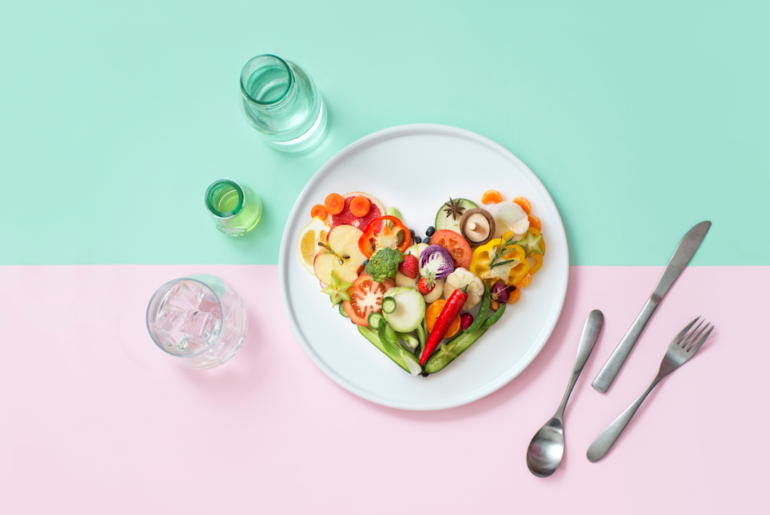
Fruits and vegetables, including bananas, pineapples, oranges, tomatoes, and tart cherries
Nuts and seeds
Fish, especially salmon
Eggs and egg whites
Dairy, including milk, yogurt, and cheese
Poultry, including turkey and chicken
“When you treat meals as part of your sleep hygiene, you’re not just eating to get through the day. You’re giving your body what it needs to rest, repair, and show up with more clarity and energy the next day,” Samanta Dall’Agnese, MD, an ENT and sleep medicine specialist, told CNBC.[]
Beyond familiar sleep disruptors like caffeine, sugary drinks have also been associated with poorer sleep quality.[] And while a glass of wine might help you drift off more quickly, it can lead to early awakenings and difficulty falling back asleep.[]
Ultra-processed foods—especially those high in saturated fats, refined carbs, and added sugars—may interfere with your body’s natural release of melatonin, making it harder to wind down at bedtime.[]
Spicy foods can also be problematic, as they may trigger indigestion or acid reflux, both of which can disrupt restful sleep.[]
Check the time
Does when you eat matter? In many cases, yes. While there’s no strong evidence that eating or drinking right before bed improves sleep, research suggests that late-day eating—especially in the hours leading up to bedtime—can make it harder to fall asleep and stay asleep.[]
A 2026 clinical trial found that finishing meals at least three hours before bedtime helped better align the body’s circadian rhythms, leading to improvements in blood pressure, heart rate, and blood sugar control.[]
“Avoiding eating or drinking for at least 3 to 4 hours before bedtime is ideal to promote better quality sleep,” Sarathi Bhattacharyya, MD, a pulmonologist, sleep medicine specialist, and medical director of MemorialCare Sleep Disorders Center in Long Beach, CA, told Prevention.[]
What it means for clinical practice:
What patients eat—and when they eat—are modifiable habits that can meaningfully affect both sleep quality and overall cardiometabolic health. It may be worth incorporating simple guidance on nutrition and meal timing into sleep hygiene conversations, especially for patients with insomnia, metabolic conditions, GERD, or circadian rhythm disruptions.